Quick Answer
Ferrosilicon nitride (FeSiN) for grain-oriented electrical steel (GOES) can influence magnetic properties only indirectly. In some oriented silicon steel routes, FeSiN is used as a source of nitrogen and silicon in the steel melt. That nitrogen matters because, in aluminum nitride (AlN) inhibitor routes, it helps set up the fine precipitates that control grain growth and the later formation of the Goss texture. The texture is what decides core loss and magnetic induction. FeSiN is one input in that chain, not a stand-alone way to lower core loss. The final result depends on your inhibitor system, hot and cold working, annealing and overall process control.
What Does FeSiN Contribute to the Steel?
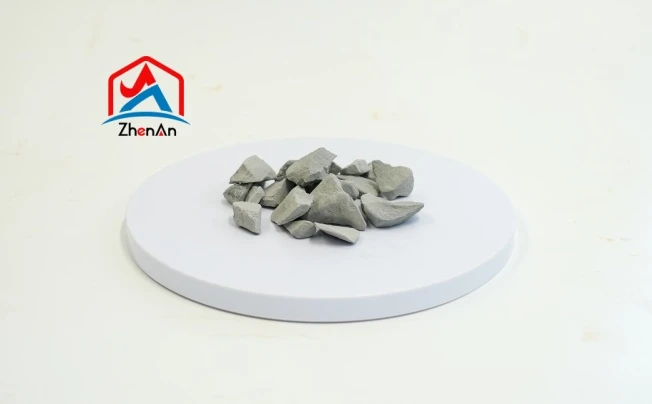
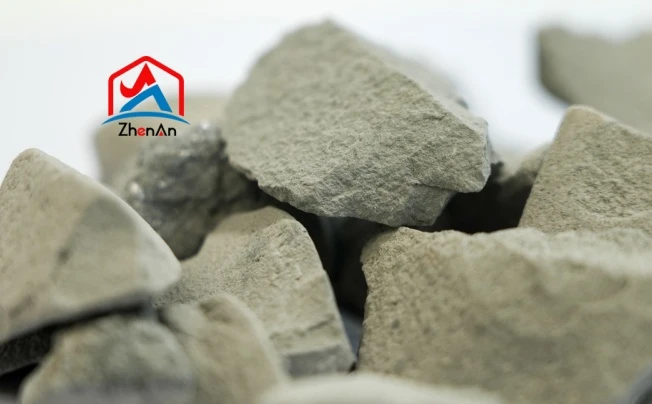
FeSiN is made by nitriding ferrosilicon. The product is a mix of phases, mainly silicon nitride (Si3N4) and iron-silicon phases, so it brings two things into the melt: nitrogen and silicon. You can compare its uses in steelmaking and refractories in our ferrosilicon nitride applications overview, which does not go into grain-oriented steel.
Keep three nitrogen numbers apart: the nitrogen printed on the specification, the nitrogen the melt actually picks up, and the nitrogen still in the steel at later stages. The silicon also has to be counted. Grain-oriented grades already carry high silicon, around 3% in typical grades, so every kilogram of silicon from the alloy belongs in your silicon budget. Oxygen, carbon, aluminum and calcium in the alloy matter too, because they can end up as inclusions. We explain this in our note on impurities in ferro silicon nitride. Take exact values from the COA of the batch you will receive.
Nitrogen recovery is not a constant. It changes with steel composition, temperature, the stage where you add the alloy, how well it is mixed in, and any later degassing. Two heats with the same addition can therefore end up with different nitrogen. If you use FeSiN, sample before and after the addition on your own heats and calculate your own recovery, instead of borrowing a figure from another plant.
Why Does Nitrogen Matter in Grain-Oriented Electrical Steel?
Nitrogen and AlN-Based Inhibitor Systems
In AlN-based routes, aluminum and nitrogen in the steel form fine AlN precipitates, in some routes together with manganese sulfide (MnS). These are separate inhibitor phases: nitrogen forms nitrides with aluminum, and MnS comes from manganese and sulfur. Do not mix them up when you read process literature.
Producers do not all use the same system. Some routes build the inhibitor from elements already in the steel from melting. Others add nitrogen to the strip later by nitriding. So whether nitrogen from the melt is needed at all depends on your route, and nothing here should be read as a rule for every GOES process.
Inhibitors, Grain Growth and Goss Texture
Inhibitors hold back normal grain growth during annealing. At a later stage, grains with the Goss orientation grow at the expense of the others in a step called secondary recrystallization. A sharp Goss texture gives low core loss and high magnetic induction along the rolling direction, which is why this steel is used in transformer cores.
Size and distribution of the precipitates, and the thermal conditions they see, are decisive. Too little inhibitor can leave grain growth poorly controlled, while coarse or poorly distributed precipitates may not restrain it as intended. For this reason, more nitrogen is not automatically better, and a finer grain size is not automatically better for magnetic properties.
What Can FeSiN Change in the Magnetic Properties, and What Can It Not?
Two measures describe the magnetic quality of oriented silicon steel. Core loss is the energy lost as heat when the steel is magnetized and demagnetized under alternating current, so lower is better for a transformer. Magnetic induction describes how strongly the steel magnetizes along the rolling direction, so higher is generally better. Silicon raises electrical resistivity, which limits eddy current loss, and a sharp Goss texture improves the way the steel magnetizes along the rolling direction. Both measures therefore depend on composition and on texture.
The link between FeSiN and these properties runs through several steps:
- FeSiN supplies nitrogen and silicon to the melt.
- Together with aluminum and your other composition targets, this sets the conditions for the inhibitor.
- The inhibitor controls grain growth during annealing.
- Grain growth control shapes the Goss texture.
- The texture determines core loss and magnetic induction.
Each step has its own variables, so you cannot read a magnetic result back to the additive alone. We do not claim a fixed percentage improvement in core loss from FeSiN, because published work ties magnetic results to the whole route rather than to one additive. What FeSiN can do is help you reach a target nitrogen level in a route that needs it.
Also remember that nitrogen is useful during processing but not in the finished steel. In typical routes the elements that served as inhibitors are removed in high-temperature annealing, because residual carbon and nitrogen can cause magnetic ageing. Confirm the details with your own process data.
How Does FeSiN Addition Differ from Strip Nitriding?
Both bring nitrogen into the process, but at different stages and for different purposes.
| Item | FeSiN addition | Strip nitriding |
|---|---|---|
| Process stage | Alloy addition during steelmaking | Later strip processing |
| What is controlled | Nitrogen and silicon input to the melt and their recovery | Nitrogen introduced into the strip and related structure control |
| How it is judged | Analysis before and after addition, recovery and composition budget | The nitriding and heat treatment schedule |
| Can it replace the other? | Needs validation on your route | Cannot be decided from a material name |
Nitriding studies help explain how nitrogen, inhibitors and texture relate. They do not prove that FeSiN can stand in for strip nitriding. If your route already includes nitriding, treat FeSiN as a separate question that has to be tested.
What Determines Whether FeSiN Fits Your Process?
We cannot give one addition rate, temperature or recovery for every mill. Check these points against your own route:
- starting nitrogen, target nitrogen and the silicon budget
- aluminum and related impurity requirements
- addition method, absorption behavior and batch variation
- later heating, rolling, annealing and inhibitor control
If any of these is not defined in your process yet, define it before you test a nitrogen source.
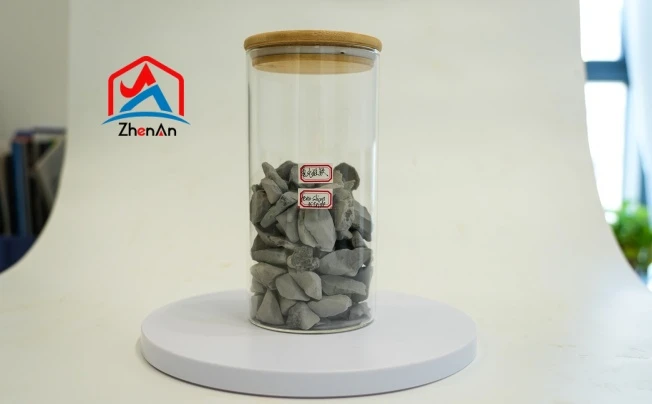
Batch variation deserves special attention. A nitrogen source that changes from batch to batch makes it hard to tell whether a change in magnetic results came from the alloy or from your process. Ask for the COA of each batch, keep a retained sample, and record which batch went into which heat, so that any shift in nitrogen or in magnetic results can be traced back to its cause.
What Mistakes Should You Avoid When Choosing a Nitrogen Source?
- Reusing rebar logic. In vanadium microalloyed rebar, nitrogen helps form vanadium carbonitrides that raise strength. That logic does not transfer to oriented silicon steel, where nitrogen matters for inhibitors and texture.
- Judging by nitrogen content alone. A higher nitrogen alloy also changes the silicon you add and the impurities that come with it.
- Ignoring the silicon budget. Your grade has a silicon target, and the alloy's silicon counts toward it.
- Copying results from another mill. Recovery and magnetic results depend on the route, so test on your own heats.
- Stopping at the ladle result. Final nitrogen and magnetic properties are only known after later processing and annealing.
Why Is FeSiN Different from High-Purity Ferrosilicon?
They solve different purchasing tasks. FeSiN is a nitrogen source that also carries silicon. High-purity ferrosilicon is a silicon alloying material, selected for tight limits on trace elements in electrical steel.
When you compare them, check nitrogen, silicon and impurity inputs together. Do not carry the specification limits of high-purity ferrosilicon over to FeSiN, because the two materials are made and used differently.
What Should You Verify Before a Production Trial?
| Check item | Information you need |
|---|---|
| Production route | Steel grade, current nitrogen control and inhibitor scheme |
| Composition targets | Starting and target N and Si, and limits on related elements |
| Material data | Batch composition, particle size, form and COA |
| Process records | Addition amount, addition stage and sampling position |
| Evaluation | Composition stability, plus the structure and magnetic evaluation your product standard requires |
Run the trial on a limited number of heats and record the nitrogen before and after the addition. For chemistry options and sizes, see our ferrosilicon nitride specification page, and check the batch against its COA.
Ferrosilicon Nitride in Grain-Oriented Steel FAQ
Is FeSiN required in every grain-oriented steel process?
No. Routes differ in the inhibitor system and in where nitrogen is introduced. Some rely on nitrogen from the melt, others add nitrogen to the strip by nitriding, so check what your own route needs.
Can FeSiN replace strip nitriding?
Not on the basis of the material name alone. FeSiN is added during steelmaking and strip nitriding happens later, so any substitution has to be validated on your own route.
Does higher FeSiN nitrogen content guarantee better magnetic properties?
No. The nitrogen content only tells you how much nitrogen the alloy can supply. Magnetic properties depend on the inhibitor state, the texture and the full processing route, and the alloy also adds silicon and impurities.
Is FeSiN the same as high-purity ferrosilicon?
No. FeSiN is a nitrogen source that also carries silicon, while high-purity ferrosilicon is a silicon alloying material with tight trace-element limits. Compare nitrogen, silicon and impurity inputs for each.
Which magnetic properties should I check in a trial?
Check core loss and magnetic induction according to the standard of your product, together with composition before and after the addition and any structure or texture evaluation your route requires.
Send Your Process Route and Nitrogen Target for Specification Review
Send us your current nitrogen control route, your nitrogen and silicon targets, and the form and size you plan to use, and we can review the material data with you. Magnetic properties cannot be predicted from the product alone, so they have to be confirmed in your own trial. You can also email us directly at sale@zanewmetal.com.