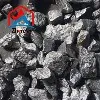
Ferrosilicon is widely used as a deoxidizer in steelmaking because silicon reacts with dissolved oxygen in molten steel to form silicon-containing oxide products. At the same time, the silicon retained in the metal contributes to the final chemical composition of the steel. Understanding this dual function helps steelmakers select the right FeSi grade, control alloy additions and manage non-metallic inclusions during refining.
Quick Answer
Ferrosilicon acts as a deoxidizer in steelmaking by supplying silicon that reacts with dissolved oxygen in molten steel. The simplified reaction is [Si] + 2[O] → (SiO2). The resulting oxide products must then be controlled through inclusion growth, flotation and slag absorption during refining.
FeSi75 and FeSi72 can both be used for silicon-based deoxidation. FeSi75 provides more silicon per unit mass on a nominal grade basis, but it is not automatically a better deoxidizer. The correct selection depends on the target steel chemistry, actual silicon recovery, impurity limits, addition practice and particle size.
For steel plants, the most important factors are the actual FeSi composition, addition timing, molten-steel temperature, bath mixing, slag conditions and the removal of deoxidation products.
Table of Contents
- Why Is Deoxidation Needed in Steelmaking?
- How Does Ferrosilicon Deoxidize Molten Steel?
- Ferrosilicon as a Deoxidizer and Alloying Agent
- What Affects Ferrosilicon Deoxidation Performance?
- FeSi75 vs FeSi72 for Steelmaking Deoxidation
- Ferrosilicon vs Other Steelmaking Deoxidizers
- How to Select Ferrosilicon for Deoxidation
- FAQ About Ferrosilicon Deoxidation
Key Takeaways
- Primary function: Ferrosilicon supplies silicon for deoxidation and final steel chemistry adjustment.
- Basic reaction: Dissolved silicon reacts with dissolved oxygen to form silicon-containing oxide products.
- Inclusion control: Chemical deoxidation is only part of the process; the resulting inclusions must also be removed or modified.
- Grade selection: FeSi75 has a higher nominal silicon content than FeSi72, but actual performance depends on the complete specification and refining conditions.
- Purchasing: Check Si, Al, C, P, S, particle size, fines tolerance and batch COA before confirming an order.
Why Is Deoxidation Needed in Steelmaking?
Oxygen is involved in several stages of steelmaking, particularly during oxidation, refining and the adjustment of molten-steel chemistry. Before casting, the dissolved oxygen level must be controlled according to the steel grade and the requirements of the refining route.
If dissolved oxygen is not properly controlled, it can contribute to the formation of undesirable oxide inclusions during solidification and subsequent processing. These inclusions may affect steel cleanliness, mechanical properties and downstream production performance.
Steelmakers therefore introduce deoxidizing elements that react with dissolved oxygen and convert it into oxide products.
Deoxidation involves two closely related objectives:
- Reducing the dissolved oxygen content in molten steel.
- Controlling the formation, modification and removal of non-metallic inclusions.
These objectives should not be confused. A deoxidizer may successfully bind dissolved oxygen, but the resulting oxide inclusions still need to be managed during refining.
Slag chemistry, stirring conditions, refining time and the ability of inclusions to float out of the metal all influence the final steel cleanliness.

How Does Ferrosilicon Deoxidize Molten Steel?
Ferrosilicon does not remove oxygen simply by being charged into a furnace. The alloy must first be heated and assimilated into the molten steel so that its silicon can participate in the deoxidation reaction.
Step 1: Ferrosilicon Enters the Molten Steel
Ferrosilicon is introduced through a controlled alloy addition method according to the plant's steelmaking and ladle-refining practice.
Several physical and operational factors influence how the material enters the bath:
- Particle size and the physical form of the alloy.
- Addition position and charging method.
- Molten-steel temperature.
- Bath movement and mixing conditions.
The FeSi must be heated, incorporated and distributed before its silicon can contribute effectively to the steel chemistry.
Step 2: Silicon Enters the Steel Bath
As ferrosilicon dissolves into molten steel, silicon becomes available for reactions with dissolved oxygen.
Some of the added silicon participates in deoxidation, while the silicon retained in the metal contributes to the final steel composition.
This is why the FeSi addition must consider both the oxygen condition and the target silicon content. Calculating the required alloy quantity from oxygen removal alone may result in an unsuitable final silicon level.
Step 3: Silicon Reacts with Dissolved Oxygen
The basic silicon deoxidation reaction can be represented by the following simplified equation:
[Si] + 2[O] → (SiO2)
In this equation:
- [Si] represents dissolved silicon in the metal phase.
- [O] represents dissolved oxygen in the metal phase.
- (SiO2) represents the silicon-containing oxide product.
The reaction illustrates how silicon chemically binds oxygen. However, actual steelmaking is more complex than this single equation. The equilibrium depends on temperature, steel composition, the activities of silicon and oxygen, and the presence of other deoxidizing elements.
The oxide inclusions formed in actual production may contain MnO, Al2O3, CaO and other components. Their composition depends on the complete refining system rather than the FeSi addition alone.
Step 4: Deoxidation Products Are Removed or Modified
After dissolved oxygen has reacted, the resulting oxide products must be managed during refining.
Depending on their size, composition and the operating conditions, non-metallic inclusions may:
- Grow through collision and agglomeration.
- Float toward the slag-metal interface.
- Be absorbed into the slag.
- Remain in the molten steel or undergo further modification.
The final result depends on how effectively the refining process controls both the oxygen reaction and the resulting inclusions.
Important: Adding more ferrosilicon does not automatically produce cleaner steel. Excessive or poorly controlled alloy additions can change the final steel chemistry without necessarily improving inclusion removal.
Ferrosilicon as a Deoxidizer and Alloying Agent
One of the main advantages of ferrosilicon is that it performs two related functions during steelmaking: silicon-based deoxidation and silicon alloy adjustment.
Part of the silicon reacts with dissolved oxygen, while the remaining silicon contributes to the target composition of the finished steel.
| Function | Role of Ferrosilicon | Process Consideration |
|---|---|---|
| Deoxidation | Supplies silicon that reacts with dissolved oxygen. | Oxygen level and inclusion removal. |
| Silicon Adjustment | Contributes silicon to the final steel chemistry. | Target Si content and actual recovery. |
| Process Control | Provides a controlled silicon-bearing alloy addition. | Grade, impurities, particle size and addition timing. |
For a steel plant, this means that the required ferrosilicon quantity should be determined using the initial steel composition, target silicon level, expected recovery and refining practice.
For more information about the general application of this grade, see our guide to Ferrosilicon 75 for steelmaking.
What Affects Ferrosilicon Deoxidation Performance?
The deoxidation performance of ferrosilicon is not determined by its grade number alone. Alloy chemistry, physical properties and steelmaking conditions work together to determine how the material behaves in production.
FeSi Grade and Silicon Content
FeSi75 has a higher nominal silicon content than FeSi72. Therefore, for the same theoretical silicon input, a smaller mass of FeSi75 is generally required.
However, higher silicon content does not automatically mean higher recovery, lower dissolved oxygen or better steel cleanliness. These results also depend on addition conditions, bath mixing, slag chemistry and the actual composition of the material.
Grade selection should be based on the required silicon input and the complete purchasing specification rather than the grade number alone.
Aluminum and Other Impurity Limits
Commercial ferrosilicon is not chemically equivalent to pure silicon. Besides silicon, it contains other elements that may enter the molten steel during addition.
Depending on the steel grade and refining requirements, you should pay attention to:
- Aluminum (Al).
- Calcium (Ca).
- Manganese (Mn).
- Carbon (C).
- Phosphorus (P).
- Sulfur (S).
Aluminum is particularly important when the steelmaking process requires tighter control of aluminum input and aluminum-containing inclusions.
When standard FeSi does not meet the required aluminum limit, low aluminum ferrosilicon for steelmaking may be a more suitable specification.
You can also compare low-Al and standard ferrosilicon to understand how aluminum limits affect material selection.
Molten Steel Temperature
Temperature affects the physical assimilation of ferrosilicon and the thermodynamic conditions of silicon deoxidation.
The alloy must be heated and incorporated into the molten steel before its silicon is distributed throughout the bath. At the same time, the equilibrium between dissolved silicon, dissolved oxygen and oxide products changes with temperature and steel composition.
There is therefore no single universal temperature that guarantees the best ferrosilicon deoxidation performance for every steel grade and refining route.
Addition Timing
The appropriate time to add ferrosilicon depends on the refining sequence and the chemistry of the molten steel.
Before determining the addition point, the steelmaking team should consider:
- The dissolved oxygen condition at the time of addition.
- The sequence of other deoxidizers and alloy additions.
- The required final silicon content.
- The available time for mixing and inclusion removal.
- The possibility of reoxidation during subsequent refining.
Addition timing should follow the actual steel grade and plant practice rather than a fixed rule applied to every heat.
Bath Mixing and Stirring
Once FeSi enters molten steel, bath movement helps distribute silicon throughout the liquid metal.
Mixing conditions influence bath homogenization, the distribution of alloying elements, mass transfer and the movement of oxide inclusions.
Insufficient mixing may lead to local chemistry differences, while appropriate stirring supports more uniform alloy distribution and inclusion transport.
Slag Conditions and Reoxidation
Ferrosilicon deoxidation takes place within a complete metal-slag-refining system.
An oxidizing slag can influence the oxygen balance at the metal-slag interface. Slag entrainment and other reoxidation routes may also introduce additional oxide inclusions after the initial deoxidation reaction.
For this reason, the choice of FeSi should be considered together with slag practice, refining conditions and inclusion-control procedures.
Ferrosilicon Particle Size
Particle size affects how ferrosilicon is handled, charged, heated and assimilated into molten steel.
For the same material mass, smaller particles provide greater external surface area. However, excessive fines may increase dust generation, transfer losses and segregation during handling.
Larger lumps may require suitable charging openings, sufficient contact with molten steel and adequate time for heating and assimilation.
Smaller particles should not automatically be considered more efficient for every steelmaking route. The appropriate size depends on the feeding equipment and addition method.
For a detailed size-selection guide, see what ferrosilicon particle size is used in steelmaking.
FeSi75 vs FeSi72 for Steelmaking Deoxidation
FeSi75 and FeSi72 are both used to supply silicon during steelmaking. Their main difference is the nominal silicon content, but the actual purchasing decision should also consider impurities, particle size, cost and process requirements.
| Comparison Factor | FeSi75 | FeSi72 |
|---|---|---|
| Nominal Si Level | Minimum 75% for the corresponding grade specification. | Minimum 72% for the corresponding grade specification. |
| Silicon Input per Tonne of Alloy | Higher theoretical silicon input. | Lower theoretical silicon input. |
| Alloy Mass for the Same Theoretical Si Input | Generally lower. | Generally higher. |
| Impurity Requirements | Must be checked against the actual specification. | Must be checked against the actual specification. |
| Particle Size | Depends on the agreed supply specification. | Depends on the agreed supply specification. |
| Selection Basis | Target Si, impurities, addition method and cost. | Target Si, impurities, addition method and cost. |
For example, if a steel plant requires the same theoretical silicon input from two grades, FeSi75 generally requires less alloy mass than FeSi72. Actual addition quantities must still account for the initial steel chemistry and the recovery achieved under the plant's operating conditions.
FeSi75 is not automatically the better choice for every steel grade. A lower purchase price for FeSi72 may be attractive, but the actual cost should be evaluated against the silicon delivered, impurity limits and process performance.
For a dedicated grade-selection comparison, read our guide to ferrosilicon 72 and 75 for steelmaking.


Ferrosilicon vs Other Steelmaking Deoxidizers
Ferrosilicon is not the only material used for steel deoxidation. Aluminum, silicomanganese and calcium-bearing alloys also have important roles in steelmaking.
These materials introduce different elements and form different oxide systems. Their selection should be based on the required steel chemistry and refining objective.
| Deoxidizer | Main Metallurgical Role | Main Selection Consideration |
|---|---|---|
| Ferrosilicon | Silicon-based deoxidation and silicon alloy adjustment. | Required silicon input and final steel chemistry. |
| Aluminum | Strong deoxidation and aluminum-killed steel practice. | Aluminum target and alumina inclusion control. |
| Silicomanganese | Manganese and silicon addition with deoxidation. | Whether both Mn and Si additions are required. |
| CaSi / Calcium-Bearing Alloys | Calcium treatment and inclusion modification. | Whether calcium treatment is required after deoxidation. |
Ferrosilicon vs Aluminum
Aluminum is widely used for strong deoxidation and Al-killed steel production. It forms alumina-based inclusions that need to be controlled during subsequent refining.
Ferrosilicon is useful when silicon is required for both oxygen control and final alloy adjustment. It is therefore particularly relevant when the final steel chemistry requires a controlled silicon content.
The comparison should not be reduced to which element removes more oxygen. The target chemistry, inclusion-control requirements and refining sequence are equally important.
Ferrosilicon vs Silicomanganese
Silicomanganese introduces both manganese and silicon into the molten steel while also contributing to deoxidation.
It is suitable when both alloying elements are required. Ferrosilicon is more directly suited to processes where silicon is the primary alloying requirement.
Ferrosilicon vs Calcium-Bearing Alloys
Calcium-bearing alloys serve a different metallurgical purpose. Calcium treatment is commonly used for inclusion modification, particularly when the morphology and composition of oxide inclusions need to be adjusted.
CaSi should therefore not be treated simply as a stronger or weaker version of ferrosilicon. The two materials may be used at different stages of a refining route.
There is no universally best steelmaking deoxidizer. The appropriate material or combination depends on the steel grade, target chemistry, refining sequence and inclusion-control requirements.
How to Select Ferrosilicon for Deoxidation
When selecting ferrosilicon for steelmaking, you should evaluate the chemical specification and physical characteristics together. The grade name alone is not enough to confirm whether a batch is suitable.
Ferrosilicon Specification Checklist
| Parameter | What to Check | Why It Matters |
|---|---|---|
| Grade | FeSi75, FeSi72 or another agreed grade. | Identifies the silicon grade. |
| Silicon (Si) | Actual Si content and minimum requirement. | Determines theoretical silicon input. |
| Aluminum (Al) | Actual content and maximum limit. | Controls additional aluminum input. |
| Carbon (C) | Actual content and maximum limit. | Important for steel grades with strict carbon limits. |
| Phosphorus (P) and Sulfur (S) | Actual results and agreed maximum limits. | Controls unwanted impurity input. |
| Calcium and Other Elements | Ca, Mn, Cr or other elements specified by the buyer. | Ensures compatibility with the steel specification. |
| Particle Size | Nominal size range and distribution. | Matches the charging and feeding system. |
| Fines and Oversize | Permitted undersize and oversize percentages. | Controls physical consistency and handling losses. |
| Batch COA | Actual chemical analysis for the delivered lot. | Verifies compliance with the purchase specification. |
Step 1: Confirm the Final Steel Chemistry
Start with the chemical composition required for the finished steel. Identify the target silicon range and the maximum permissible levels of other elements introduced through alloy additions.
Step 2: Calculate the Required Silicon Input
Determine the amount of silicon needed after considering the initial steel composition, target silicon level, alloy composition and expected recovery.
The theoretical addition and actual plant addition are not necessarily the same. Process recovery should be based on plant data rather than an assumed universal percentage.
For a worked calculation, see how much ferrosilicon 75 you should add in steelmaking.
Step 3: Select the FeSi Grade and Impurity Limits
Compare FeSi75 and FeSi72 according to the required silicon input, aluminum limit, carbon content and other restricted elements.
If the steelmaking process requires tighter aluminum control, select a low-Al specification and verify it through the batch COA.
Step 4: Confirm Particle Size and Addition Method
Select the material size according to the charging equipment, conveying system, addition position and available time for assimilation.
Define acceptable fines and oversize limits in the purchase specification whenever particle-size consistency is important.
Step 5: Verify the Delivered Batch
Compare the batch Certificate of Analysis with the agreed purchasing specification. Check actual Si, Al, C, P, S and other specified elements rather than relying only on the nominal grade designation.
For a detailed purchasing checklist, read what to check in a ferrosilicon 75 COA.
When evaluating a supplier, keep the grade designation, chemical limits, particle size, packaging and inspection requirements consistent between the RFQ, quotation, purchase order and COA.
FAQ About Ferrosilicon Deoxidation
Why is ferrosilicon used as a deoxidizer in steelmaking?
Ferrosilicon supplies silicon that reacts with dissolved oxygen in molten steel, forming silicon-containing oxide products. The silicon retained in the metal also contributes to the final steel composition.
What is the chemical reaction between silicon and oxygen in steelmaking?
The simplified reaction is [Si] + 2[O] → (SiO2). In actual steelmaking, the resulting inclusions may contain several oxide components depending on temperature, steel composition and refining conditions.
Is FeSi75 better than FeSi72 for deoxidation?
Not automatically. FeSi75 has a higher nominal silicon content, so less alloy mass may be required for the same theoretical silicon input. The actual choice also depends on impurity limits, particle size, target steel chemistry, cost and plant performance.
Does ferrosilicon particle size affect deoxidation?
Yes. Particle size affects handling, charging, heating and assimilation. Excessive fines can increase dust and handling losses, while large lumps may need more time and suitable charging conditions. The appropriate size depends on the actual addition method.
What is the difference between ferrosilicon and aluminum deoxidation?
Ferrosilicon introduces silicon and supports silicon-based deoxidation and alloy adjustment. Aluminum is used for strong deoxidation and Al-killed steel practice, forming alumina-based inclusions. The appropriate material depends on the required steel chemistry and inclusion-control route.
Does adding more ferrosilicon always improve steel cleanliness?
No. Excessive FeSi addition can increase the final silicon content without guaranteeing better inclusion removal. Deoxidizer quantity, refining conditions, slag practice and inclusion flotation must be considered together.
What should steelmakers check when buying ferrosilicon?
Check the grade, actual Si content, Al, C, P and S limits, particle size, fines and oversize tolerance, batch consistency and COA. The purchasing specification should match the final steel chemistry and the plant's addition practice.
Need Ferrosilicon for Your Steelmaking Process?
Choosing ferrosilicon for steelmaking requires more than comparing the nominal silicon percentage. The grade, actual chemical composition, impurity limits, particle size and addition method all need to match your production requirements.
At ZhenAn, we supply ferrosilicon grades including FeSi75 and FeSi72 for steelmaking and other metallurgical applications. We can discuss the required silicon content, aluminum limits, particle size, quantity and export packing before preparing a quotation.
To help us identify a suitable specification, please provide:
- Required grade: FeSi75 or FeSi72.
- Target Si content and maximum Al content.
- Other controlled impurity limits.
- Required particle size and tolerance.
- Order quantity and destination port.
View Ferrosilicon 75 View Ferro Silicon Grades Send Your FeSi Specification