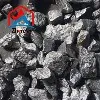
Quick Answer: Ferromanganese does not have one fixed density for every grade. Published measurements have reported approximately 7.11 g/cm³ for low-carbon ferromanganese and 6.55 g/cm³ for high-carbon ferromanganese in the tested commercial samples. You should also distinguish material density from bulk density. Material density describes the alloy itself, while bulk density includes the spaces between lumps or particles.
What Is the Density of Ferromanganese?
Ferromanganese density varies with alloy grade, chemical composition, inclusions and material structure. Because ferromanganese is an iron-manganese alloy rather than a pure substance, different commercial grades should not automatically be assigned the same density value.
A published comparison of commercial low-carbon and high-carbon ferromanganese reported the following measured densities:
| Ferromanganese Type | Measured Density | Important Note |
|---|---|---|
| Low-Carbon Ferromanganese | 7.11 g/cm³ | Measured value for the LC-FeMn sample used in the study |
| High-Carbon Ferromanganese | 6.55 g/cm³ | Measured value for the HC-FeMn sample used in the study |
| Liquid Pure Iron (reference) | 6.98 g/cm³ | Liquid-state comparison value in the same study; not a ferromanganese grade |
These figures should be treated as measured reference values rather than universal specifications. Actual ferromanganese density can vary with alloy chemistry, production conditions, inclusions, porosity and the physical condition of the material. The liquid-iron value is included only for comparison.
Ferromanganese Material Density vs Bulk Density
When discussing ferromanganese density, it is important to distinguish between material density and bulk density. They describe two different physical properties and should not be used interchangeably.
Ferromanganese Material Density
Material density describes the mass of the actual ferromanganese alloy relative to its solid volume.
Density = Mass ÷ Solid Material Volume
This measurement does not include the large spaces between separate lumps or particles. It is mainly relevant when evaluating alloy properties, immersion behavior and melting characteristics.
Ferromanganese Bulk Density
Bulk density measures the mass of a quantity of ferromanganese divided by the total volume occupied by that material.
The measured volume therefore includes:
- the ferromanganese alloy itself;
- gaps between lumps or particles;
- void space created by irregular particle shapes;
- differences in particle packing.
For this reason, ferromanganese bulk density is substantially lower than the density of the solid alloy. Reference data for loose ferromanganese bulk cargo with a particle size of up to 300 mm gives a bulk density range of approximately 3,571–5,556 kg/m³, or about 3.57–5.56 t/m³. This is a cargo reference range, not a fixed value for every particle size or packing method.
| Property | Material Density | Bulk Density |
|---|---|---|
| What Is Measured? | Solid alloy itself | Material plus void spaces |
| Typical Unit | g/cm³ or kg/m³ | kg/m³ or t/m³ |
| Affected by Particle Size? | Limited direct effect | Yes |
| Affected by Packing Arrangement? | No | Yes |
| Main Use | Physical and metallurgical evaluation | Storage, transport and cargo calculations |
This explains why two technical documents may give very different ferromanganese density values without necessarily contradicting each other. One may describe the solid alloy, while the other describes the bulk material.

Why Does Ferromanganese Density Vary by Grade?
Carbon Content and Ferromanganese Grade
High-carbon, medium-carbon and low-carbon ferromanganese have different chemical compositions. Changes in manganese, iron, carbon and other constituents can affect the physical properties of the resulting alloy.
In the published LC-FeMn and HC-FeMn comparison, the tested low-carbon material had a higher measured density than the high-carbon sample. However, carbon content alone should not be used to calculate an exact density for a commercial grade.
Inclusions in Ferromanganese
Commercial ferromanganese may contain oxide, sulfide and other inclusions formed during production. Differences in the type and amount of these inclusions can contribute to differences in measured physical properties.
For this reason, two materials with similar nominal Mn and C levels do not necessarily have exactly the same density.
Internal Porosity and Material Structure
Internal pores, cracks and differences in solidification structure can affect the measured volume of a ferromanganese sample.
A more porous material can show a different volume-density result from a denser and more compact alloy, even when the nominal chemical grade is similar.
Particle Size and Packing
Particle size has a particularly strong influence on ferromanganese bulk density.
Large irregular lumps leave more empty space between individual pieces. Smaller particles can fill some of these gaps, changing the amount of material that fits into a given storage or shipping volume.
Bulk-density information should therefore ideally be evaluated together with the particle-size range of the supplied ferromanganese.
How Ferromanganese Density Affects Melting Behavior
Ferromanganese density is not only a laboratory property. It can also influence how ferroalloy particles behave after they are added to molten metal.
In the published commercial-alloy study, low-carbon ferromanganese was measured at approximately 7,110 kg/m³, while high-carbon ferromanganese was approximately 6,550 kg/m³. The reference density of liquid pure iron used in the study was approximately 6,980 kg/m³.
Under the conditions of that study, the density relationship between the tested solid ferromanganese samples and the liquid iron bath differed by alloy grade. These values should not be used as universal predictions of floating, sinking or melting behavior at other temperatures.
Density, however, is only one factor affecting ferroalloy dissolution. Actual melting behavior can also depend on:
- chemical composition;
- particle size;
- bath temperature;
- mixing and stirring conditions;
- internal alloy structure.
For steelmaking buyers, grade, chemical composition and particle size normally remain more important purchasing parameters than density alone.
Why Ferromanganese Bulk Density Matters for Shipping
Ferromanganese bulk density becomes particularly important when the focus changes from metallurgical performance to storage and transportation.
Ferromanganese is a relatively dense bulk material, so you may need bulk-density information when calculating:
- warehouse storage volume;
- bulk cargo loading;
- container or vessel weight distribution;
- packing requirements;
- material handling capacity.
For example, 10 metric tons of ferromanganese does not occupy the same volume as 10 metric tons of a lower-density carbon or mineral material.
For shipping calculations, use the actual particle size, packing form and bulk-density information for your order rather than the solid alloy density. You should also confirm the loading plan and applicable weight-distribution limits.
Should Buyers Specify Ferromanganese Density?
For most conventional ferromanganese purchases, density is not normally the first specification that needs to be confirmed.
You should first confirm the required grade, chemical composition and particle size. Ferromanganese density becomes more important when the material will be used in a process where melting behavior, feeding, storage volume or cargo calculations require additional physical-property data.
If you are comparing ferromanganese with other manganese materials, you can also explore our manganese products and grades. Electrolytic manganese flakes and manganese briquettes are different products, so you should not apply ferromanganese density figures to them.
| Purchasing Item | What to Confirm |
|---|---|
| Ferromanganese Grade | High carbon, medium carbon or low carbon |
| Chemical Composition | Mn, C, Si, P, S and other required limits |
| Particle Size | Required lump or particle-size range |
| Material Density | Confirm when required by the process |
| Bulk Density | Confirm when required for storage or transportation |
| Packing | Confirm agreed packing and shipment form |
| Batch Documentation | Confirm required chemical analysis or inspection documents |
If your order requires a specific grade, particle size, packing form or other agreed parameters, you can also review our guide to low-carbon ferromanganese customization.
If density is critical to the application, you should also ask whether the stated figure is a measured batch value, typical reference value or bulk-density range.
How Particle Size Affects Ferromanganese Bulk Density
Ferromanganese density and particle size are related in some purchasing and logistics calculations, but they are not the same specification.
Changing the lump size does not automatically change the intrinsic density of the ferromanganese alloy itself.
It can, however, change the bulk density of the delivered material because different particle-size distributions pack differently.
For example, a shipment containing predominantly large, irregular lumps may leave more empty space between pieces than a shipment containing a broader range of particle sizes.
This distinction is useful when comparing supplier data sheets. If one document gives a density close to 7 g/cm³ while another gives approximately 4–5 t/m³, the two values may describe different physical properties rather than different material quality.
Key Takeaways on Ferromanganese Density
- Ferromanganese density is not one universal value for every grade.
- Published measurements have reported approximately 7.11 g/cm³ for LC-FeMn and 6.55 g/cm³ for HC-FeMn in the tested commercial samples.
- Ferromanganese material density and bulk density should not be confused.
- Reference ferromanganese cargo data gives a bulk-density range of approximately 3.57–5.56 t/m³.
- Grade, composition, inclusions and internal structure can affect material density, while particle size and packing arrangement strongly influence bulk density.
Ferromanganese Density FAQ
Q: What is the density of ferromanganese?
A: There is no single density value for every ferromanganese grade. In one published comparison of commercial alloys, low-carbon ferromanganese measured approximately 7.11 g/cm³ and high-carbon ferromanganese approximately 6.55 g/cm³.
Q: Is low-carbon ferromanganese denser than high-carbon ferromanganese?
A: In the commercial samples examined in the published study, the low-carbon ferromanganese sample had a higher measured density than the high-carbon sample. These values should be treated as reference measurements rather than universal specifications for every producer or grade.
Q: What is the bulk density of ferromanganese?
A: Reference cargo data gives a ferromanganese bulk-density range of approximately 3,571–5,556 kg/m³. Actual bulk density can vary with particle size, particle shape and packing condition.
Q: Why is ferromanganese bulk density lower than alloy density?
A: Bulk density includes the empty spaces between separate ferromanganese lumps or particles. Material density measures only the solid alloy itself.
Q: Should ferromanganese density be included when purchasing?
A: Density should be confirmed when it affects melting behavior, feeding equipment, storage calculations or shipping plans. For routine purchasing, alloy grade, chemical composition and particle size are usually more fundamental specifications.
Request Ferromanganese Information