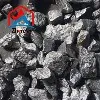
Quick Answer: What Are the Characteristics of Ferrosilicon Powder?
Ferrosilicon powder is a finely ground iron-silicon alloy used in steelmaking, foundry operations and other metallurgical processes. Its main characteristics include controlled silicon content, adjustable particle size, a high surface-area-to-mass ratio compared with lump ferrosilicon, and suitability for applications requiring fine feeding or uniform mixing.
The actual performance of ferrosilicon powder depends on its chemical grade, particle-size distribution, impurity levels, moisture condition and addition method. Common commercial grades include FeSi65, FeSi70, FeSi72 and FeSi75, with particle sizes such as 0–1 mm, 1–3 mm and customized mesh specifications.
For buyers, the most important checks are silicon content, Al/P/S/C limits, particle-size distribution, batch COA and packaging. These parameters should be agreed before ordering rather than judged by appearance alone.
Table of Contents
- What Is Ferrosilicon Powder?
- Chemical Composition of Ferrosilicon Powder
- Physical Characteristics and Properties
- Particle Size and Mesh Specifications
- Main Industrial Applications
- Ferrosilicon Inoculant vs. Spheroidizing Agent
- Quality Inspection and COA Verification
- Packaging, Storage and Handling
- How to Choose a Ferrosilicon Powder Supplier
- Frequently Asked Questions
1. What Is Ferrosilicon Powder?
Ferrosilicon powder is a powdered ferroalloy made by crushing and grinding solidified ferrosilicon, followed by screening or classification to obtain the required particle-size range. Its main components are iron (Fe) and silicon (Si), with smaller amounts of other elements depending on the original alloy grade and production specification.
Unlike lump ferrosilicon, which is commonly supplied for bulk furnace charging, powdered material is selected for processes requiring finer particles, controlled feeding, blending or specific metallurgical reactions.
The grinding process changes the physical form of the alloy but does not automatically change its chemical grade. For example, FeSi75 powder and FeSi75 lumps should have the same agreed chemical grade, although their particle size and handling characteristics are different.
Ferrosilicon is commercially available in different grades and physical forms. You can review our ferrosilicon product range for the available grades and supply options.
The typical production route includes:
- Raw material preparation: Ferrosilicon alloy is selected according to the required silicon grade and chemical specification.
- Crushing and grinding: The solid alloy is reduced into smaller particles using suitable crushing or milling equipment.
- Screening and classification: The ground material is separated into specified particle-size fractions.
- Quality inspection: Chemical composition and particle-size distribution are checked against the agreed requirements.
- Packaging: Qualified powder is packed in suitable bags for storage and transportation.
For product specifications and available particle sizes, see our FeSi Powder product page.

Ferrosilicon powder produced by grinding and screening ferrosilicon alloy.
2. Chemical Composition of Ferrosilicon Powder
Chemical composition is one of the most important characteristics of ferrosilicon powder. The silicon content determines the commercial grade, while aluminum, phosphorus, sulfur, carbon and other controlled elements influence whether the material meets the requirements of a particular metallurgical process.
The following table summarizes the chemical specifications currently published for our FeSi powder grades. These are supplier-listed reference limits, not universal values for every ferrosilicon standard. The final purchase specification and batch COA should be used for acceptance.
| Grade | Si Min. (%) | Al Max. (%) | P Max. (%) | S Max. (%) | C Max. (%) | Cr Max. (%) |
|---|---|---|---|---|---|---|
| FeSi75 | 75 | 1.5 | 0.04 | 0.02 | 0.20 | 0.50 |
| FeSi72 | 72 | 2.0 | 0.04 | 0.02 | 0.20 | 0.50 |
| FeSi70 | 70 | 2.0 | 0.04 | 0.02 | 0.20 | 0.50 |
| FeSi65 | 65 | 2.0 | 0.04 | 0.02 | 0.20 | 0.50 |
Note: Values above reproduce the published FeSi powder product specification. Calcium and other elements are not listed in this particular table. If your process controls Ca, Mn or additional trace elements, include their limits in the purchase specification and request the corresponding test results.
2.1 Silicon Content
Silicon is the principal functional element in ferrosilicon powder. FeSi75 contains a higher minimum silicon content than FeSi72, FeSi70 and FeSi65. For the same target silicon input, a higher-silicon grade generally requires less alloy mass, although the final addition must also account for recovery and process conditions.
The appropriate grade should be selected according to the required silicon contribution, impurity limits and cost per unit of effective silicon. Read our ferrosilicon grade selection guide for a comparison of different grades.
2.2 Aluminum, Phosphorus and Sulfur
Aluminum, phosphorus and sulfur should be controlled according to the intended steel or foundry application. Aluminum may affect the inclusion-control requirements of steelmaking, while phosphorus and sulfur are important residual elements in many steel and casting specifications.
Buyers should compare all specified elements instead of selecting a powder only by its silicon percentage. For more detailed FeSi75 chemical requirements, see our Ferrosilicon 75 specification guide.
2.3 Why Batch Consistency Matters
Two batches carrying the same commercial grade may still show different actual analysis results within their permitted limits. Consistent chemical composition helps buyers maintain predictable addition calculations and reduce unexpected chemistry corrections.
For this reason, request a batch-specific Ferrosilicon 75 Certificate of Analysis (COA) rather than relying only on a general product brochure.
3. Physical Characteristics and Properties of Ferrosilicon Powder
The physical properties of ferrosilicon powder are influenced by its silicon grade, manufacturing route, particle-size distribution and storage condition. Unlike chemical composition, some physical characteristics cannot be represented by one universal numerical value for every powder grade.
| Property | Characteristic | Practical Importance |
|---|---|---|
| Appearance | Generally grey to dark grey metallic powder | Visual identification and contamination screening |
| Composition | Iron-silicon alloy with grade-dependent silicon content | Determines the chemical specification and application suitability |
| Particle Size | Fine powder, granules or customized mesh fractions | Affects feeding, mixing and handling |
| Specific Surface Area | Generally increases as particle size decreases | Influences contact area and reaction behavior |
| Flowability | Depends on particle shape, size distribution and moisture | Important for consistent mechanical feeding |
| Bulk Density | Depends on particle packing and size distribution | Relevant to storage volume and feeding equipment |
| Thermal Behavior | Depends on alloy composition and operating conditions | Relevant to melting, dissolution and metallurgical reactions |
| Moisture Condition | Should be protected from moisture during storage | Helps prevent caking and handling problems |
3.1 Particle Surface Area and Reaction Behavior
Compared with large ferrosilicon lumps, fine powder has more external surface area per unit mass. This can improve contact with surrounding materials and make powder easier to distribute in processes designed for fine additions.
However, smaller particles do not automatically guarantee higher silicon recovery. Excessive fines may increase dust generation and material losses during transportation, storage and feeding. The actual metallurgical result depends on the addition method, temperature, mixing conditions and process design.
3.2 Density and Flowability
The apparent or bulk density of ferrosilicon powder is different from the intrinsic density of the solid alloy. Bulk density changes with particle-size distribution, particle shape and how tightly the powder is packed.
Flowability also matters when powder is supplied through hoppers, screw feeders or automated dosing equipment. A powder containing excessive moisture or an unsuitable proportion of fine particles may feed less consistently.
If bulk density or flowability is a critical purchasing requirement, request an actual test result with the test method stated. Do not use an assumed density value as a substitute for a product-specific inspection report.
3.3 Thermal Properties
The melting and dissolution behavior of ferrosilicon depends on its silicon content, alloy composition, particle size and the temperature and conditions of the receiving melt. Therefore, one fixed melting-point figure should not be applied to all FeSi powder grades.
For industrial applications, buyers should evaluate thermal behavior together with the actual addition method and the required chemical composition rather than selecting a powder solely by a general melting-temperature value.
4. Particle Size and Mesh Specifications
Particle size is one of the main physical specifications of ferrosilicon powder. It determines whether the material can pass through the feeding system, mix with other materials and meet the requirements of the intended metallurgical process.
Common ferrosilicon powder specifications include:
| Particle Size | Product Form | Key Consideration |
|---|---|---|
| 0–1 mm | Fine powder | Suitable for processes requiring a finer particle fraction |
| 1–3 mm | Fine granules | Balances particle size and handling requirements |
| 0–3 mm | Powder / fine material | Common commercial specification; fines distribution should be confirmed |
| 100 mesh | Fine powder | Confirm the applicable sieve standard and particle distribution |
| 200 mesh | Fine powder | Used where a finer material is required |
| 240 mesh | Fine powder | Confirm the passing and retained fractions |
| 300–325 mesh | Very fine powder | Requires suitable dust control and handling equipment |
These are available or commonly specified product options, not a guarantee that every size is held in stock. Customized particle-size specifications can be discussed according to the customer's requirements.
4.1 How Particle Size Affects Performance
Fine particles: Provide a larger surface area per unit mass and can be easier to blend with other fine materials. However, they may generate more dust and require better control during storage and feeding.
Coarser particles: Are generally easier to handle than very fine powder and may generate less airborne dust. Their suitability depends on the feeding equipment and the time available for the material to interact with the melt.
A complete particle-size specification should include more than a nominal size. Buyers should also agree on the sieve standard, passing percentage, retained percentage and acceptable out-of-range material where these affect production.
For a more detailed comparison of lump, granular and powdered ferrosilicon, see our ferrosilicon particle-size specification guide.

Fine ferrosilicon powder for customized particle-size requirements.
5. Main Industrial Applications of Ferrosilicon Powder
Ferrosilicon powder is used in several metallurgical applications where silicon addition, fine particle size or controlled material distribution is required. The suitable grade and particle size depend on the process rather than on the product name alone.
5.1 Steelmaking and Deoxidation
Silicon has a strong affinity for oxygen and is widely used as a deoxidizing element in steelmaking. Ferrosilicon provides silicon to react with dissolved oxygen in molten steel, forming silica-based reaction products that can be removed through appropriate steelmaking and slag practices.
Fine ferrosilicon may be used in selected addition or diffusion-deoxidation practices where the process is designed for powdered material. Its particle size, chemical grade and addition method should be coordinated with the steelmaking route.
For more information about the role of silicon in steel deoxidation, read our related ferrosilicon deoxidizer in steelmaking guide.
5.2 Alloying and Silicon Adjustment
Ferrosilicon is also used as an alloying addition to adjust the silicon content of steel and other metal products. The required grade depends on the target chemical composition, the amount of silicon required and the permitted impurity levels.
When a process requires fine or accurately controlled additions, powdered material may be considered if the feeding system and material recovery conditions are suitable.
5.3 Foundry and Cast Iron Applications
Ferrosilicon is widely used in foundry operations as a silicon addition and as a base material for inoculation. Inoculation promotes graphite nucleation in cast iron and helps improve the consistency of the graphite structure.
The appropriate material depends on the base iron composition, treatment method, casting requirements and required active elements. Plain ferrosilicon powder should not automatically be substituted for a specially formulated foundry inoculant.
5.4 Reduction in Metallurgical Processes
Ferrosilicon is used as a reducing agent in certain metallurgical production routes, including magnesium production and the manufacture of other ferroalloys. The required silicon grade and physical form depend on the specific reduction process and feeding arrangement.
When powdered FeSi is required, buyers should confirm the particle-size distribution and chemical specification with the process operator before ordering.
5.5 Welding Consumables
Certain welding-electrode coating and welding-consumable formulations use ferrosilicon powder as a source of silicon or as part of the formulated mineral and alloy mixture. The required grade, fineness and impurity limits depend on the coating formulation and applicable manufacturing specification.
6. Ferrosilicon Inoculant vs. Spheroidizing Agent
An important distinction in foundry applications is the difference between inoculation and spheroidization. Although both processes involve ferrosilicon-based alloys, they have different purposes and require different material compositions.
| Item | Ferrosilicon-Based Inoculant | FeSiMg Nodulizer |
|---|---|---|
| Main Function | Promotes graphite nucleation | Promotes graphite spheroidization |
| Key Composition | Fe-Si, sometimes with Ca, Ba, Sr or other active elements | Mg-bearing FeSi alloy, often with rare earth and other controlled elements |
| Application | Gray iron and ductile iron inoculation | Ductile iron treatment |
| Selection Factors | Inoculation response, fading, particle size and base iron chemistry | Mg, Si, RE, Ca, treatment method and residual magnesium target |
Plain ferrosilicon can be used as an inoculant or as the base alloy for specialized inoculants. However, it is not equivalent to a magnesium-based spheroidizing agent. Ductile iron nodularization normally requires a magnesium-bearing alloy such as ferro silicon magnesium (FeSiMg) nodulizer.
Selecting the correct material is essential because using a plain FeSi grade in place of a qualified nodulizer will not provide the required magnesium treatment.
7. Quality Inspection and COA Verification
A reliable ferrosilicon powder specification should cover both chemical composition and physical properties. A product may meet its silicon requirement but still fail to meet the particle-size or impurity requirements of the intended application.
Before accepting a shipment, buyers should check the following items:
| Inspection Item | What to Verify | Why It Matters |
|---|---|---|
| Chemical Composition | Si, Al, P, S, C, Cr and other agreed elements | Confirms compliance with the chemical specification |
| Particle Size | Actual sieve analysis and size distribution | Confirms suitability for feeding and processing |
| Moisture | Moisture condition or agreed test result | Helps assess storage and handling condition |
| Appearance | Foreign matter, contamination and visible agglomeration | Identifies obvious physical quality issues |
| Batch Traceability | Batch number, test date and product identification | Connects the test results with the actual shipment |
| Packaging | Bag condition, labels and moisture protection | Reduces contamination and material loss during transportation |
7.1 Chemical Analysis
The chemical analysis should report the actual measured composition of the batch. The laboratory method and applicable analytical standard should be identified according to the agreed purchase specification.
7.2 Particle-Size Analysis
Sieve analysis or another agreed particle-sizing method can be used to determine the proportion of material within the specified size range. Buyers should define the sieve standard and acceptance limits before shipment.
7.3 COA and Batch Traceability
A batch-specific Certificate of Analysis should identify the product grade, lot number, actual chemical results and relevant testing information. It should be consistent with the product identification and shipment documents.
For further guidance, see our Ferrosilicon 75 COA verification guide and ferrosilicon quality inspection guide.
8. Packaging, Storage and Handling
Ferrosilicon powder requires suitable packaging to prevent material loss, contamination and moisture ingress during storage and transportation. Packaging should also match the buyer's unloading equipment and consumption requirements.
| Packaging Type | Typical Specification | Suitable Requirements |
|---|---|---|
| Small Bags | 25 kg per bag | Smaller orders and controlled manual handling |
| Jumbo Bags | 1,000 kg per bag | Bulk industrial orders and mechanical handling |
| Customized Packing | According to customer requirements | Specific loading, storage and transportation arrangements |
8.1 Storage Recommendations
- Store ferrosilicon powder in a dry, covered warehouse.
- Keep bags properly sealed when the material is not in use.
- Protect the product from rain, standing water and excessive humidity.
- Keep the material away from contamination and incompatible substances.
- Use suitable dust-control equipment and follow the product SDS during handling.
- Check packaging condition and batch identification before use.
Fine powder should be handled carefully to minimize airborne dust. Operators should follow the applicable safety data sheet, workplace ventilation requirements and personal protective equipment instructions.
9. How to Choose a Ferrosilicon Powder Supplier
When purchasing ferrosilicon powder, buyers should evaluate more than the quoted price. The supplier must be able to provide the required chemical grade, particle-size distribution, packaging and batch documentation.
We recommend confirming the following information before placing an order:
- Product grade: FeSi65, FeSi70, FeSi72, FeSi75 or another specified composition.
- Chemical requirements: Minimum silicon content and maximum impurity limits.
- Particle size: 0–1 mm, 1–3 mm, mesh specification or customized distribution.
- Quality documents: Batch COA, particle-size inspection and SDS where applicable.
- Packaging: 25 kg bags, 1 MT jumbo bags or customized packing.
- Order quantity: Trial quantity, regular order or bulk shipment.
- Delivery requirements: Destination port, trade term and expected shipment schedule.
A reliable supplier should be able to explain the available grades, confirm the requested size and provide supporting quality documentation. For additional evaluation criteria, see our ferrosilicon grade selection guide.
10. Frequently Asked Questions About Ferrosilicon Powder
Q1: What is ferrosilicon powder made of?
Ferrosilicon powder is made from an iron-silicon alloy. Its main components are iron and silicon, while aluminum, phosphorus, sulfur, carbon and other elements are controlled according to the specified grade.
Q2: What are the main characteristics of ferrosilicon powder?
Its main characteristics include adjustable silicon content, fine particle size, a relatively large surface area per unit mass and suitability for controlled feeding or blending. Chemical composition, particle-size distribution and moisture condition determine its practical performance.
Q3: What grades of ferrosilicon powder are available?
Common grades include FeSi65, FeSi70, FeSi72 and FeSi75. The appropriate grade depends on the required silicon content, impurity limits and intended application.
Q4: What is the common particle size of ferrosilicon powder?
Common specifications include 0–1 mm, 1–3 mm and 0–3 mm. Fine powder can also be supplied in mesh specifications such as 100, 200, 240, 300 and 325 mesh, subject to order confirmation.
Q5: Can ferrosilicon powder be used as a deoxidizer?
Yes. Ferrosilicon supplies silicon, which reacts with dissolved oxygen in molten steel. Powdered material can be used in selected deoxidation practices where its particle size and addition method are suitable for the process.
Q6: Is ferrosilicon powder a spheroidizing agent for ductile iron?
No, ordinary ferrosilicon powder should not be considered equivalent to a magnesium-based spheroidizing agent. Ferrosilicon can be used for inoculation, while ductile iron spheroidization generally requires a magnesium-containing alloy such as FeSiMg.
Q7: What is the difference between ferrosilicon powder and silicon metal powder?
Ferrosilicon powder is an iron-silicon alloy containing iron as a major component. Silicon metal powder is produced by grinding industrial silicon and has a different chemical composition and application specification. They should not be treated as interchangeable products.
Q8: What packaging is available for ferrosilicon powder?
Common packaging includes 25 kg bags and 1,000 kg jumbo bags. Customized packaging can also be discussed according to the customer's storage, handling and shipment requirements.
Q9: What documents should buyers request when purchasing ferrosilicon powder?
Buyers should request a batch-specific COA showing actual chemical composition, together with particle-size inspection results when required. An SDS and agreed shipment documents should also be confirmed before delivery.
Request a Ferrosilicon Powder Specification and Quotation
ZHEN AN INTERNATIONAL supplies ferrosilicon products in different grades and physical forms for steelmaking, foundry and other metallurgical applications. We can discuss FeSi65, FeSi70, FeSi72 and FeSi75 powder specifications, particle-size requirements and customized export packing.
To help us recommend a suitable product, please provide the following information:
- Required ferrosilicon grade and silicon content
- Maximum limits for Al, P, S, C and other controlled elements
- Required particle size or mesh specification
- Order quantity and packaging requirements
- Destination port and preferred trade term (FOB, CFR or CIF)
- COA, inspection and other documentation requirements
Send us your requirements to confirm the available specification and receive a quotation for your application.
ZHEN AN INTERNATIONAL CO., LIMITED
Your Partner for Ferrosilicon and Metallurgical Raw Materials.