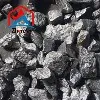
Quick Answer: To judge ferrosilicon quality, check the actual chemical composition against the agreed grade specification, verify the batch Certificate of Analysis (COA), inspect particle size and fines, check for foreign matter or damaged packaging, and compare quality results across multiple batches. Appearance alone cannot confirm chemical quality.
For steelmaking and foundry applications, the right ferrosilicon is the material that consistently meets your required silicon content, impurity limits, particle-size range and acceptance criteria-not necessarily the product with the highest silicon content or the lowest price.
When you purchase ferrosilicon, a supplier's grade name and quoted price are only the starting point. Two offers for the same grade may differ in aluminum content, other impurities, particle-size distribution, fines and batch consistency.
A practical quality check should therefore combine document verification, chemical analysis, physical inspection and supplier evaluation. The following six checks help you determine whether a ferrosilicon shipment matches your production requirements.
1. Check the Chemical Composition Against the Required Grade
Chemical composition is one of the most important indicators of ferrosilicon quality. Start by confirming the required silicon grade, then check the other elements controlled by your purchase specification.
| Element | What to Check | Why It Matters |
|---|---|---|
| Silicon (Si) | The required minimum or range for FeSi45, FeSi65, FeSi72, FeSi75 or another agreed grade. | Determines the silicon grade and contributes to deoxidation and alloying performance. |
| Aluminum (Al) | The maximum aluminum content permitted by the order. | Important when the steelmaking or foundry process has specific aluminum-control requirements. |
| Calcium (Ca) | The applicable maximum or agreed range. | Helps confirm compliance with the selected grade and process requirements. |
| Carbon (C) | The maximum carbon content where specified. | Relevant when the final steel or alloy has a controlled carbon balance. |
| Phosphorus (P) and Sulfur (S) | The applicable maximum limits. | Helps ensure the material meets the chemical requirements of the intended application. |
| Other Controlled Elements | Mn, Cr, B or other elements when required by the selected standard or order. | Confirms compliance with any additional chemistry requirements. |
Important: Do not use one generic composition table as a universal pass-or-fail rule for every ferrosilicon grade. The applicable standard, grade designation and agreed purchase specification determine the limits that should be checked.
For example, a batch labeled FeSi75 should be evaluated against the specified silicon requirement and all agreed impurity limits. A higher measured silicon value does not automatically make a batch better if another controlled element exceeds its permitted limit.
If you need the detailed limits and purchasing considerations for FeSi75, see our Ferrosilicon 75 specification guide.
2. Verify the COA and Batch Traceability
A Certificate of Analysis (COA) records the reported chemical analysis for a material batch. It is more useful for quality verification than a general product brochure, but only when the certificate can be linked to the actual shipment.
Before accepting a COA, check the following items:
| COA Item | What to Verify |
|---|---|
| Product and Grade | The certificate identifies the ferrosilicon grade ordered. |
| Batch or Lot Number | The identification matches the relevant shipment records and packaging marks. |
| Actual Chemical Results | Measured values are compared with the agreed limits, not merely copied from a generic specification sheet. |
| Testing Information | Check the laboratory, test date and analysis method where provided or required. |
| Document Consistency | The grade, batch identification and quantity can be reconciled with the purchase and shipping documents. |
A COA does not, by itself, prove that every bag contains the same material or that the particle-size distribution is correct. The reliability of the reported results also depends on representative sampling and proper batch identification.
For a step-by-step explanation, read our Ferrosilicon 75 COA and certificate of analysis guide.
3. Inspect Particle Size and Fines Content
Ferrosilicon is supplied in different physical forms, including lumps, granules and powder. The appropriate size depends on the feeding equipment, addition method and intended application.
| Product Form | Example Commercial Size | Quality Check |
|---|---|---|
| Lumps | 10–50 mm or 10–100 mm | Check the permitted undersize, oversize and fines content. |
| Granules | A specified range such as 1–3 mm or 3–8 mm | Confirm the screening range and particle-size distribution. |
| Powder | A specified mesh size or particle-size distribution | Check the required fineness and the proportions outside the target range. |
Do not judge size quality simply by looking at a few large pieces. Ask whether the shipment meets the agreed particle-size distribution and whether the permitted fines and oversized fractions are clearly defined.
Ferrosilicon is a brittle ferroalloy, so some particle breakdown can occur during handling, storage and transport. The acceptable amount should be agreed in advance rather than assuming that any fines automatically indicate defective material.
Where size control is important, request a sieve-analysis or screening report and confirm the sampling procedure.
See our ferrosilicon particle-size guide for steelmaking for more detail.
4. Check Appearance, Cleanliness and Packaging
Visual inspection is a useful first screening step. It can help identify obvious contamination or handling problems, but it cannot replace chemical analysis or the agreed inspection procedure.
During a physical inspection, check for:
- Foreign matter: Look for soil, wood fragments, packaging debris, excessive slag or other material that should not be present in the product.
- Excessive fines: Compare the amount of loose powder and broken particles with the agreed size tolerance.
- Moisture or contamination: Check for wet packaging, signs of moisture ingress and visible contamination during storage or transport.
- Packaging damage: Inspect torn bags, leaking seams, damaged lifting loops and other conditions that could cause material loss.
- Identification marks: Confirm that bag labels and lot numbers can be matched with the order and inspection documents.
Ferrosilicon normally has a metallic grey appearance and can show fractured surfaces because of its brittle nature. Color alone is not a reliable way to determine silicon content, impurity levels or compliance with a chemical specification.
If the shipment looks acceptable but its chemical composition has not been verified, its quality remains unconfirmed. Conversely, normal breakage should not automatically be treated as a failure when it falls within the agreed size and fines limits.
5. Compare Quality Results Across Multiple Batches
A single compliant batch does not establish that a supplier can maintain the same quality over time. For recurring purchases, compare several recent COAs and review whether the results remain within the required limits.
| Evaluation Item | What to Look For |
|---|---|
| Silicon Content | Results consistently satisfy the agreed grade requirement. |
| Impurity Control | Controlled elements remain within the required limits from batch to batch. |
| Particle Size | Screening results and fines content remain consistent with the order requirements. |
| Traceability | The supplier can link inspection records to the relevant production lot and shipment. |
| Quality Documentation | The supplier can provide the agreed COA, inspection records and supporting documents. |
When evaluating long-term supply, consistent compliance is often more useful than choosing a supplier based on the highest silicon result in a single test. The target is repeatable material that meets your production requirements, not simply a larger number on one certificate.
6. Confirm the Supplier's Inspection and Quality-Control Process
Supplier evaluation should focus on whether the company can demonstrate that the material supplied matches the agreed specification. A supplier's quality claims are more useful when supported by traceable records and an inspection process.
Before placing a large or recurring order, consider asking for:
- A current technical specification for the required grade.
- A recent batch COA showing the actual chemical analysis.
- Particle-size and fines information when these parameters matter to your process.
- Batch identification and relevant packing records.
- Details of the sampling and inspection procedure.
- Third-party inspection arrangements when required by your purchase contract.
For reference, ASTM A100-07(2024), Standard Specification for Ferrosilicon, covers ferrosilicon grades for steelmaking and foundry uses and addresses chemical composition, size requirements and chemical analysis. Use the standard specified in your contract and confirm the applicable grade rather than assuming that every commercial product follows identical limits.
You can also compare the available grades and forms on our ferrosilicon product overview.
Need Ferrosilicon That Meets Your Specification?
Send us your required grade, silicon content, impurity limits, particle size and quantity. We can discuss the applicable product specification, batch analysis and inspection requirements before quotation.
Contact Us for Ferrosilicon Quality DetailsCommon Mistakes When Judging Ferrosilicon Quality
Judging Quality by Appearance Alone
A clean-looking surface does not prove that the chemical composition meets the required grade. Use visual inspection to screen for obvious problems, then verify chemistry through the agreed analysis procedure.
Assuming Higher Silicon Content Always Means Better Quality
The appropriate grade depends on the intended application. A batch should meet the required silicon level and all other controlled limits. Higher silicon content cannot compensate for a failure to meet another mandatory specification.
Using Raw Silica Specifications to Accept Finished Ferrosilicon
Silica purity and silica particle size are relevant to furnace charge preparation and production control. However, a buyer cannot determine whether the finished ferrosilicon meets its purchase specification merely by knowing the silica raw material's purity or size. Finished-product acceptance should be based on the agreed chemical composition, physical requirements and inspection records.
Checking the COA Without Matching the Batch
A COA for a different lot or an unrelated general specification sheet does not establish the quality of the shipment being received. Match the report to the actual lot and agreed order requirements.
Ignoring Fines and Handling Damage
Because ferrosilicon can break during handling, inspect the actual size distribution and compare it with the permitted tolerance. Do not use an undefined visual standard in place of an agreed particle-size acceptance criterion.
Ferrosilicon Quality Inspection Checklist
Before accepting a shipment, use this checklist to confirm the main quality requirements.
- Confirm the correct ferrosilicon grade and applicable standard.
- Compare the actual Si content with the required minimum or range.
- Check Al, Ca, C, P, S and any other controlled elements.
- Verify that the COA corresponds to the relevant batch.
- Check particle size, permitted fines and oversized material.
- Inspect the material for foreign matter and visible contamination.
- Check the packaging, bag marks and lot identification.
- Review historical batch results when assessing recurring supply.
- Arrange representative sampling or third-party inspection when required.
For a specific FeSi75 order, you can also review our Ferrosilicon 75 product specifications and FeSi75 vs FeSi72 grade comparison before confirming your purchase requirements.
Frequently Asked Questions About Ferrosilicon Quality
Can you judge ferrosilicon quality by its appearance?
Appearance can help identify obvious contamination, damaged packaging or excessive visible fines. It cannot establish the exact silicon content or impurity levels. Chemical analysis and the agreed inspection criteria are needed to verify compliance.
What is the most important test for ferrosilicon quality?
There is no single test that covers every quality requirement. Chemical analysis verifies composition, while particle-size inspection, physical checks and batch traceability address other aspects of product acceptance.
Does a COA guarantee that a shipment meets the specification?
A COA provides reported analytical results for a particular batch. Its usefulness depends on representative sampling, correct lot identification and comparison with the agreed specification. Additional inspection may be needed to verify size, packaging or the physical condition of the delivered material.
Is ferrosilicon with more silicon always better?
No. The suitable grade depends on the process and purchase specification. The material must meet the required silicon content as well as all other applicable chemical and physical requirements.
How can I assess a ferrosilicon supplier before a large order?
Review the technical specification, recent batch COAs, particle-size information, traceability records and inspection arrangements. For higher-risk or recurring orders, consider agreeing on representative sampling and independent inspection before shipment.
Looking for a Reliable Ferrosilicon Supply?
Tell us your grade, required chemical composition, particle size, quantity and destination. We can help you confirm the applicable specification and discuss the inspection and documentation requirements for your order.
Review our ferrosilicon product range or contact us with your purchase requirements.
Request Ferrosilicon Information