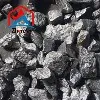
Quick Answer: Quartz quality in ferrosilicon production is determined by more than its SiO2 content. Chemical purity, impurity distribution, lump size, mechanical strength, thermal stability, softening behavior and reducibility all influence how the silica source performs in a submerged arc furnace.
Poorly selected quartz can generate excessive fines, disturb charge permeability, contribute to slag formation and affect silicon recovery. For consistent ferrosilicon production, producers should evaluate both the chemical analysis and physical behavior of quartz under furnace conditions. The acceptance limits must match the specific furnace and charge recipe.
Key Takeaways
- SiO2 is the primary silicon source in ferrosilicon smelting.
- Al2O3, CaO, MgO and other impurities can contribute to slag formation or affect the final alloy chemistry.
- Quartz decrepitation produces fines that can reduce furnace burden permeability.
- Lump size, mechanical strength and softening behavior influence material movement and gas flow.
- Silicon recovery depends on the complete furnace system, not quartz purity alone.
- Batch consistency and representative sampling are essential for raw-material quality control.
Ferrosilicon is produced through the carbothermic reduction of silica in a submerged arc furnace. Quartz or quartzite provides the main silicon source, while carbonaceous materials act as reducing agents and an iron source is added to produce the iron-silicon alloy.
Because this process operates at high temperatures and involves complex chemical and physical reactions, the quality of the raw materials has a significant influence on furnace operation.
However, two quartz sources with similar SiO2 contents may not behave identically during smelting. Their mineral composition, impurity distribution, mechanical strength, thermal stability and reducibility can differ considerably.
For ferrosilicon producers, understanding these differences is important when evaluating raw-material suppliers, controlling the furnace burden and maintaining consistent alloy chemistry.
Table of Contents
- The Role of Quartz in Ferrosilicon Production
- Quartz Chemical Purity and Impurity Control
- Quartz Lump Size and Charge Permeability
- Thermal Stability and Quartz Decrepitation
- Softening Behavior and Reducibility
- How Quartz Quality Affects Furnace Performance
- Silicon Recovery and Final Alloy Quality
- Quartz Quality Inspection Checklist
- How to Evaluate a Quartz Supplier
- Frequently Asked Questions
- Technical References
1. The Role of Quartz in Ferrosilicon Production
Quartz and quartzite are silica-bearing raw materials used in ferrosilicon smelting. They provide the SiO2 required for silicon reduction, while carbonaceous materials supply the carbon needed for the reaction.
In a simplified form, the overall carbothermic reduction reaction can be expressed as:
SiO2 + 2C → Si + 2CO
Simplified overall reaction
Actual ferrosilicon smelting is more complex than this overall equation. Silicon monoxide (SiO) gas and silicon carbide (SiC) participate in intermediate reactions, and iron is introduced into the furnace to form the final Fe-Si alloy.
The quality of the silica source therefore influences several parts of the process:
- Silicon input: SiO2 content determines the theoretical amount of silicon available in the raw material.
- Slag formation: Gangue minerals and impurity oxides contribute to the non-metallic material in the furnace.
- Charge behavior: Lump size, strength and fines content influence the structure and permeability of the burden.
- Reduction efficiency: Thermal behavior and reducibility affect the interaction between silica and carbonaceous materials.
Quartz should therefore be evaluated as both a chemical raw material and a physical component of the furnace burden.
Carbon materials are equally important in this system. Read our guide to coke selection for ferrosilicon smelting to understand how fixed carbon, ash, particle size, resistivity and reactivity influence furnace performance.
2. Quartz Chemical Purity and Impurity Control
Chemical purity is one of the first properties examined when selecting quartz for ferrosilicon production. A high SiO2 content provides more theoretical silicon per tonne of raw material, while the other mineral constituents determine the impurity load introduced into the furnace.
2.1 Silicon Dioxide Content
SiO2 is the principal chemical component of quartz used in ferrosilicon production.
A higher SiO2 content generally means that less non-silica material enters the furnace with each tonne of quartz. This can reduce the gangue load and make the raw-material balance easier to control.
Some technical and industrial references use approximately 97–98% SiO2 or higher as a screening reference for particular silica sources. However, this should not be treated as a universal acceptance specification. The required purity depends on the target alloy grade, quartz source, furnace design and complete charge composition.
2.2 Important Impurities in Quartz
Besides SiO2, quartz may contain several other oxides and trace elements. Their behavior during smelting is not identical.
| Component | Potential Effect | What Producers Should Check |
|---|---|---|
| Al2O3 | Contributes to alumina-bearing slag and can influence aluminum input into the overall process. | Actual Al2O3 content and its variation between batches. |
| Fe2O3 | Iron-bearing material may be reduced under furnace conditions and contribute to the metal phase. | Total iron content and its relationship with the specified iron source. |
| CaO | Participates in CaO-SiO2-Al2O3 slag formation. | Actual content and combined slag chemistry. |
| MgO | Contributes to the oxide load and can affect slag composition. | Content and variation between deliveries. |
| TiO2 | May affect the impurity balance and distribution of titanium in the production system. | Trace-element content according to the target alloy grade. |
| P and B | May be relevant to the final alloy specification, depending on their source and behavior during smelting. | Trace-element analysis where these elements are controlled. |
Al2O3, CaO and MgO can contribute to the formation of silicate-based slag. However, it is inaccurate to assume that every impurity simply enters the slag.
The distribution of elements between the metal, slag and gas phases depends on the chemical form of the impurity, furnace temperature, reducing conditions and interactions with other charge materials.
For example, iron-bearing oxides can be reduced under suitable furnace conditions. Their behavior should not be grouped together with that of alumina and lime.
2.3 Why Total Impurity Content Is Not Enough
Two quartz samples may have similar total impurity levels but different individual oxide compositions.
For example, one sample may contain more alumina, while another contains more calcium-bearing minerals. Although their total impurity contents may appear similar, their contribution to slag chemistry can differ.
It is therefore better to evaluate individual oxide contents rather than relying exclusively on the total impurity percentage.
Producers should also consider the other sources of impurities entering the furnace, including coke ash, iron-bearing materials, additives and furnace-related contamination.
3. Quartz Lump Size and Charge Permeability
Particle size is an important physical property of quartz used in submerged arc furnace operations. The charge must maintain a suitable structure so that solid materials can move downward and reaction gases can flow upward through the burden.
3.1 Why Consistent Lump Size Matters
A properly screened quartz supply helps maintain a more predictable particle-size distribution.
When the size distribution is inconsistent, smaller particles may fill the spaces between larger lumps. This can change the void structure of the furnace burden and increase resistance to gas flow.
The main considerations include:
- Oversized lumps: May have insufficient reaction surface relative to smaller particles and may behave differently during heating and reduction.
- Excessive undersize material: Can fill the voids between larger particles and reduce charge permeability.
- Wide size distribution: May cause uneven burden packing and inconsistent material movement.
- Excessive fines: Can be carried by furnace gases or contribute to unstable charge conditions.
3.2 There Is No Universal Quartz Lump Size
The appropriate quartz size range depends on furnace design, electrode arrangement, charge composition and operating practice.
Some industrial and technical references describe lump ranges such as 10–150 mm or narrower ranges for particular production systems. These figures are examples, not a universal purchasing specification.
Before purchasing quartz, producers should define:
- Required nominal lump-size range.
- Maximum permitted undersize fraction.
- Maximum permitted oversized fraction.
- Screening and sampling method.
- Acceptable size variation between deliveries.
Particle-size control should be based on the complete furnace burden rather than copying another producer's specification.
4. Thermal Stability and Quartz Decrepitation
Quartz must withstand rapid heating when it enters the upper region of a submerged arc furnace. Its thermal strength determines how well the lumps maintain their physical integrity during this temperature increase.
4.1 What Is Quartz Decrepitation?
Quartz decrepitation refers to the cracking, fragmentation or disintegration of quartz lumps during heating.
It can occur because of thermal gradients, internal defects, mineral inclusions and phase transformations within the silica material.
When quartz breaks into smaller particles before reaching the appropriate reaction zone, the amount of fines in the furnace burden increases.
4.2 How Decrepitation Affects Furnace Operation
The potential consequences can be explained as follows:
Quartz Decrepitation Process
↓
↓
↓
↓
The severity depends on the amount of fines generated and how the furnace responds to the changed burden structure.
4.3 Quartz Phase Transformations
Silica undergoes several temperature-dependent phase transformations during heating. The transformation behavior varies with the original silica phase, mineral structure and thermal history.
Some transformations involve volume changes that can contribute to internal stress and cracking. However, the thermal behavior of different quartz sources is not identical.
Research comparing different quartz types has shown that their resistance to disintegration during heating can vary even when their chemical compositions appear similar.
For this reason, SiO2 purity alone cannot fully predict the thermal performance of quartz in ferrosilicon production.
5. Softening Behavior and Reducibility
Besides chemical composition and thermal strength, the softening and reduction behavior of quartz also matter during smelting.
5.1 Softening and Melting Behavior
Quartz undergoes structural and physical changes as it moves through different furnace temperature zones.
The softening and melting behavior influences how the silica-bearing material interacts with other components of the charge and the reaction environment.
A suitable thermal behavior should be evaluated in relation to the furnace's actual temperature profile and burden movement.
Simply selecting quartz with the highest softening temperature is not a sufficient quality criterion. The material must behave appropriately within the specific furnace and reduction process.
5.2 What Is Quartz Reducibility?
Reducibility describes how effectively the silica source participates in the reduction process under specified test and operating conditions.
It is affected by several properties, including:
- Silica mineral structure and phase composition.
- Impurity distribution and mineral inclusions.
- Particle size and exposed reaction surfaces.
- Thermal behavior and softening characteristics.
- Interaction with carbonaceous reducing materials.
Quartz sources with similar SiO2 percentages may therefore exhibit different reduction behavior.
When comparing quartz suppliers, producers should consider available reducibility test results together with thermal stability and chemical analysis.
6. How Quartz Quality Affects Furnace Performance
The influence of quartz quality is best understood by looking at the interaction between chemical composition, burden structure, gas flow and furnace reactions.
6.1 Slag Formation and Furnace Burden
Although ferrosilicon production has traditionally been described as a nearly slag-free process, silicate-based slag can form and accumulate within the furnace.
Quartz impurities such as Al2O3 and CaO can participate in slag formation. However, slag chemistry is not determined by quartz alone. Coke ash, iron sources, other additions and furnace conditions also contribute.
Recent research has shown that accumulated CaO-SiO2-Al2O3 slag can obstruct material and gas flow, potentially reducing metal yield and increasing energy consumption.
Therefore, the complete charge chemistry should be evaluated rather than treating quartz as the only source of slag-forming materials.
6.2 Gas Permeability and Material Movement
Gas permeability is important because the submerged arc furnace relies on interactions between ascending gases and descending solid charge materials.
Excessive quartz fines can fill the voids between larger particles and increase the resistance to gas movement.
Changes in permeability may affect gas distribution, burden movement and the overall reaction environment.
6.3 Electricity Consumption
Ferrosilicon smelting is an energy-intensive process. Quartz quality can influence electricity consumption through its effects on charge composition, fines generation, slag formation, material movement and silicon recovery.
For example, excessive gangue material may increase the amount of non-product material handled by the furnace, while poor thermal stability may disturb the burden structure.
However, high-purity quartz does not guarantee a fixed reduction in electricity consumption.
Specific energy consumption also depends on:
- Target ferrosilicon grade and silicon content.
- Carbon reductant type, ash content and reactivity.
- Iron source and overall charge composition.
- Furnace design and electrical operating conditions.
- Electrode position and burden control.
- Silicon recovery and production rate.
To evaluate the real benefit of a quartz change, compare electricity consumption and silicon recovery over comparable production periods while controlling other operating variables.
7. Silicon Recovery and Final Alloy Quality
Silicon recovery describes how much of the silicon introduced through the raw materials is ultimately recovered in the produced alloy, based on the material-balance method used by the producer.
Quartz quality can influence this result, but it is not the only determining factor.
7.1 Factors Affecting Silicon Recovery
The following factors should be considered together:
| Factor | Possible Influence |
|---|---|
| SiO2 purity | Determines the theoretical silicon content of the silica-bearing raw material. |
| Quartz reducibility | Influences how the silica source participates in the reduction reactions. |
| Thermal stability | Affects fines generation and furnace burden behavior. |
| Particle-size distribution | Influences gas permeability and material movement. |
| Carbon reductant properties | Affect carbon balance, SiO reactions and furnace operating conditions. |
| Furnace operation | Influences reaction conditions, gas losses, material movement and metal production. |
A producer should therefore evaluate silicon recovery using actual production and material-balance data rather than assuming that every increase in quartz purity produces the same improvement.
7.2 Does Quartz Quality Affect the Chemical Composition of Ferrosilicon?
Yes. Some elements introduced through quartz may transfer into the final alloy, while others may report to slag or gas phases depending on their chemical form and furnace conditions.
This is particularly relevant when producing ferrosilicon for applications with tighter impurity requirements.
However, final alloy chemistry also depends on the carbon reductant, iron source, furnace conditions, raw-material handling and sampling procedures.
For buyers, the most reliable way to verify finished-product quality is to check the actual batch analysis rather than infer it from the producer's quartz specification.
See our guide on how to distinguish the quality of ferrosilicon for a practical inspection procedure.
8. Quartz Quality Inspection Checklist
When evaluating quartz for ferrosilicon production, a chemical analysis alone is not sufficient. Producers should combine laboratory testing, particle-size inspection and physical-property evaluation.
| Inspection Item | What to Check | Purpose |
|---|---|---|
| SiO2 | Actual content and agreed minimum. | Confirm the primary silicon source. |
| Al2O3 | Actual content and batch variation. | Control alumina input and slag chemistry. |
| Fe2O3 | Iron-bearing impurities. | Evaluate the total iron input and its effect on the charge balance. |
| CaO and MgO | Individual oxide contents. | Assess potential slag-forming contributions. |
| TiO2, P and B | Trace-element analysis where required. | Control elements relevant to the target alloy. |
| Particle Size | Nominal lump range and sieve analysis. | Maintain consistent burden structure. |
| Fines Content | Undersize percentage before charging. | Control burden permeability. |
| Mechanical Strength | Resistance to breakage during transport and handling. | Reduce unintended fines generation. |
| Thermal Stability | Cracking and disintegration during heating tests. | Evaluate decrepitation behavior. |
| Softening Behavior | Thermal response under specified test conditions. | Assess compatibility with the furnace process. |
| Reducibility | Available test results under defined conditions. | Compare the reduction behavior of different silica sources. |
| Batch Consistency | Analysis across several deliveries. | Identify raw-material variation. |
8.1 Define Acceptance Limits Before Purchasing
There is no single chemical and physical specification that suits every ferrosilicon furnace.
Before purchasing, producers should establish acceptance limits according to:
- Target ferrosilicon grade.
- Furnace design and burden characteristics.
- Existing charge recipe and carbon reductant.
- Required production rate and silicon recovery.
- Impurity limits for the final alloy.
These requirements should be documented in the purchase specification and used consistently for sampling and incoming-material inspection.
9. How to Evaluate a Quartz Supplier
For ferrosilicon producers, choosing a quartz supplier should involve more than comparing the quoted price per tonne.
The following checks can help assess whether a supplier can provide stable raw materials.
9.1 Request a Representative Chemical Analysis
Ask for the actual SiO2 content and individual impurity results rather than relying only on a general description such as high-purity quartz.
Confirm the sampling method, test method and reporting basis so that different supplier reports can be compared consistently.
9.2 Check Physical Quality
Request information about particle-size distribution, fines content, mechanical strength and thermal stability.
Where the furnace is sensitive to quartz decrepitation, ask whether the supplier can provide relevant test results.
9.3 Compare Multiple Deliveries
A single good laboratory report does not establish long-term consistency.
Compare several consecutive batches to identify changes in chemical composition, particle size and physical properties.
9.4 Evaluate the Complete Raw-Material System
Quartz should be assessed together with coke or other carbonaceous reducing materials and the iron source.
For example, changes in coke ash can alter the furnace's total impurity input even if quartz quality remains unchanged.
Review the complete raw-material specification rather than evaluating each material independently.
9.5 Verify the Finished Ferrosilicon
Raw-material inspection is only one part of production quality control. The final ferrosilicon must still meet the chemical composition and physical specifications agreed with the customer.
For FeSi75 buyers, compare the actual Si, Al, C, P and S results with the agreed purchasing limits. Our Ferrosilicon 75 COA guide explains how to verify batch analysis and traceability.
You can also review our Ferrosilicon 75 product specifications for available chemical grades, particle sizes and packing options.
For more information about downstream use, see Ferrosilicon 75 for steelmaking.
Need Ferrosilicon With Consistent Chemical Quality?
When purchasing ferrosilicon, check the actual chemical composition, impurity limits, particle size and batch COA against your production requirements.
ZHEN AN supplies ferrosilicon grades including FeSi75 and FeSi72 for steelmaking and foundry applications. Contact us with your required grade, chemical specification, particle size and order quantity to discuss product availability and quotation.
Frequently Asked Questions
1. What SiO2 content is suitable for ferrosilicon production?
Some industrial references use approximately 97–98% SiO2 or higher as a screening reference for particular silica sources. The actual acceptance limit depends on the furnace, target ferrosilicon grade, impurity requirements and charge composition.
2. Which impurities in quartz are important for ferrosilicon smelting?
Important components to monitor include Al2O3, Fe2O3, CaO, MgO and TiO2. Trace elements such as phosphorus and boron may also matter for certain grades. Their behavior during smelting differs, so individual analysis is preferable to total impurity content alone.
3. What is quartz decrepitation?
Quartz decrepitation is the cracking or fragmentation of quartz lumps during heating. It produces fines that can change furnace burden permeability and affect gas flow and material movement.
4. Does higher quartz purity always mean higher silicon recovery?
No. Higher SiO2 content increases the theoretical silicon input per tonne of quartz, but actual silicon recovery also depends on reducibility, thermal stability, carbon reactivity, charge permeability, furnace operation and gas losses.
5. How can producers check quartz quality before smelting?
Check the chemical analysis, particle-size distribution, fines content, mechanical strength, thermal stability and reducibility where required. Compare results from multiple batches and use acceptance limits defined for the specific furnace.
Technical References
The following technical studies provide further information about silica raw materials, thermal stability, burden permeability and slag formation in silicon and ferrosilicon production.
- Legemza, J. et al. (2021). New Approach in Research of Quartzes and Quartzites for Ferroalloys and Silicon Production. Metals, 11(4), 670.
- Disintegration of Six Different Quartz Types during Heating to 1600 °C. Minerals, 13(2), 132, 2023.
- Bao, S. and Ringdalen, E. (2025). Slag formation in silicon and ferrosilicon production using quartz, limestone and iron source. International Journal of Minerals, Metallurgy and Materials, 32, 859–868.
- Gas Flow and Pressure Drop in Charge Material in Silicon Production. Journal of The Minerals, Metals and Materials Society.
Conclusion
Quartz quality is an important part of ferrosilicon raw-material control. Its chemical purity determines the theoretical silicon input, while impurity composition, lump size, mechanical strength, thermal stability and reducibility influence the behavior of the complete furnace burden.
In particular, quartz decrepitation and excessive fines can affect charge permeability, while slag formation and the interaction between raw materials influence furnace operation and silicon recovery.
For producers, the most reliable approach is to evaluate quartz through both chemical and physical testing and compare its performance under consistent furnace conditions. For buyers, raw-material control is a useful indicator of production management, but the final acceptance decision should always be based on the delivered ferrosilicon specification and batch COA.