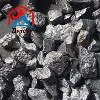
Silicon Carbide (SiC) is the critical refractory backbone for the lithium battery industry in 2026. Due to its superior thermal conductivity and high-temperature strength, Silicon Carbide components-such as saggers, furnace linings, and structural supports-are essential for the high-temperature sintering of cathode and anode materials. Utilizing high-quality Silicon Carbide 88 90 ensures stable thermal distribution and extends the service life of battery kilns, significantly reducing maintenance costs for manufacturers.
1. The Hidden Connection: Silicon Carbide and Battery Cells
While the global market discusses the "Silicon Carbide Battery" in terms of EV driving range, a parallel revolution is happening in the manufacturing plants. The production of lithium-ion battery (LiB) materials-specifically LFP (Lithium Iron Phosphate) and NCM (Nickel Cobalt Manganese)-requires precise thermal processing.
In 2026, Silicon Carbide 88 90 has transitioned from a traditional metallurgical deoxidizer into a high-performance refractory raw material for battery kilns. Without the high thermal conductivity of SiC, the rapid and uniform heating required for high-capacity battery chemicals would be impossible to achieve at scale.
2. Key Applications: SiC as the Kiln "Skeleton"
The sintering of battery materials occurs in massive tunnel kilns or roller hearth kilns. Here, Silicon Carbide 88 90 is utilized in several critical components:
A. SiC Saggers and Crucibles
Cathode materials are placed inside "saggers" for heating. Traditional alumina saggers have low thermal conductivity, leading to "cold spots" in the material core. By using Silicon Carbide 88 90, manufacturers ensure that heat reaches the center of the batch instantly, ensuring chemical consistency in every battery cell.
B. High-Temperature Structural Supports
Battery kilns operate 24/7. The beams and pillars supporting the kiln cars must withstand heavy loads at 1300°C+ without sagging. Silicon Carbide 88 90 maintains its mechanical strength where other refractories soften, preventing structural failure and expensive downtime.

3. Technical Comparison: Why SiC 88 90 Dominates 2026
Why are kiln designers specifically requesting Silicon Carbide 88 90 instead of other materials? The data tells the story.
Table 1: Refractory Performance Matrix (SiC vs. Alumina)
| Property | Silicon Carbide 88 90 | Alumina | Impact on Battery Production |
| Thermal Conductivity | Excellent | Poor | SiC reduces sintering time by 20% |
| Thermal Shock Resistance | Superior | Moderate | SiC components last 3x longer |
| Chemical Inertness | High | High | Prevents contamination of battery powder |
| Energy Efficiency | High | Low | SiC lowers "Cost per Kilogram" |
4. Cost-Efficiency: The Strategic Value of ZhenAn SiC 88 90
In the 2026 battery market, the competition is about "Cost per Kilowatt-hour." By utilizing ZhenAn's Silicon Carbide 88 90, refractory producers can optimize their formulations:
- Reduced Cycle Times: Because SiC transfers heat faster, the sintering cycle is shortened. This increases the total annual output of the kiln without building new lines.
- Thermal Stability: SiC 88 90 has a very low coefficient of thermal expansion. This prevents saggers from cracking during the rapid cooling phase, a common issue that drains profits in battery plants.
- Sustainable Sourcing: Our Silicon Carbide 88 90 is produced with advanced emission controls, aligning with the "Green Battery" requirements of European and North American buyers.
5. FAQ: Expert Insights into SiC Battery Refractories
Q1: How does SiC 88 90 contribute to "Energy Savings" in battery plants?
Answer: In 2026, electricity is a major cost factor. Silicon Carbide's high thermal conductivity allows the heat to penetrate the material faster, meaning the kiln heaters don't have to work as hard or as long to reach the target temperature. This can save up to 15% in power costs.
Q2: Is Silicon Carbide 88 90 too "impure" for lithium battery applications?
Answer: Not at all. For kiln components (structural supports, linings, sagger bodies), the Silicon Carbide 88 90 grade provides the ideal structural integrity. The trace impurities are locked within the SiC matrix and do not interact with the battery chemicals, which are usually protected by a coating or high-purity inner liner.

One-Stop Metallurgical Material Factory In China
Get the most competitive March 2026 factory prices for Silicon Carbide 88 and 90. With our massive stock at Huangpu Port and fast global shipping, we help you secure your supply chain and maximize production ROI.