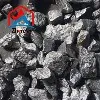
Quick Answer: Ferrosilicon is an iron-silicon alloy, while ferrosilicon granules are a smaller particle form of that alloy produced by crushing and screening. Granules generally have a more controlled size distribution for specific feeding and dosing requirements. The main difference is physical form, not necessarily chemical composition. The right choice depends on your application, required grade and particle size.
What Is Ferrosilicon?
Ferrosilicon (FeSi) is an iron-silicon alloy produced by smelting silica, carbon-based reducing materials and an iron source in an electric furnace. It is widely used in steelmaking as a deoxidizer and silicon alloying addition. It is also used in foundry production and selected metallurgical reduction processes.
Commercial ferrosilicon is available in different grades, including FeSi45, FeSi65, FeSi70, FeSi72 and FeSi75. These designations primarily indicate the silicon content range. Other chemical elements, including aluminum, calcium, manganese, chromium, phosphorus, sulfur and carbon, may also need to meet specified limits.
Ferrosilicon can be supplied in several physical forms, including lumps, granules, powder and briquettes. The appropriate form depends on the feeding system, addition method, handling requirements and intended metallurgical application.
What Are Ferrosilicon Granules?
Ferrosilicon granules are produced by crushing larger ferrosilicon pieces and screening the crushed material into a specified particle-size range. This process separates the alloy into different size fractions without intentionally changing its underlying chemical grade.
Common commercial sizes include 0.3–1 mm, 1–3 mm and 3–8 mm. Other sizes can be specified according to the application and production requirements. The exact available range depends on the supplier and the agreed order specification.
Compared with larger lumps, granules have a greater surface area relative to their mass. This can affect how they are handled, fed and exposed to molten metal. More uniform particles can also help with controlled dosing when the feeding equipment is designed for granular material.
However, smaller particles are not automatically better for every process. Fine material may generate more dust, oxidize more readily and require closer control of storage and handling. Particle size should therefore be selected according to the intended use rather than appearance alone.
Ferrosilicon vs Ferrosilicon Granules: Key Differences
The most important distinction is that ferrosilicon describes the alloy, while granules describe one of its physical forms. A product sold as ferrosilicon granules can still be FeSi45, FeSi65, FeSi72 or another grade, provided its chemical composition meets the agreed specification.
| Comparison | Ferrosilicon Lumps | Ferrosilicon Granules |
|---|---|---|
| Physical form | Larger, irregular pieces | Smaller, screened particles |
| Typical size examples | 10–30 mm, 30–50 mm, 50–100 mm | 0.3–1 mm, 1–3 mm, 3–8 mm |
| Chemical grade | Depends on the specified FeSi grade | Can retain the same grade as the source alloy |
| Handling | Generally easier to handle with less dust | Requires attention to fines and particle-size consistency |
| Feeding and dosing | Suitable for many bulk additions | Can suit controlled feeding and smaller additions |
| Typical selection priority | Bulk handling and charging requirements | Specified particle size and feeding accuracy |
Neither form is universally superior. Larger lumps may be more practical for bulk additions, while granules may be more suitable when the process requires smaller particles. Actual melting behavior and silicon recovery also depend on the furnace or ladle conditions, addition method and material specification.
Chemical Composition of Ferrosilicon Granules
Because granules are processed from ferrosilicon alloy, their chemical composition generally follows the grade of the source material. Crushing and screening primarily change the particle size, although processing, segregation and handling can affect the consistency of the delivered size fractions and the condition of the material.
The following table retains the principal composition limits listed in the original product information. These are reference values for the listed grades, not a substitute for a complete product standard or an agreed purchase specification.
| Grade | Si (%) Min. | Al (%) Max. | Ca (%) Max. | P (%) Max. |
|---|---|---|---|---|
| FeSi45 | 45 | 3.0 | 1.0 | 0.04 |
| FeSi65 | 65 | 3.0 | 1.0 | 0.04 |
Note: The table shows selected limits from the existing page. Confirm all required elements, including Mn, Cr, S and C where applicable, against the supplier's complete specification and batch certificate of analysis (COA).
For procurement, silicon content alone is not enough. Two batches with the same nominal grade can have different impurity levels or particle-size distributions. Buyers should specify both the chemical requirements and the physical form to avoid receiving material that does not match their production needs.
Available Ferrosilicon Sizes and Forms
Ferrosilicon can be supplied in different physical forms according to the application. The sizes below are examples of commercial options, not universal requirements. The available range and acceptable size tolerance should be confirmed before placing an order.
| Form | Example Sizes | Selection Consideration |
|---|---|---|
| Lumps | 10–30 mm, 30–50 mm, 50–100 mm | Bulk charging and handling |
| Granules | 0.3–1 mm, 1–3 mm, 3–8 mm | Controlled particle size and dosing |
| Powder | 65 mesh, 200 mesh, 300 mesh, 325 mesh | Fine-particle applications and blending |
| Briquettes | 50 × 50 mm or customized | Process-specific handling and feeding |
For a more detailed explanation of particle-size selection, read our Ferrosilicon Particle Size Guide. It explains how lumps, granules and powder differ in size and handling requirements.
How to Choose Between Ferrosilicon Lumps and Granules
The choice should start with your production process rather than the product name. Consider the following factors before confirming the grade and particle size.
1. Application and Addition Method
For bulk steelmaking additions, larger lumps may be more convenient for charging and handling. Granules may be suitable for smaller or controlled additions when the feeding equipment accepts the specified particle size. The appropriate form depends on the operating practice of your plant.
2. Required Particle-Size Distribution
Do not specify only a general term such as "granules." State the minimum and maximum particle sizes and, where necessary, the permitted proportion of undersized and oversized material. A clearly defined size range helps reduce inconsistencies between shipments.
3. Chemical Composition and Grade
Confirm the required silicon content and impurity limits independently of particle size. If your process requires FeSi65 granules, for example, the order should identify both the FeSi65 chemical grade and the required granular size range.
4. Fines, Packaging and Storage
Excessive fines can affect material handling and dosing. Fine particles also have greater surface area relative to their mass and may be more susceptible to oxidation under unsuitable storage conditions. Confirm the acceptable fines level, packaging method and storage requirements for the intended application.
5. Quality Inspection and Documentation
Request a batch-specific COA and verify the agreed chemical composition. Where particle size is critical, include the size range and tolerance in the purchase specification. Third-party inspection can be considered when required by the contract or the buyer's quality-control procedures.
Packaging and Order Requirements
Ferrosilicon granules can be packed in 25 kg bags, 1 MT big bags or other agreed packaging formats, depending on the order and shipping requirements. Packaging should protect the material during handling and transportation and should be suitable for the particle size being supplied.
Before requesting a quotation, prepare the following information:
- Required grade, such as FeSi45, FeSi65, FeSi72 or FeSi75.
- Target particle size and acceptable size tolerance.
- Chemical composition and impurity limits.
- Order quantity and packaging preference.
- Destination port and expected shipment schedule.
- COA, inspection and other documentation requirements.
Providing these details allows the supplier to confirm whether the required grade and size are available and prepare a quotation that reflects your actual purchasing requirements.
Frequently Asked Questions
Are ferrosilicon and ferrosilicon granules the same material?
Granules are a physical form of ferrosilicon, produced by crushing and screening the alloy. They can retain the same chemical grade as the source material, provided the finished product meets the specified composition.
What is the difference between ferrosilicon lumps and granules?
The main difference is particle size and physical form. Lumps are larger pieces, while granules are smaller, screened particles. This affects handling, feeding and the way the material interacts with molten metal.
What particle sizes are available for ferrosilicon granules?
Commercial examples include 0.3–1 mm, 1–3 mm and 3–8 mm. Availability depends on the supplier, and customized sizes may be possible. Confirm the exact range and tolerance before ordering.
Are ferrosilicon granules always better than lumps?
No. Granules may be better suited to controlled feeding or smaller additions, while lumps can be more practical for bulk charging. The right choice depends on the equipment, addition method and process requirements.
Can standard ferrosilicon granules be used as a foundry inoculant?
Ferrosilicon is used in foundry applications, but a standard granular grade is not automatically equivalent to a specialized inoculant. Confirm the active-element composition, particle size and required treatment effect before selecting the material.
Request Ferrosilicon Granules for Your Application
Whether you need ferrosilicon lumps or granules, specify your grade, particle size, chemical limits, quantity and packaging requirements before ordering. We can review your requirements and discuss the available product specifications and shipment arrangements.
Need a quotation for ferrosilicon granules?
Contact Us for Specifications and PricingFor additional product information, visit our Ferrosilicon Product Range or read our guide to Ferrosilicon Granules Applications.