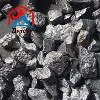
Silicon-carbon alloys have the potential to serve as substitutes for ferrosilicon, silicon carbide, and carburizers, while also decreasing the required quantity of deoxidizers. Silicon-carbon balls are produced by crushing a silicon-carbon alloy and subsequently pressing it into spherical form in conjunction with other materials. These balls are utilized extensively for deoxidation processes in steel manufacturing facilities.
Functions of Silicon-Carbon Balls
1. Deoxidizing Effect: Silicon-carbon balls exhibit a significant deoxidizing effect, particularly within the steel industry. Their application can reduce deoxidation time by approximately 10% to 30%. This efficiency is primarily attributed to the high silicon content present in silicon-carbon balls. Silicon serves as a crucial deoxidizing agent in steel production, as it possesses a strong affinity for oxygen, leading to the formation of silica. Consequently, the incorporation of silicon-carbon balls in steelmaking facilitates rapid deoxidation.
2. Enhancement of Steel Purity: Beyond their deoxidizing capabilities, silicon-carbon balls play a vital role in reducing the oxygen content of molten steel. This reduction effectively decreases the oxide content, thereby significantly enhancing the purity of the molten steel and improving the overall quality of the final product. Additionally, the use of silicon-carbon balls contributes to a reduction in the volume of smelting slag.
3. Impact on Casting Quality: In the casting process, silicon-carbon balls are equally important. Their application promotes the crystallization of graphite and the formation of ductile iron, which in turn enhances the quality of castings. Furthermore, the use of silicon-carbon balls significantly mitigates the clogging of cast iron nozzles, thereby improving operational efficiency.