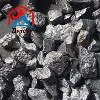
Broadly speaking, ferroalloy refers to products such as deoxidizers and elemental additives added during the steelmaking process to make the steel have certain characteristics or meet certain requirements. As an important mixture in the steel production process, it can remove oxygen, enhance performance, and improve the structure.
Ferro alloy: alloy additives, deoxidizers, desulfurizers and denaturants, consisting of not less than 4% iron or one (including one) metallic or non-metallic element;
Alloy Additives: Ferrous alloys used to obtain the desired (controllable) melt composition; Deoxidizers: Ferrous alloys used to reduce the oxygen content in metals;
Desulfurizer: Silicon-manganese alloy is an iron alloy used to reduce the sulfur content in metals;
Denaturant: adding a small amount of iron alloy that changes the properties of non-metallic elements and/or impurities, resulting in changes in alloy properties;

Ferro silicon: Iron and silicon alloys containing silicon between 8.0% and 95.0%.
Ferro manganese: Iron and manganese alloys contain manganese between 60.0% and 95.0%.
Micro-carbon ferro manganese: Ferromanganese contains no more than 0.15% carbon.
Low carbon ferro manganese: The carbon content of ferromanganese is between 0.15% and 0.7%.
Medium carbon ferro manganese: The carbon content of ferromanganese is between 0.7% and more than 2.0%.
High carbon ferro manganese: Ferromanganese contains more than 2.0% to 8.0% carbon.
Blast furnace ferro manganese: smelted by the blast furnace method, the manganese content of ferromanganese alloy is between 60.0% and 82.0%.
Manganese silicon alloy: The iron, manganese and silicon alloy content is between 57.0% and 75.0%, and the silicon content is between 10.0% and 35.0%.
Micro-carbon, low-carbon manganese silicon alloy: The carbon content of manganese-silicon alloy does not exceed 0.30%.

Ferro chrome: An alloy of iron and chromium with a chromium content of not less than 52.0%. Microcarbon ferrochromium: ferrochromium with a carbon content of no more than 0.15%.
Low carbon ferro chrome: ferrochrome with a carbon content of 0.15% to 0.50% or more.
Medium carbon ferro chrome: ferrochrome with a carbon content of 0.50% to more than 4.0%.
High carbon ferro chrome: ferrochrome with a carbon content of 4.0% to more than 10.0%.
Vacuum method micro-carbon ferro chrome: The carbon content of ferrochrome smelted by vacuum solid-state decarburization method does not exceed 0.100%.
Low titanium high carbon ferro chrome: High carbon ferrochrome contains no more than 0.05% titanium.
Ferro chromium nitride: the nitrogen content is not less than 3.0%, and the chromium content of silicon-manganese alloy is not less than 60.0%.

Silicon chromium alloy: Iron, chromium, and silicon alloys contain not less than 30.0% chromium and not less than 35.0% silicon.
Ferro tungsten: The iron and tungsten alloy content is between 70.0% and 85.0%.
Ferro molybdenum: An alloy of iron and molybdenum containing between 55.0% and 75.0% molybdenum.
Ferro vanadium: The iron and vanadium alloy content ranges from 35.0% to 85.0%. Titanium: The iron and titanium alloy content is between 20.0% and 75.0%.
Ferro niobium: An alloy containing 15.0% to 80.0% iron and niobium.
Molybdenum oxide block: molybdenum oxide block containing not less than 45.0% molybdenum.
Calcium silicon alloy: The content of iron, silicon and calcium is between 40.0% and 65.0%, and the calcium content is between 8.0% and 35.0%.

Ferro phosphorus: Iron and phosphorus alloys containing phosphorus between 15.0% and 25.0%. The manganese content of manganese and iron alloys is not less than 93.5%.
Metal chromium: a metal with a chromium content of not less than 98.0%.
Rare earth ferrosilicon alloy: the content of ferrosilicon alloy is between 20.0% and 47.0%, and the content of ferrosilicon alloy is between 37.0% and 44.0%.
Rare earth magnesium ferrosilicon alloy: the content of ferrosilicon alloy is between 0.5% and 23.0%, and the magnesium content is between 4.5% and 15.0%.
Vanadium pentoxide: a product with a vanadium pentoxide content of not less than 97.0%.
Silicon barium alloy: Iron, silicon, and barium alloys contain not less than 35.0% silicon and not less than 2.0% barium.

Silicon aluminum alloy: The content of iron, silicon and aluminum alloy is not less than 5.0%, and the aluminum content is not less than 10.0%.
Silicon-barium-aluminum alloy: The content of iron, silicon, barium and aluminum alloy is not less than 20.0%, and the content is not less than 6.0%. The aluminum content of silicon-manganese alloy is not less than 10.0%.
Silicon calcium barium aluminum alloy: the content of iron, silicon, calcium, barium and aluminum alloy is not less than 30.0%, the calcium content is not less than 6.0%, the barium content is not less than 9.0%, and the aluminum content is not less than 8.0%.
Manganese nitrogen alloy: The nitrogen content of iron, manganese and nitrogen alloys is not less than 4.0%, and the manganese content is not less than 73.0%.
Ferro manganese nitride: The nitrogen content of ferromanganese is not less than 4.0%, and the manganese content is not less than 73.0%.
Nitride metal manganese: nitrogen content is not less than 6.0%, manganese content is not less than 85.0%.
Vanadium nitrogen alloy: The iron, vanadium and nitrogen alloy content is between 77.0% and 81.0%, and the nitrogen content is between 10.0% and 18.0%.
Vanadium slag: slag with a vanadium pentoxide content of not less than 8.0%.
Electrolytic manganese metal: Electrolytic smelting metal manganese content does not exceed 99.8%.