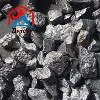
Silicon carbide is a new type of strong composite deoxidizer. It is different from traditional deoxidizers in that it has good deoxidation effect, shortens deoxidation time, forms slagging early, has a thick reducing atmosphere, saves energy, improves steelmaking efficiency and improves quality. Silicon carbide has good stability, good oxidation resistance and thermal shock resistance, and has been widely used.

Refractory materials and corrosion-resistant materials: Because silicon carbide has a high melting point (degree of decomposition), chemical inertness and resistance to thermal shock, silicon carbide can be used in abrasive tools, sheds and saggers used in ceramic product firing kilns, Silicon carbide ceramic products such as silicon carbide bricks, aluminum electrolytic cell linings, crucibles, small furnace materials and other products used in vertical cylinder distillation furnaces in zinc smelting industry.

Chemical uses: Silicon carbide can be used as a purifier for smelting steel, that is, as a deoxidizer for steelmaking and a structural improver for cast iron. This generally uses low purity silicon carbide to reduce costs. It can also be used as a raw material for manufacturing silicon tetrachloride.

Electrical uses: used as heating elements, non-linear resistance elements and high semiconductor materials. Heating elements such as silicon carbon rods (suitable for various electric furnaces working at 1100 to 1500°C, nonlinear resistor elements, and various lightning protection valves.

The amount of pig iron in the charge must be controlled. Silicon carbide manufacturers recommend that it be around 10%. The appropriate proportion of smelting silicon carbide as the charge is added is between 40% and 55%. During the tapping process, appropriate silicon carbide particles should be selected, and the amount added should be 0.1%-0.2% times more than during cupola melting. If you have any questions or needs about silicon carbide, you can call us for consultation at any time.