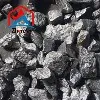
Why Silicon Manganese Nitride Works as a Microalloying Addition
The main characteristics of silicon manganese nitride are a high content of the principal elements, a low content of harmful impurities such as phosphorus, a high utilisation rate of nitrogen after the material is added to the melt, and a correspondingly low addition amount. Those four points explain why it is chosen as a microalloying element rather than charged as a straightforward ferroalloy.
Microalloying succeeds only when the added element is taken up fully and distributed evenly. A carrier with low recovery forces the operator to over-add, which wastes alloy and makes the final analysis unpredictable.
Nitride Precipitation at the Grain Boundaries
Nitride precipitates at the grain boundaries, where it raises the high-temperature strength of those boundaries and increases the creep strength of the steel. Grain boundary strength is what limits service life in heat-resistant and high-temperature applications, so precipitation control is the practical target of the microalloying treatment rather than an incidental effect.
Because the nitrogen arrives with the manganese in a single carrier, the precipitation that forms during rolling and subsequent heat treatment is fine, evenly distributed and reproducible from heat to heat. That reproducibility is the reason master alloys are preferred to mixed elemental charges in grades where the nitrogen window is narrow.
Elemental Additions Compared with the Master Alloy
| Point of comparison | Manganese and nitrogen added as elements | Silicon manganese nitride master alloy |
|---|---|---|
| Solubility in the melt | low, particularly for nitrogen | high, both elements dissolve readily |
| Density | low for the nitrogen carrier | matched to the melt, so the addition stays under the steel |
| Addition | difficult and slow | single, simple addition |
| Control of nitrogen | poor; nitrogen escapes easily | good; nitrogen recovery is high and repeatable |
Elemental manganese and elemental nitrogen both suffer from low solubility, low density for the nitrogen carrier, difficulty of addition and difficulty in controlling how much nitrogen actually stays in the steel. Charging them together in a nitride master alloy removes all four problems in one step.
Where the Microalloying Effect Is Applied
Because of the combined effect of manganese and nitrogen, both elements need to be added when refining high-strength steel, stainless steel and heat-resistant steel. Nitrogen raises yield strength and tensile strength through grain refinement and precipitation, while manganese supports deoxidation, sulphide control and hardness.
High-strength structural and rebar grades, where strength is raised without a large alloy cost.
Stainless and heat-resistant steels, where grain boundary strength controls service performance.
Special alloy steel produced to a controlled nitrogen specification.
Value for Manganese Deep Processing
Research and production of silicon manganese nitride master alloy products carries real practical significance and economic value for the metal manganese deep processing industry. It converts manganese into a higher-value, specification-driven product, and it gives steelmakers a dependable way to hit nitrogen targets that would otherwise be difficult to reach with elemental additions.
Frequently Asked Questions
Q: What are the main characteristics of silicon manganese nitride?
High content of the principal elements, low harmful impurities such as phosphorus, high nitrogen utilisation in the melt and a low addition amount.
Q: What does microalloying with this material achieve?
Nitride precipitation at the grain boundaries raises high-temperature grain boundary strength and creep strength, and grain refinement lifts yield and tensile strength.
Q: Why not add manganese and nitrogen separately?
Elemental additions suffer from low solubility, low density, difficulty of addition and poor control of the nitrogen that actually stays in the steel.
Q: Which steels need both manganese and nitrogen?
High-strength steel, stainless steel and heat-resistant steel are the usual cases, since both elements are required to reach the specified properties.
Q: Is phosphorus a concern?
Yes. Low phosphorus content is one of the selection criteria, because phosphorus is a harmful impurity in these steel grades.
Q: What is the benefit downstream of the steel plant?
It gives the metal manganese deep processing industry a higher-value product and gives steelmakers repeatable control of nitrogen in the finished heat.