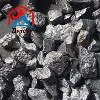
Manganese reduces the thermal brittleness caused by sulfur, refines the pearlite grains, increases the strength of pearlitic steel, improves the hot workability of the steel, and improves the hardenability of the steel. Silicon nitride has high temperature thermal stability, thermal shock resistance, thermal shock resistance, chemical stability and good electrical insulation and hardness.
In some microalloy steels, the role of microalloying elements can be fully utilized, the amount of microalloying elements can be saved, and production costs can be reduced.

Therefore, nitride is a good additive in metallurgical production. The main substances in silicon manganese nitride are manganese nitride (Mn5N2) and silicon nitride (Si3N4). Manganese plays an important role in the deoxidation, desulfurization and alloying processes of steelmaking. Manganese can improve the hot processing performance of steel by reducing the thermal brittleness caused by sulfur. Silicon manganese nitride has good heat resistance, thermal conductivity, chemical stability and small thermal expansion. Its strong micro-alloying effect and enhanced Nitrogen effect has been widely used in fields such as oriented silicon steel, HRB400 and above steel bars.

The nitrogen content in silicon manganese nitride is generally 12%-32%. It is a new type of steel-making alloy additive and an alloying agent for the production of high-nitrogen steel, special alloy steel and stainless steel. During the rolling process, nitrogen element is evenly added to the molten steel, and nitrogen precipitates at the grain boundaries to form nitrogen, carbon and other compounds, which play the role of refinement, strengthening, and solid solution strengthening, thereby improving the toughness and tensile strength of the steel.