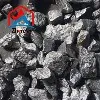
Quick Answer: Ferrosilicon vs Ferrovanadium
Ferrosilicon (FeSi) and ferrovanadium (FeV) are two different iron-based ferroalloys used in steelmaking, but they serve different metallurgical purposes. Ferrosilicon is primarily used for steel deoxidation and silicon alloying, while ferrovanadium supplies vanadium for microalloying, precipitation strengthening and grain control. They are not interchangeable materials, although both can be used in the same steelmaking process when the target steel composition requires them.
The main differences are their alloying elements, commercial grades, production routes, chemical specifications and effects on steel properties. The correct choice depends on the steel grade, required residual element content, impurity limits and alloy addition practice.
Key Differences at a Glance
Ferrosilicon: Supplies silicon for oxygen removal and chemical composition adjustment.
Ferrovanadium: Supplies vanadium for microalloying, carbide and carbonitride precipitation, and steel strengthening.
Selection: Choose FeSi according to the silicon and deoxidation requirements; choose FeV according to the target vanadium content and steel specification.
Table of Contents
- What Are Ferrosilicon and Ferrovanadium?
- Chemical Composition and Commercial Grades
- Different Roles in Steelmaking
- Production Process Differences
- Applications in Steel and Foundry Industries
- Physical Forms and Handling
- Cost and Procurement Considerations
- How to Choose Between Ferrosilicon and Ferrovanadium
- Frequently Asked Questions
- Ferrosilicon and Ferrovanadium Supply
1. What Are Ferrosilicon and Ferrovanadium?
What Is Ferrosilicon?
Ferrosilicon (FeSi) is an iron-silicon alloy produced by reducing silica-containing raw materials with carbonaceous reductants in an electric furnace, with an iron source included in the charge.
Its main metallurgical function is to introduce silicon into molten metal. During steelmaking, silicon reacts with dissolved oxygen to form silicon oxide, supporting deoxidation. The silicon that remains in the steel also contributes to the final chemical composition and mechanical properties.
Commercial ferrosilicon is available in several silicon grades, including FeSi45, FeSi65, FeSi70, FeSi72 and FeSi75. Different particle sizes and product forms are selected according to furnace charging, ladle addition, injection and foundry requirements.
We supply different ferrosilicon grades for steelmaking and foundry applications, with chemical composition and particle size confirmed against the purchasing specification.

What Is Ferrovanadium?
Ferrovanadium (FeV) is an iron-vanadium alloy used primarily as a vanadium-bearing addition in steel production. It introduces vanadium into molten steel, allowing steelmakers to control the vanadium content required by the final product specification.
Vanadium has a strong affinity for carbon and nitrogen. Under suitable steel chemistry and processing conditions, it forms vanadium carbides, nitrides and carbonitrides (V(C,N)). These precipitates contribute to precipitation strengthening and can help control grain growth and refine the steel microstructure.
Common commercial grades include FeV40, FeV50, FeV60 and FeV80. The grade is selected according to the required vanadium input, impurity limits and alloy addition practice.
Explore our ferrovanadium grades and specifications for steelmaking and alloy production.

2. Chemical Composition and Commercial Grades
The most obvious difference between ferrosilicon and ferrovanadium is the principal alloying element. FeSi is purchased according to its silicon content, while FeV is specified according to its vanadium content.
The following table summarizes the commercial grades listed in our product range. These are product reference ranges rather than universal limits for every international standard. Always confirm the applicable grade specification and batch COA before purchasing.
Ferrosilicon Grades and Silicon Content
| Grade | Silicon Content (Si) | Typical Selection Consideration |
|---|---|---|
| FeSi45 | 45–47% | Lower-silicon addition requirements |
| FeSi65 | 64.47% minimum in the published product table | Intermediate silicon addition |
| FeSi70 | 70% minimum | Steelmaking and alloy adjustment |
| FeSi72 | 72% minimum | Common steelmaking deoxidation grade |
| FeSi75 | 75% minimum | Higher silicon concentration per unit weight |
For FeSi75, silicon content alone does not define the complete purchasing specification. Aluminum, calcium, manganese, chromium, phosphorus, sulfur and carbon should also be checked according to the intended application.
For a more detailed product comparison, see our Ferrosilicon 75 product specifications.
Ferrovanadium Grades and Vanadium Content
| Grade | Vanadium Content (V) | Typical Selection Consideration |
|---|---|---|
| FeV40 | 38–45% | Lower vanadium concentration |
| FeV50 | 48–55% | Intermediate vanadium addition |
| FeV60 | 55–65% | Higher vanadium concentration |
| FeV80 | 75–85% | Concentrated vanadium addition |
Detailed FeV80 subgrades may specify a narrower vanadium range, such as 78–82%. The exact chemical composition must therefore be checked against the applicable FeV80-A or FeV80-B specification rather than relying on the grade name alone.
Important elements to verify in a ferrovanadium COA include:
- Vanadium (V): Determines the amount of vanadium introduced into the steel.
- Carbon (C): Important for low-carbon and tightly controlled steel grades.
- Silicon (Si): Must remain within the agreed impurity limit.
- Aluminum (Al): Controlled according to the steelmaking and inclusion-control requirements.
- Phosphorus (P) and Sulfur (S): Checked against the final steel specification.
Our Ferrovanadium 80 product specification provides a more detailed example of FeV80 chemistry and product requirements.
Purchasing note: A higher grade number generally indicates a higher concentration of the principal alloying element. It does not automatically mean that the product is more suitable for every steel grade. Impurity limits and actual process recovery must also be considered.
3. Different Roles in Steelmaking
Although both products are used in steel production, their metallurgical functions are fundamentally different. Ferrosilicon mainly supports deoxidation and silicon adjustment, while ferrovanadium is used when vanadium is required in the final steel chemistry.
How Ferrosilicon Works as a Deoxidizer
During steelmaking, dissolved oxygen in molten steel must be controlled before solidification. Excess oxygen can contribute to oxide inclusions and gas-related defects, affecting steel cleanliness and casting quality.
Silicon has a strong affinity for oxygen. When ferrosilicon is added to molten steel, the simplified deoxidation reaction is:
[Si] + 2[O] → (SiO2)
Here, [Si] and [O] represent dissolved silicon and oxygen in molten steel, while (SiO2) represents the silica reaction product.
The deoxidation process involves more than the chemical reaction itself. Inclusion formation, particle growth, flotation, slag chemistry and steelmaking conditions all influence the final oxygen level and steel cleanliness.
After deoxidation, the remaining silicon contributes to the target silicon content of the finished steel. This makes ferrosilicon useful for both oxygen control and alloy composition adjustment.
For more information, see our guide to Ferrosilicon 75 for steelmaking.
How Ferrovanadium Strengthens Steel
Ferrovanadium serves a different purpose. Its main function is to introduce vanadium into steel rather than to replace the primary deoxidizer.
Vanadium can combine with carbon and nitrogen to form fine carbide, nitride and carbonitride precipitates. Depending on the steel composition and thermomechanical processing route, these particles contribute to:
- Precipitation strengthening: Fine V(C,N) particles hinder dislocation movement and increase steel strength.
- Grain-size control: Vanadium-bearing precipitates can restrict grain growth under suitable processing conditions.
- Mechanical property adjustment: Controlled vanadium additions help achieve the strength and toughness requirements of selected steel grades.
- Heat-treatment response: Vanadium-containing precipitates influence the microstructure and tempering behavior of alloy steels.
The effect of vanadium depends on carbon and nitrogen levels, vanadium content, austenitizing temperature, cooling conditions and subsequent heat treatment. Adding more ferrovanadium does not automatically produce better mechanical properties.
For detailed grade selection and steelmaking requirements, see our Ferrovanadium Specification Guide.
Can Both Alloys Be Used in the Same Steelmaking Process?
Yes. Ferrosilicon and ferrovanadium can both be used in the same steelmaking operation when the target steel composition requires silicon and vanadium.
For example, a steelmaking process may use ferrosilicon for deoxidation and silicon adjustment, followed by a controlled ferrovanadium addition to achieve the specified vanadium content.
The addition sequence, quantity and timing must be determined by the steelmaking route, alloy recovery, temperature, slag conditions and target chemistry. Neither alloy should be treated as a direct substitute for the other.
4. Production Process Differences
Ferrosilicon Production: Carbothermic Reduction
Ferrosilicon is generally produced in a submerged arc furnace through the carbothermic reduction of silica-containing raw materials.
The main raw materials include:
- Quartz or quartzite: Supplies silicon dioxide (SiO2).
- Carbon reductants: Coke, coal and other carbonaceous materials provide the reducing agent.
- Iron-bearing materials: Supply iron for alloy formation.
A simplified overall reduction reaction is:
SiO2 + 2C → Si + 2CO↑
Inside the furnace, the actual reaction mechanism is more complex and involves intermediate compounds such as silicon monoxide (SiO) and silicon carbide (SiC). Furnace temperature, electrode position, raw material quality, carbon balance and operating conditions influence silicon recovery and final alloy composition.
After smelting, the alloy is tapped, cast, cooled, crushed and screened into the required particle-size ranges. Each batch can then be checked against the specified chemical composition.
Read more about our ferrosilicon production process, including raw material selection and furnace operations.
Ferrovanadium Production: Aluminothermic and Silicothermic Reduction
Ferrovanadium production uses vanadium-bearing raw materials, commonly vanadium oxides, as the source of vanadium. Industrial production routes include aluminothermic and silicothermic reduction, with the appropriate process depending on the raw materials, target grade and production technology.
Aluminothermic reduction: Aluminum acts as the reducing agent for vanadium oxides. The exothermic reaction generates the heat required for reduction and metal formation.
Silicothermic reduction: Silicon is used as the reducing agent to recover vanadium from the oxide feed under suitable process conditions.
After reduction and alloy formation, the ferrovanadium is cooled, crushed, screened and inspected according to the required grade and particle-size specification.
The production route and raw material quality influence vanadium recovery, residual elements and the final chemical composition.
For more information, read our article on the ferrovanadium production process and supply chain.
5. Applications in Steel and Foundry Industries
Where Is Ferrosilicon Used?
Ferrosilicon is widely used in steelmaking and foundry operations because it provides a controllable source of silicon.
| Application | Main Function |
|---|---|
| Carbon Steel Production | Deoxidation and silicon composition adjustment. |
| Electrical Steel | Provides silicon required for electrical and magnetic property control. |
| Alloy Steel | Introduces silicon as part of the required alloy chemistry. |
| Cast Iron Production | Supplies silicon for composition adjustment and serves as a base material for specialized inoculants. |
| Magnesium Production | Used as a silicon-bearing reducing material in applicable magnesium production routes. |
For foundry applications, ordinary ferrosilicon should not automatically be treated as equivalent to a modified inoculant. Specialized calcium-, barium- or strontium-bearing ferrosilicon-based inoculants are designed for particular graphite nucleation and fading-control requirements.
Where Is Ferrovanadium Used?
Ferrovanadium is mainly used in steel grades where controlled vanadium microalloying is required.
| Steel Application | Role of Vanadium |
|---|---|
| High-Strength Low-Alloy (HSLA) Steel | Contributes to precipitation strengthening and microstructure control. |
| Structural Steel | Helps achieve specified strength and mechanical properties. |
| Pipeline Steel | Supports controlled microalloying in high-strength pipeline grades. |
| Tool Steel | Vanadium carbides contribute to hardness and wear resistance. |
| Bearing and Alloy Steel | Provides controlled vanadium additions for the required steel properties. |
| Heat-Resistant Steel | Contributes to microstructure and property control according to the steel design. |
Ferrovanadium is particularly relevant when the steel specification explicitly requires vanadium. Its use should be determined by the final steel chemistry rather than by the general industry name alone.
6. Physical Forms and Handling
Both ferrosilicon and ferrovanadium are supplied in solid alloy forms, but their available sizes and handling requirements depend on the product grade and intended addition method.
| Factor | Ferrosilicon | Ferrovanadium |
|---|---|---|
| Appearance | Generally silver-gray or gray metallic material. | Generally gray metallic lumps or crushed material. |
| Available Forms | Lumps, granules and powder. | Lumps and other specified particle-size forms. |
| Common Sizes | 10–50 mm, 0–10 mm, 1–3 mm and customized sizes. | 10–50 mm, 10–100 mm and customized sizes. |
| Size Selection | Depends on furnace charging, ladle addition and feeding equipment. | Depends on alloy addition equipment, dissolution conditions and batch handling. |
| Storage | Keep dry and protect from contamination and moisture. | Keep dry and use suitable sealed or moisture-protective packaging as agreed. |
Particle size influences material handling, feeding consistency and dissolution behavior. Buyers should confirm the size range, oversize and undersize tolerance, fines content and packaging before placing an order.
7. Cost and Procurement Considerations
Ferrosilicon and ferrovanadium should not be compared only by their quoted price per metric ton. Their principal alloying elements, market conditions and functions in steel production are different.
What Affects Ferrosilicon Cost?
- Silicon grade, such as FeSi45, FeSi65, FeSi72 or FeSi75.
- Actual silicon content and impurity limits.
- Electricity and carbon reductant costs.
- Particle size, fines tolerance and processing requirements.
- Order quantity, packaging and delivery terms.
What Affects Ferrovanadium Cost?
- Vanadium grade, such as FeV40, FeV50, FeV60 or FeV80.
- Vanadium content and impurity limits.
- Upstream vanadium oxide prices and market supply.
- Production route and alloy recovery.
- Particle size, quantity, packing and shipment requirements.
Compare Cost per Unit of Contained Alloying Element
A more useful purchasing method is to compare the cost per kilogram of the principal alloying element rather than comparing the total alloy price alone.
Cost per kg of contained element = Alloy price per MT ÷ (1,000 × element fraction)
For example, a quotation for FeSi75 should be evaluated according to its actual silicon content, while FeV80 should be evaluated according to its actual vanadium content.
For a more accurate comparison, the buyer should also account for the actual recovery rate in the production process:
Effective element cost = Alloy price per MT ÷ (1,000 × element fraction × actual recovery rate)
This is a purchasing calculation framework, not a fixed recovery assumption. The recovery rate should be based on the plant's own production records or controlled trials.
When comparing different ferrovanadium grades, you can also read our FeV50 vs FeV80 price comparison by vanadium content.
What Should Buyers Check Before Ordering?
| Purchasing Item | What to Confirm |
|---|---|
| Grade | FeSi or FeV grade required by the steel specification. |
| Chemical Composition | Main element content and agreed impurity limits. |
| Particle Size | Required size range and oversize/undersize tolerance. |
| Batch COA | Actual batch composition and traceability information. |
| Packaging | Jumbo bags, drums or other agreed export packaging. |
| Inspection | Sampling, testing and third-party inspection requirements. |
| Delivery | Quantity, destination port, Incoterm and delivery schedule. |
For ferrosilicon purchases, our Ferrosilicon 75 COA guide explains how to check batch chemistry and verify the certificate against the agreed specification.
8. How to Choose Between Ferrosilicon and Ferrovanadium
The correct ferroalloy should be selected according to the metallurgical function required in the production process, not simply by comparing the price or the total metal content.
Choose Ferrosilicon When:
- You need to reduce dissolved oxygen in molten steel.
- You need to adjust the silicon content of the finished steel.
- Your production specification requires FeSi45, FeSi65, FeSi70, FeSi72 or FeSi75.
- You need a silicon-bearing material for a foundry or other metallurgical process.
Start by reviewing our ferrosilicon product range and confirming the required silicon content, impurity limits and particle size.
Choose Ferrovanadium When:
- Your steel grade requires a controlled vanadium addition.
- You are producing HSLA, structural, pipeline or selected alloy steels.
- You need vanadium-bearing precipitates to support the required steel properties.
- Your steelmaking specification defines a specific vanadium content and impurity window.
Review our ferrovanadium product range to compare FeV40, FeV50, FeV60 and FeV80.
Can Ferrosilicon and Ferrovanadium Replace Each Other?
No. Ferrosilicon supplies silicon, while ferrovanadium supplies vanadium. Their chemical reactions, alloying functions and effects on the final steel composition are different.
If a steel grade requires both silicon and vanadium, the two materials may be used together under a controlled alloy addition practice. The final choice must follow the target steel chemistry and the plant's process parameters.
9. Frequently Asked Questions
Q1: What Is the Main Difference Between Ferrosilicon and Ferrovanadium?
Ferrosilicon is mainly used for deoxidation and silicon alloying in steelmaking. Ferrovanadium supplies vanadium for microalloying, precipitation strengthening and grain control. They perform different metallurgical functions and cannot directly replace each other.
Q2: Which Is Better for Steelmaking, Ferrosilicon or Ferrovanadium?
Neither is universally better. Ferrosilicon is suitable when silicon addition and deoxidation are required, while ferrovanadium is selected when the steel specification requires vanadium microalloying. The correct choice depends on the target steel composition.
Q3: Can Ferrosilicon Replace Ferrovanadium?
No. Ferrosilicon cannot provide the required vanadium content for vanadium-alloyed steel. Similarly, ferrovanadium is not a substitute for ferrosilicon when silicon deoxidation is required.
Q4: Can Both Ferrosilicon and Ferrovanadium Be Added to the Same Steel?
Yes. Both can be used in the same steelmaking process when the steel grade requires silicon and vanadium. Their addition amounts and timing must be controlled according to the steel chemistry, temperature, recovery and production route.
Q5: What Are the Common Grades of Ferrosilicon and Ferrovanadium?
Common ferrosilicon grades include FeSi45, FeSi65, FeSi70, FeSi72 and FeSi75. Common ferrovanadium grades include FeV40, FeV50, FeV60 and FeV80. The actual composition should always be verified against the agreed product specification and batch COA.
Q6: Why Is Ferrovanadium Usually More Expensive Than Ferrosilicon?
Ferrovanadium generally has a higher unit price because vanadium is a more specialized alloying element with a different upstream supply chain and market. However, the actual price difference changes with market conditions, grade and chemical specification. Buyers should compare cost per unit of contained vanadium or silicon rather than price per ton alone.
Q7: What Should Be Checked in a Ferrosilicon or Ferrovanadium COA?
For ferrosilicon, check Si, Al, Ca, Mn, Cr, P, S and C according to the purchasing specification. For ferrovanadium, check V, C, Si, Al, P and S, together with any additional elements specified by the buyer. The batch number and product grade should match the order documentation.
Q8: Which Particle Size Should I Choose?
Particle size should match the furnace charging, ladle addition or feeding method. Common ferrosilicon sizes include 10–50 mm and smaller granules, while ferrovanadium is commonly supplied in 10–50 mm and 10–100 mm ranges. Customized sizes can be discussed according to the actual production requirements.
10. Ferrosilicon and Ferrovanadium Supply
We supply ferrosilicon and ferrovanadium grades for steelmaking, foundry and alloy production. Different grades, chemical compositions and particle sizes can be evaluated according to your production requirements.
Ferrosilicon: FeSi45, FeSi65, FeSi70, FeSi72 and FeSi75, available in different particle sizes and product forms.
Ferrovanadium: FeV40, FeV50, FeV60 and FeV80, with chemical composition and size confirmed according to the agreed specification.
When requesting a quotation, please provide your required grade, target chemical composition, impurity limits, particle size, order quantity, packing requirements and destination port. We can review the specification and provide the corresponding product information and quotation.
Looking for the Right Ferroalloy?
Send us your steel specification or purchasing requirements. We can help you compare the suitable ferrosilicon or ferrovanadium grade, chemical composition and particle size.
Explore Ferrosilicon Explore Ferrovanadium
Email: sale@zanewmetal.com
Technical references: U.S. EPA AP-42: Ferroalloy Production; Review of Interphase Precipitation in Vanadium-Microalloyed Steels; USITC: Ferrosilicon and Steelmaking Applications.