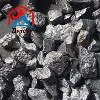
Direct Answer
For buyers evaluating SiC 88 Deoxidizer Price, the useful market reference is a price range rather than a fixed number, because the final quotation depends on raw-material cost, electricity, freight, particle size, and delivery condition. Based on the April 1, 2026 market reference, 88% metallurgical silicon carbide is quoted at RMB 4,800-4,900/ton, with a reported increase of RMB 100/ton in both Gansu and Ningxia. In real transactions, this range should be treated as a market signal rather than a final offer, because steel plants buy deoxidation performance, not a posted list price.
Why Should SiC 88 Deoxidizer Price Be Read as a Market Report Rather Than a Fixed Price?
A fixed posted number rarely reflects how metallurgical SiC is actually traded. In practical steelmaking supply, the quotation changes with chemistry tolerance, size range, ash level, packaging, and destination. A buyer asking for SiC 88 deoxidizer is not simply buying a lump material by name. The buyer is selecting a furnace input whose cost must be judged against oxygen removal efficiency, silicon contribution, carbon contribution, and total deoxidation expense.
This is why the price should be understood as a range.
From plant-side observation, April fluctuations in raw materials, especially coke-related inputs, together with changes in electricity and inland freight, have directly led to small upward adjustments in SiC quotation levels. In other words, the price movement is not random. It is tied to the production economics behind the material.
What Does the April 2026 Market Reference Show for 88% SiC?
| Data updated as of April 2026 | ||||
|---|---|---|---|---|
| Product | Grade | Price Range (RMB/ton) | Region | Market Change |
| Metallurgical Silicon Carbide | 88% lump | 4,800-4,900 | Gansu | +100 |
| Metallurgical Silicon Carbide | 88% lump | 4,800-4,900 | Ningxia | +100 |
This table provides a current market frame for SiC 88 deoxidizer price, but it should not be treated as the final landed cost for every buyer. Actual offers still depend on:
- particle size
- fixed carbon and ash level
- free silica content
- order volume
- packing method
- delivery location
- payment term


Why Is SiC 88 Often More Cost-Effective Than FeSi 75?
The value of SiC 88 comes from its function in the furnace rather than from nominal assay alone. In many ordinary steelmaking operations, SiC 88 acts as a deoxidizer while also supplying useful silicon and carbon. FeSi 75 mainly provides silicon. When the steelmaking route can make productive use of both silicon and carbon, SiC 88 often reduces the total deoxidation cost.
That is the main economic logic.
A plant comparing FeSi 75 with SiC 88 should not focus only on ton price. The real comparison is the cost of achieving the required deoxidation result. If SiC 88 lowers oxygen effectively while also contributing usable silicon and carbon, the plant may reduce dependence on other additions. This is why SiC 88 is often treated as a practical and cost-efficient deoxidizer in ordinary steelmaking.
What Cost Factors Are Driving SiC 88 Deoxidizer Price?
From a market-analysis perspective, the price of SiC 88 is shaped mainly by three operating costs and one specification factor.
1. How are raw materials moving?
Silicon carbide production is sensitive to petroleum coke, silica-based feedstock, and reducing carbon materials. According to factory observation, April movement in coke-related raw materials has directly affected processing cost, which helps explain the recent upward adjustment in market quotations.
2. How much does electricity affect production cost?
Electricity is a major part of SiC manufacturing cost. Since silicon carbide is an energy-intensive product, even a limited change in regional power pricing can narrow the producer's margin and push quotation upward.
3. How does freight change the final offer?
Freight matters more than many buyers assume. The same 88% SiC may show similar ex-factory pricing, but delivered cost changes once trucking, inland transfer, or port logistics are added. This is especially important for coastal or export buyers.
4. How do size and impurity limits affect the quote?
A broader commercial size range is easier to supply. A tighter screened range with lower ash or more controlled chemistry usually raises processing cost. This is why two SiC 88 offers may appear close in grade name but differ in real price basis.
Why Is It Risky to Ask Only for "SiC 88 Price"?
Because one buyer may mean standard lump for routine deoxidation, while another may require a tighter size range, lower ash, export packaging, or a different delivery term. These are not equivalent supply conditions.
For that reason, a serious quotation request should include:
- required size range
- application: steelmaking deoxidizer
- monthly or trial quantity
- packing requirement
- delivery destination
- trade basis
- payment condition
Without these points, a quoted number can be misleading because the product definition is incomplete.
How Should Steel Plants Read the Current Market for SiC 88?
The present market should be read as firm, with moderate cost-side support, rather than sharply overheated. The reported RMB 100/ton increase suggests that producers are adjusting offers mainly because of production-cost pressure, not because of abnormal speculative demand. That distinction matters to buyers.
If the cost side remains firm, SiC 88 quotations are unlikely to move back immediately to older levels. If freight or electricity rises further, delivered offers may continue to tighten. This is why buyers should judge the market by trend and production logic, not only by a single posted number.
Request a Firm Quote for Your Port.
What Is the Most Practical Conclusion?
The useful way to develop the keyword "SiC 88 Deoxidizer Price" is to present it as an industry report rather than a price sheet. April 2026 market data shows 88% metallurgical silicon carbide at RMB 4,800-4,900/ton, up by RMB 100/ton in Gansu and Ningxia, but that range is only the starting point for commercial evaluation. The final value of SiC 88 depends on raw-material cost, electricity, freight, size control, and its ability to lower total deoxidation cost compared with FeSi 75.
For steel plants, the correct question is not simply what SiC 88 costs today. The correct question is whether the delivered SiC 88 grade still gives a lower and more efficient deoxidation cost in actual furnace operation.
The April market range is only a reference. For a workable offer, buyers should send size range, quantity, packing requirement, and destination port.
Frequently Asked Questions: Metallurgical Silicon Carbide (SiC 88%)
Q1: Can SiC 88% replace Ferrosilicon (FeSi 75)?
A1:Yes. Metallurgical SiC 88% is a reliable substitute for Ferrosilicon in standard carbon steel and foundry applications. It offers higher silicon recovery rates and lower total alloy costs per ton compared to bulk ferrosilicon.
Q2: When to use SiC Briquettes vs. SiC Grains?
A2:SiC Briquettes are ideal for cupolas and induction furnaces due to their high density and deep melt penetration. SiC Grains (0-10mm) are better for rapid deoxidation when added directly to the ladle during tapping.
Q3: How does density affect Silicon Carbide recovery?
A3:Higher bulk density in Silicon Carbide for steelmaking ensures the material passes through the slag layer to react directly with the molten steel, maximizing the silicon recovery rate and minimizing material waste.
Q4: Are impurities controlled in SiC grades below 90%?
A4:High-quality Metallurgical SiC (80-90% grades) maintains strict impurity controls, keeping Phosphorus (P) and Sulfur (S) below 0.05%. This prevents brittleness and ensures the mechanical toughness of the final steel product.
Q5:Where can I get the latest silicon carbide price?
A5:Silicon carbide prices change frequently depending on market conditions, specifications, and order quantity. It is recommended to contact suppliers directly for real-time quotations.📩 sale@zanewmetal.com