Direct Answer
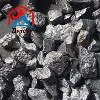
Metallurgical silicon carbide deoxidizer is a silicon-carbon additive used in steelmaking to reduce oxygen activity, lower FeO in slag, and supply useful silicon and carbon to molten steel. In ordinary steelmaking and foundry practice, 88% SiC is often a more cost-effective alternative to FeSi 75. Grains are usually preferred over briquettes because they contain no binder, react faster, and provide more transparent chemistry.
What is the deoxidation mechanism of metallurgical SiC?
The simplified reaction is:
SiC+3FeO→SiO2+CO+3Fe
This reaction explains the practical role of SiC in steelmaking. Silicon carbide reacts with iron oxide in the slag-metal system, reduces FeO, and returns metallic iron to the bath. At the same time, oxygen is consumed through the formation of silica and carbon monoxide. This lowers the oxygen potential of the system and improves the conditions for subsequent alloy adjustment.
The reaction is also thermally useful. Because the deoxidation process releases effective reaction heat, it helps offset part of the furnace heat loss during refining and chemistry correction. In production terms, this does not replace electrical input, but it supports a more stable thermal balance than a passive addition.
What Are the Main Specifications of Metallurgical Silicon Carbide Deoxidizer?
The most common commercial grades for steelmaking are 75%, 88%, and 90%.
| Grade | SiC Content | Typical Application | Cost Position | Practical Comment |
|---|---|---|---|---|
| SiC 75 | 75% min | routine deoxidation, lower-cost use | lower | suitable where impurity tolerance is broader |
| SiC 88 | 88% min | ordinary steelmaking, foundry use, FeSi 75 replacement | balanced | often the best cost-performance grade |
| SiC 90 | 90% min | more stable deoxidation, tighter control | higher | used where consistency and recovery are more important |
Typical Product Parameters
- Product name: Metallurgical Silicon Carbide Deoxidizer
- Available grades: 75%, 88%, 90%
- Form: Grains
- Application: Steelmaking, foundry melting, deoxidation, silicon adjustment
- Packaging: Jumbo bags or customized export packing


Why Is 88% Silicon Carbide Often Preferred Over FeSi 75?
In many ordinary steelmaking operations, 88% metallurgical silicon carbide is often a more economical substitute for FeSi 75.
The reason is operational rather than theoretical. FeSi 75 mainly contributes silicon, while SiC 88 contributes both silicon and carbon. When both elements are useful to furnace balance, the total cost of deoxidation and chemistry correction can often be reduced.
This is why many mills do not compare SiC 88 and FeSi 75 only by ton price. They compare them by actual furnace result: oxygen removal efficiency, silicon contribution, carbon contribution, slag reduction effect, and total alloying cost.
For ordinary steel grades and foundry applications, 88% SiC often provides the most practical balance between cost and metallurgical effect.
Why Choose Grains over Briquettes?
Faster Reaction in the Furnace
Grains usually react faster than briquettes because they provide more exposed surface area and enter the slag-metal system more directly. In actual furnace operation, this gives a quicker metallurgical response and makes chemistry adjustment easier to observe.
No Binder Added
Grains are supplied without binder, which means there is no extra bonding material entering the furnace. This is important for buyers who want direct chemistry input and do not want additional uncertainty from binder quality or briquette strength.
More Transparent Purity
With grains, the chemistry is more transparent. The buyer sees the actual material rather than a compacted form whose performance may also depend on binder ratio, pressure, and briquetting condition.
Lower Risk of Delayed Reaction
Briquettes are useful in some charging situations, but their compacted structure usually slows the initial reaction. In operations where deoxidation speed matters, grains are often the better technical option.
For this reason, grains are commonly preferred where the plant wants faster reaction, cleaner input, and more direct control over deoxidation behavior.
How Is Metallurgical Silicon Carbide Used in Electric Arc Furnaces (EAF)?
In the electric arc furnace, metallurgical silicon carbide is mainly used for slag reduction, deoxidation support, FeO reduction, silicon adjustment, and improvement of metallic yield. Because EAF practice is sensitive to slag chemistry and power efficiency, SiC is valued as both a deoxidizer and a working furnace material. It helps reduce FeO in slag and return iron to the bath, which supports lower oxidation loss and more efficient melting practice.
How Is Metallurgical Silicon Carbide Used in Induction Furnaces (IF)?
In the induction furnace, metallurgical silicon carbide is commonly used for deoxidation, carburizing support, silicon adjustment, and chemistry stabilization in melting. Induction furnaces provide less refining flexibility than large EAF systems, so the consistency of the additive becomes more important. In this environment, SiC grains are often preferred because they react faster, introduce no binder, and provide a more direct chemistry response.
How Is Metallurgical Silicon Carbide Used in Converters?
In converter steelmaking, metallurgical silicon carbide is generally used for secondary deoxidation, silicon-bearing adjustment, reduction of oxidizing slag effects, and support of cost-efficient alloy trimming. Its value in converter routes depends heavily on addition timing and slag condition. When used correctly, it helps lower oxygen activity and reduce the cost of final chemistry correction.
What Packaging and Logistics Options Are Available?
Metallurgical silicon carbide is commonly packed in jumbo bags for industrial bulk use. This packaging is widely used because it supports efficient loading, storage, and export shipment.
Standard Packaging
- 1 MT jumbo bags
- Custom export packing available
- Moisture-protected packing on request
Export Logistics
- screening and size confirmation before packing
- weight control and batch identification
- container loading for export shipment
- port delivery and export documentation support
For overseas buyers, packaging discipline matters because broken bags, mixed sizes, and poor moisture control can affect both unloading efficiency and product consistency at the destination.
FAQ
Q:Why is 88% SiC often used instead of FeSi 75?
A:Because 88% SiC supplies both silicon and carbon, while FeSi 75 mainly provides silicon. In many ordinary steelmaking applications, this improves cost-performance.
Q:Why do SiC grains react faster than briquettes?
A:Because grains expose more reactive surface area and contact the slag-metal system more directly.
Q:Is 90% SiC always better than 88% SiC?
A:No. 90% SiC is more suitable where tighter consistency and recovery are required. In ordinary steelmaking, 88% SiC is often the more economical choice.
Q:Which furnace types commonly use metallurgical SiC?
A:EAF, induction furnace, and converter-side alloy adjustment.