Direct Answer
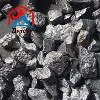
Silicon carbide deoxidizer can replace part of FeSi 75 in many ordinary steelmaking operations because it supplies both silicon and carbon, helps reduce FeO in slag, and often lowers the total cost of deoxidation on a furnace-result basis. The real comparison is not material price per ton alone. It is the cost of reaching the target oxygen level, silicon adjustment, and final chemistry with the fewest correction steps. In many routine heats, SiC 88 is the most practical replacement grade because it balances recovery, cost, and process flexibility.
Why is FeSi 75 not always the lowest-cost silicon source?
The cost advantage comes from how silicon carbide behaves in the furnace.
Does it contribute both silicon and carbon?
Yes. This is the core difference. When both silicon and carbon are useful to the heat, one material can perform part of the work that would otherwise require two separate additions.
Does it help reduce oxidizing slag conditions?
Yes. Silicon carbide can reduce FeO in slag-metal interaction, which improves metallic yield and supports a cleaner deoxidation path.
Can it reduce correction work?
In many routine operations, yes. If the material balance is handled more efficiently, the plant may need fewer late-stage adjustments. That saves power, time, and operator intervention.
These effects explain why a lower or similar quoted price is not the only reason SiC can outperform FeSi 75 economically.
How should the replacement ratio be evaluated?
There is no universal fixed substitution ratio, because recovery depends on furnace type, slag condition, steel grade, and addition timing. The practical calculation usually follows three steps.
What should be compared first?
The first comparison is effective silicon contribution, not nominal chemistry alone. FeSi 75 and SiC do not report to the bath in exactly the same way, so real plant recovery must be considered.
What should be added next?
The second comparison is useful carbon contribution. If the plant would otherwise need carbon adjustment, that value belongs in the calculation.
What is commonly missed?
The third comparison is slag-related benefit. If SiC reduces FeO and limits oxidation loss, that benefit should be counted as part of the replacement logic.
A substitution model based only on ton price usually misses the real furnace economics.


Why does SiC 88 usually become the preferred replacement grade?
Among common metallurgical silicon carbide grades, 88% SiC is often the strongest commercial balance point. Lower grades may carry more ash or gangue, while higher grades may improve consistency at a higher purchase cost. In many ordinary steelmaking routes, SiC 88 delivers enough useful silicon and carbon without moving the material cost too far upward.
This is why medium and large plants often prefer SiC 88 for routine deoxidation work. It is not the highest grade. It is often the most practical working grade.
Which steel plants benefit most from replacing FeSi 75 with SiC?
The substitution is usually most effective where:
- the steel grade can accept useful carbon contribution
- cost control matters in routine heats
- the furnace operates with repeated chemistry adjustment
- the plant wants lower total deoxidation cost rather than premium ultra-low-carbon control
This often applies to ordinary carbon steel, many routine alloy steels, foundry melting, and a large share of induction furnace and EAF operations.
The substitution is less straightforward where the steel has a very narrow carbon window or where the process cannot productively use the carbon contribution.
Why does power consumption matter in this comparison?
Many plants compare additives by purchase price and overlook the cost of correction. If a material leads to more trimming, more holding time, or more late-stage additions, the electric cost rises with it.
Silicon carbide can reduce power-related cost when it helps the heat reach target chemistry with fewer adjustments. The effect is process-dependent, but it is commercially important. In many shops, the lowest-cost additive on paper is not the lowest-cost additive in the furnace.
How Is Metallurgical Silicon Carbide Used in Induction Furnaces (IF)?
In the induction furnace, metallurgical silicon carbide is commonly used for deoxidation, carburizing support, silicon adjustment, and chemistry stabilization in melting. Induction furnaces provide less refining flexibility than large EAF systems, so the consistency of the additive becomes more important. In this environment, SiC grains are often preferred because they react faster, introduce no binder, and provide a more direct chemistry response.
Why does supplier consistency matter in substitution work?
A substitution program only works if the material is stable from batch to batch. If chemistry shifts, if size distribution is inconsistent, or if ash level varies too widely, the replacement ratio becomes unreliable. Buyers therefore need more than an attractive quote. They need controlled supply.
In this context, ZhenAn supports steelmaking and foundry customers with specification-based metallurgical material supply, which matters when a plant is evaluating silicon carbide not as a commodity, but as a repeatable furnace input.
What is the practical conclusion?
Silicon carbide deoxidizer can replace part of FeSi 75 in many ordinary steelmaking operations, but the decision should be made through total furnace economics rather than ton price alone. Where silicon, carbon, and slag reduction all contribute productively to the heat, SiC often lowers the real cost of deoxidation and chemistry correction. In those conditions, SiC 88 is usually the most practical replacement grade, because it offers the best balance between cost, recovery, and operating flexibility.
FAQ
Q:Can silicon carbide fully replace FeSi 75?
A:Not in every steel grade. The replacement depends on carbon tolerance, recovery, and furnace practice.
Q:Why is SiC often cheaper in real use than FeSi 75?
A:Because it contributes both silicon and carbon and can also support FeO reduction, which may lower total correction cost.
Q:Is SiC 88 always the best grade for substitution?
A:Not always. It is usually the most practical grade in ordinary steelmaking, but some plants may need higher purity or lower-cost alternatives depending on process targets.
Q:What is the biggest mistake in substitution analysis?
A:Comparing only posted material price instead of effective recovery, carbon contribution, and total furnace cost.
# 文章简介(Meta Description,150词内,SEO友好) This article analyzes how silicon carbide deoxidizer replaces FeSi 75 in steelmaking through total cost evaluation, covering its dual silicon and carbon supply, slag improvement benefits, and practical substitution ratios. It explains why SiC 88 is the preferred grade, which plants benefit most, and why real furnace economics matter more than raw material price alone. --- # FAQ Schema(JSON-LD,可直接部署) ```json