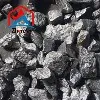
Quick Answer: The international HS code for Ferrosilicon 75 is 7202.21, covering ferro-silicon containing more than 55% silicon by weight. Ferrosilicon 75, with a nominal silicon content of approximately 75%, falls within this category when it meets the legal definition of ferro-silicon. Codes such as 72022100 are national or regional extensions, not universal eight-digit codes. Importers should verify the complete tariff code using the shipment's chemical composition and the current customs tariff of the destination country.
Key Takeaways
- 7202.21: Ferro-silicon containing more than 55% silicon by weight.
- 7202.29: Other ferro-silicon, generally containing 55% silicon or less.
- 72022100: An eight-digit tariff code used in some jurisdictions, but not a universal full declaration code.
- Actual composition matters: Check the Certificate of Analysis (COA), especially silicon and any significant additional alloying elements.
- Verify before shipment: Use the importing country's official tariff and confirm classification with your customs broker.
Table of Contents
- What Is the HS Code for Ferrosilicon 75?
- 7202.21 vs. 7202.29: What's the Difference?
- Ferrosilicon HS Codes by Country
- Does Chemical Composition Affect Classification?
- Documents Needed for Customs Classification
- How to Verify the HS Code Before Importing
- Frequently Asked Questions
What Is the HS Code for Ferrosilicon 75?
Ferrosilicon 75 is normally classified under HS subheading 7202.21, which covers ferro-silicon containing more than 55% silicon by weight. This classification follows the international Harmonized System (HS), which organizes traded goods using standardized six-digit commodity codes.
The classification can be broken down into three levels:
| Code | Classification Level | Description |
|---|---|---|
| 72 | Chapter | Iron and steel |
| 7202 | Heading | Ferro-alloys |
| 7202.21 | Six-digit subheading | Ferro-silicon containing more than 55% silicon by weight |
Ferrosilicon 75 typically contains approximately 75% silicon, with iron making up most of the remaining composition. Its silicon content is therefore above the 55% threshold used to distinguish the two principal ferro-silicon subheadings.
However, customs classification is based on the actual characteristics of the imported goods, not the commercial grade name alone. The material must also satisfy the applicable legal definition of ferro-silicon under heading 7202.
For standard product grades and available forms, see our Ferrosilicon 75 product and supply information.
7202.21 vs. 7202.29: What's the Difference?
The difference between HS 7202.21 and HS 7202.29 is the silicon-content threshold, provided the product is classified as ferro-silicon.
| HS Subheading | Silicon Content | Typical Grade Examples |
|---|---|---|
| 7202.21 | More than 55% Si by weight | Ferrosilicon 65, 72 and 75 |
| 7202.29 | Not more than 55% Si by weight | Ferrosilicon 45 and qualifying lower-silicon grades |
For example, a conventional binary ferrosilicon alloy containing 75% silicon falls within subheading 7202.21. A comparable ferro-silicon product containing exactly 55% silicon would instead fall within 7202.29, because the wording of 7202.21 requires more than 55%.
This distinction also explains why Ferrosilicon 65, Ferrosilicon 72 and Ferrosilicon 75 can share the same international six-digit HS subheading even though their silicon specifications differ.
Why Do Some Websites Show 72022100 and 72022900?
When researching the ferro silicon 75 HS code, buyers may encounter both 72022100 and 72022900 on trade-data websites, shipment databases or supplier directories.
These eight-digit codes begin with different six-digit HS subheadings:
- 72022100 begins with 7202.21, the subheading for ferro-silicon containing more than 55% silicon.
- 72022900 begins with 7202.29, the subheading for other ferro-silicon.
A trade-data page can contain product descriptions submitted by different importers and exporters. Some records may be incomplete, incorrectly classified or grouped together by the database. A shipment description mentioning "75% silicon" under 7202.29 does not establish that 7202.29 is the correct classification for standard Ferrosilicon 75.
If a shipment record conflicts with the published tariff description, verify the original customs documentation and product chemistry rather than copying the code.
Classification example: A standard ferro-silicon alloy with a measured silicon content of 75.3% meets the silicon threshold for HS 7202.21. The next step is to confirm the product's other relevant characteristics and select the correct national tariff line.
Ferrosilicon HS Codes by Country
The international Harmonized System identifies Ferrosilicon 75 under six-digit subheading 7202.21. However, countries and customs territories may add further digits to identify specific tariff lines, statistical categories or import measures.
This means 7202.21 is the internationally harmonized subheading, while the complete customs declaration code depends on the importing country.
Examples of National Tariff Codes
| Country / Region | Code Example | Important Notes |
|---|---|---|
| European Union | 7202 21 00 | Eight-digit Combined Nomenclature (CN) code for ferro-silicon containing more than 55% silicon. Check the applicable TARIC code and import measures. |
| United States | 7202.21.50.00 | An example for ferro-silicon containing more than 55% but not more than 80% silicon, where the separate calcium-content provision does not apply. |
| United States | 7202.21.10.00 | Specific provision for ferro-silicon in the relevant silicon range containing more than 3% calcium by weight. |
| China | 7202210000 | Ten-digit customs commodity code associated with ferro-silicon containing more than 55% silicon. Confirm the currently applicable Chinese tariff schedule. |
Note: These are classification examples, not a guarantee that a particular shipment qualifies for a listed national tariff line. Verify the current tariff schedule, product composition and any special classification provisions before declaration.
In the United States, for example, two products containing approximately 75% silicon may fall under different national tariff lines if their calcium contents differ. This is why the six-digit HS subheading alone is insufficient for determining the full U.S. customs code.
For the latest tariff descriptions, consult the United States International Trade Commission Harmonized Tariff Schedule or the European Commission's Combined Nomenclature guidance.
Does the HS Code Determine the Import Duty?
The HS classification is one input into determining import duties, but an HS code does not provide a complete landed-duty calculation.
Import charges may also depend on the country of origin, customs value, trade agreements, additional tariff measures and applicable trade-remedy rules. Some measures require separate origin or producer information.
Before importing, confirm the applicable tariff rate and measures using the official customs tariff for the destination country and the planned shipment date.
Does Chemical Composition Affect Classification?
Yes. The actual chemical composition is essential to the customs classification of ferrosilicon. The commercial name "Ferrosilicon 75" indicates the intended grade, but customs authorities may require analytical evidence showing the silicon content and other relevant alloying elements.
For a standard iron-silicon alloy, the silicon content determines the distinction between 7202.21 and 7202.29. However, ferro-alloys containing significant quantities of additional alloying elements may require a more detailed assessment under the legal notes to Chapter 72.
What to Check on the Certificate of Analysis
| COA Item | What to Verify | Why It Matters |
|---|---|---|
| Silicon (Si) | Actual silicon percentage by weight. | Supports the more-than-55% threshold for HS 7202.21. |
| Iron (Fe) | Iron content or balance, as applicable to the analysis. | Supports identification of the material as a ferro-alloy. |
| Calcium (Ca) | Measured content or specified maximum. | May determine a more specific national tariff line, including in the United States. |
| Other alloying elements | Any significant additions, including manganese, magnesium or other controlled elements. | May affect whether the goods should be treated as ordinary ferro-silicon or another ferro-alloy type. |
| Product form | Lumps, granules or powder. | Helps ensure the shipment description is complete and accurate. |
| Batch identification | Heat or lot number linked to the shipment. | Connects the analytical results with the goods being declared. |
A COA should represent the actual shipment or an agreed, traceable production batch. A generic catalogue specification can support preliminary review, but it does not necessarily establish the chemical composition of the goods delivered.
For more information about chemical composition and inspection requirements, see our Ferrosilicon 75 specification guide.
Do Ferrosilicon Lumps and Powder Have Different HS Codes?
Not necessarily. The legal definition of ferro-alloys in Chapter 72 includes qualifying material in lumps, granular form and powder form.
Therefore, ordinary crushing, screening or milling does not automatically change the international HS subheading of a ferro-silicon alloy when its composition and classification characteristics remain the same.
For example, standard Ferrosilicon 75 supplied as lumps or powder would generally remain within HS 7202.21 if the products satisfy the relevant legal requirements.
However, a formulated mixture, composite material or product subjected to additional processing may require separate classification review.
When buying crushed or screened ferrosilicon, check the ferrosilicon particle size guide for delivery-size considerations.
Documents Needed for Customs Classification
Importers should prepare a consistent set of commercial and technical documents before shipment. Exact requirements differ by country, but customs authorities or brokers commonly use the following documents to identify the imported material.
| Document | Main Information | Purpose |
|---|---|---|
| Commercial Invoice | Product description, quantity, declared value and seller/buyer details. | Supports the commercial declaration and customs valuation. |
| Packing List | Packaging, package count, gross weight and net weight. | Connects the shipment quantities and packages with the declaration. |
| Certificate of Analysis (COA) | Actual chemical composition and batch identification. | Supports verification of the ferro-silicon grade and classification. |
| Product Specification | Grade, chemical limits, physical form and particle size. | Provides technical details for customs classification review. |
| Transport Documents | Bill of lading or other applicable shipping records. | Supports identification and movement of the goods. |
| Additional Certificates | Origin, inspection or other certificates where applicable. | Supports country-specific regulatory or contractual requirements. |
How Should Ferrosilicon Be Described on the Invoice?
A commercial invoice should identify the actual product clearly enough for the importing party and customs authorities to recognize it.
For example, a shipment description may specify the commercial grade, actual silicon content, product form and particle-size range.
Illustrative Product Description
Ferrosilicon 75, ferro-silicon alloy lumps, Si 75.3% by weight, particle size 10–50 mm, according to batch COA.
The example above is hypothetical and is not a declaration of our company's available batch chemistry. Actual invoices must describe the goods supplied and use the verified national customs code.
The contract, invoice, packing list and COA should be consistent. Differences in grade descriptions, material composition or shipment quantities may lead to additional questions during customs review.
If you need guidance on physical appearance, chemical testing and material acceptance, read our ferrosilicon quality inspection guide.
How to Verify the HS Code Before Importing
The most reliable way to avoid classification errors is to verify the intended customs code before the shipment is dispatched.
Step 1: Confirm the Exact Ferrosilicon Grade
Request the agreed product specification and chemical analysis. Confirm that the material is ordinary ferro-silicon or identify any significant additional alloying elements that may affect classification.
Step 2: Check the International Six-Digit Subheading
For standard Ferrosilicon 75 containing more than 55% silicon by weight, the applicable international subheading is normally 7202.21.
Confirm that the product also meets the legal definition of ferro-silicon under the relevant Chapter 72 provisions.
Step 3: Find the Complete National Tariff Code
Look up subheading 7202.21 in the current tariff schedule of the importing country. Review the national subdivisions and any conditions relating to chemical composition.
Do not assume that the final two or four digits used by another country are valid for your destination market.
Step 4: Review Applicable Import Measures
Confirm the relevant tariff treatment, origin requirements, trade-remedy measures and any other import restrictions that may apply to the shipment.
The customs duty payable cannot be established from the six-digit HS code alone.
Step 5: Confirm Documents With Your Customs Broker
Provide your broker with the product specification, batch COA and draft commercial invoice. Ask them to verify the final declaration code against the destination country's official tariff.
If the classification remains uncertain, consider requesting a formal advance or binding tariff ruling where the importing jurisdiction provides this procedure.
Pre-Shipment Classification Checklist
- Confirm the product grade and actual silicon content.
- Identify other relevant alloying elements.
- Verify the international six-digit HS subheading.
- Check the current national tariff code.
- Review applicable duties and import measures.
- Match the invoice and packing list with the batch COA.
- Obtain confirmation from the importer or customs broker.
Completing these checks before shipment can reduce the risk of incorrect declarations, customs queries and avoidable clearance delays.
Request Ferrosilicon 75 Specifications and COA
We supply ferrosilicon for industrial applications and can review your required chemical composition, particle size and shipment-document requirements before quotation.
To help us prepare the appropriate quotation, please provide:
- Required ferrosilicon grade and silicon content
- Maximum aluminium and other impurity limits
- Particle size and packaging requirements
- Order quantity and delivery destination
- Required COA, inspection or shipment documents
We will confirm the available material specification and supporting documents. Final customs classification should be verified by the importer or their authorized customs representative.
Email: sale@zanewmetal.com
Request Ferrosilicon 75 SpecificationFerrosilicon 75 HS Code: FAQs
What is the HS code for Ferrosilicon 75?
The international HS code for standard Ferrosilicon 75 is 7202.21, covering ferro-silicon containing more than 55% silicon by weight. Importers must confirm the complete national tariff code using the importing country's current tariff schedule and the product's actual composition.
What is the difference between HS 72022100 and 72022900?
72022100 begins with HS subheading 7202.21, which covers ferro-silicon containing more than 55% silicon. Code 72022900 begins with 7202.29, covering other ferro-silicon. Standard Ferrosilicon 75 normally falls under 7202.21, not 7202.29.
Is the Ferrosilicon 75 HS code the same worldwide?
The international six-digit HS subheading is normally 7202.21 for standard Ferrosilicon 75. Additional digits vary by country or customs territory. For example, the European Union uses an eight-digit Combined Nomenclature, while the United States uses more detailed HTS tariff lines.
Do Ferrosilicon 75 lumps and powder have different HS codes?
Not normally at the international six-digit level. Heading 7202 covers qualifying ferro-alloys in lumps, granular form and powder form. Standard Ferrosilicon 75 generally remains under 7202.21 if its composition and legal classification remain unchanged. Specially formulated or further-processed products may require separate review.
What documents help verify the Ferrosilicon 75 HS code?
A batch Certificate of Analysis, product specification, commercial invoice and packing list can help verify the goods. The COA is particularly useful for confirming silicon and other relevant alloying-element contents. Exact documentation requirements depend on the importing country and shipment.
Official Classification References
- United Nations Statistics Division - HS Heading 7202 . Provides the international classification descriptions for ferro-alloys, including 7202.21 and 7202.29.
- World Customs Organization - HS Convention . Explains the internationally harmonized tariff classification framework.
- United States International Trade Commission - Harmonized Tariff Schedule . Official U.S. tariff classifications, national subdivisions and corresponding legal notes.
- European Commission - Combined Nomenclature . Explains the EU's eight-digit customs classification system.
Classification information is provided for technical and purchasing reference. National tariff schedules, import measures and customs requirements may change. Final declaration codes should be confirmed with the responsible customs authority or an authorized customs representative.