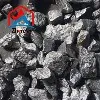
How Is Ferrosilicon Used as an Alloying Agent?
Ferrosilicon is widely used in steelmaking because it provides silicon for both alloying and deoxidation. When you use ferrosilicon as an alloying agent, the main objective is to adjust the silicon content of molten steel to meet the chemical composition required for the final product. The amount you add depends on the initial silicon content, the target composition, the silicon content of the FeSi grade and the recovery rate achieved during production.
Silicon also affects the physical properties of steel. In electrical steel, it increases electrical resistivity and helps reduce eddy-current losses. In suitable steel grades, it contributes to strength and elastic properties. However, the result depends on the complete steel composition and processing conditions; adding more silicon does not automatically improve every mechanical or magnetic property.
To obtain the intended result, you need to control three things: the chemical composition of the ferrosilicon, the amount added to the melt and the consistency of the addition process.

What Does Silicon Contribute to Steel?
1. Adjusting Chemical Composition
Different steel grades require different silicon contents. When the silicon level in molten steel falls below the target, ferrosilicon can supply the additional silicon needed to bring the composition within the specified range.
For example, if the initial silicon content is 0.20% and the target is 0.30%, the required increase is 0.10 percentage points. For 1 metric ton of steel, that represents a theoretical addition of 1 kg of silicon before accounting for recovery losses.
This calculation gives you a starting point for determining the FeSi addition. You must also consider the actual silicon content stated on the batch certificate of analysis (COA) and the recovery rate established for your steelmaking process.
2. Improving the Electrical Properties of Steel
Silicon is an important alloying element in electrical steel used in transformers, motors and generators. Its contribution to higher electrical resistivity helps reduce eddy-current losses when the steel is exposed to alternating magnetic fields.
Magnetic performance also depends on grain orientation, sheet thickness, microstructure and processing conditions. If you are producing electrical steel, the silicon target must follow the required grade specification rather than simply maximizing the silicon content.
3. Contributing to Strength and Elastic Properties
In suitable steel grades, silicon contributes to solid-solution strengthening and can increase the elastic limit. This is useful in applications such as certain spring steels, where the material must withstand repeated loading without excessive permanent deformation.
The final result depends on the steel's complete chemical composition and heat treatment. Excessive or poorly controlled silicon can affect other properties, so you should always follow the target composition specified for your steel grade.
How to Calculate the Required Ferrosilicon Addition
When selecting an alloying addition, calculate the amount of silicon needed first, then convert that requirement into the quantity of ferrosilicon. The following formula provides a practical estimate.
Required FeSi (kg) = Steel mass (kg) × Required increase in silicon mass fraction ÷ (Actual FeSi silicon fraction × Silicon recovery fraction)
Use the actual silicon content from your material specification or COA where available. The recovery rate should be based on your production data, not assumed to be identical across all furnaces and addition practices.
Worked Example: FeSi72 vs. FeSi75
Assume you have 1,000 kg of molten steel. Its initial silicon content is 0.20%, and your target is 0.30%. The required increase is 0.10 percentage points, equivalent to 1 kg of silicon before recovery losses.
For illustration, assume a silicon recovery rate of 90%. The following estimates use nominal silicon contents of 72% and 75%; they are not guaranteed production addition rates.
| Calculation Item | FeSi72 | FeSi75 |
|---|---|---|
| Steel mass | 1,000 kg | 1,000 kg |
| Required silicon increase | 1 kg | 1 kg |
| Nominal silicon content | 72% | 75% |
| Assumed recovery rate | 90% | 90% |
| Estimated FeSi addition | 1.54 kg | 1.48 kg |
Under these assumptions, FeSi75 requires approximately 0.06 kg less alloy for this particular silicon adjustment. The difference is small in this example, but it becomes more relevant when you evaluate larger quantities and recurring production requirements.
Do not use this example as a universal dosing instruction. Actual recovery, oxygen content, slag conditions, addition timing and the initial composition can change the required amount. Verify the finished steel composition through your normal sampling and analysis procedure.
Ferrosilicon as an Alloying Agent vs. a Deoxidizer
Ferrosilicon has two closely related functions in steelmaking. As an alloying agent, it supplies silicon that remains in the finished metal. As a deoxidizer, it reacts with dissolved oxygen. The same addition may contribute to both functions, so the amount of silicon retained in the steel can be lower than the amount introduced.
| Item | Alloying Function | Deoxidation Function |
|---|---|---|
| Main purpose | Adjust the silicon content of the finished steel. | React with dissolved oxygen in molten steel. |
| Main consideration | Target composition and silicon recovery. | Oxygen level, slag conditions and inclusion removal. |
| How to verify results | Check the final silicon content against the steel specification. | Evaluate oxygen control and inclusion conditions using the plant's testing procedures. |
Silicon has a strong affinity for oxygen and can react with dissolved oxygen to form silica-containing products. Removing these products from the steel depends on the refining conditions and the ability of inclusions to enter the slag. The reaction also releases heat, but you should not treat ferrosilicon addition as a substitute for controlling the overall steelmaking temperature and refining process.
Read more about the other main applications of ferrosilicon and the role of different product forms in metallurgical processing.
Request FeSi72 / FeSi75 Specifications & Quote
How Ferrosilicon Production Affects Alloy Consistency
The original production principle remains important to the final result. Ferrosilicon is produced in submerged-arc furnaces using silica-bearing materials, carbon reductants and iron-bearing inputs. The raw materials must be weighed in the required proportions and mixed consistently before charging.
Incorrect batching or uneven charge distribution can affect furnace operation and product consistency. For buyers, this is one reason to look beyond the nominal silicon grade: the delivered material must also meet the agreed chemical limits and particle-size requirements.
When evaluating a batch of ferrosilicon, check the following items:
- Silicon content: Confirm that the measured value meets your specified grade.
- Critical impurities: Check aluminum, calcium, carbon, phosphorus and sulfur where relevant to your process.
- Particle size: Ensure that the supplied size range matches your feeding and addition method.
- Batch traceability: Make sure the COA corresponds to the supplied material and batch identification.
For more detail, see how to read a Ferrosilicon 75 COA.

How to Choose Between FeSi72 and FeSi75
FeSi72 and FeSi75 can both be used for silicon addition and deoxidation. The better choice depends on your target composition, impurity limits, actual recovery and material cost.
| Selection Factor | FeSi72 | FeSi75 |
|---|---|---|
| Nominal silicon content | 72% | 75% |
| Silicon supplied per metric ton | Approximately 720 kg at the nominal grade level. | Approximately 750 kg at the nominal grade level. |
| Main purchasing consideration | Cost and compatibility with the required chemistry. | Higher nominal silicon content per unit mass. |
| Checks before purchase | Actual Si content, impurities, size and COA. | Actual Si content, impurities, size and COA. |
A higher silicon grade does not automatically have lower impurity levels or better recovery. Compare the actual COA and the full specification rather than relying on the grade number alone.
View our Ferrosilicon 72 product page and Ferrosilicon 75 product page for more information about the available grades.
Frequently Asked Questions
What is ferrosilicon used for as an alloying agent?
Ferrosilicon introduces silicon into molten steel or iron. The retained silicon helps achieve the required chemical composition and can contribute to strength, elastic properties and the electrical properties of suitable steel grades.
How does ferrosilicon improve electrical steel?
Silicon increases electrical resistivity, which helps reduce eddy-current losses. The final magnetic performance also depends on the steel's microstructure, grain orientation, thickness and processing conditions.
What is the difference between ferrosilicon alloying and deoxidation?
Alloying aims to retain silicon in the finished metal to meet the target composition. Deoxidation uses silicon to react with dissolved oxygen. One FeSi addition can serve both functions, so the required addition depends on silicon recovery and process conditions.
Should I choose FeSi72 or FeSi75?
Choose according to your target silicon content, impurity limits, recovery rate and material cost. FeSi75 supplies more nominal silicon per metric ton, but whether it is more economical depends on the confirmed quotation and your production results.
How much ferrosilicon is needed to increase silicon content?
Calculate the required increase in silicon, then divide the required silicon mass by the actual silicon fraction of the ferrosilicon and the expected recovery fraction. Treat the result as an estimate and verify the final composition through your normal production controls.
What should I check before buying ferrosilicon for alloying?
Confirm the silicon content, relevant impurity limits, particle size, fines tolerance, packing and batch COA. The material specification should match your production requirements and the acceptance criteria agreed in the purchase contract.
Request Ferrosilicon for Your Alloying Application
We supply FeSi72 and FeSi75 for metallurgical applications. Send us your required grade, chemical composition, particle size, quantity and destination port so we can confirm the relevant product specification and quotation for your order.