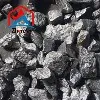
Ferrosilicon powder is a finely ground or atomized iron-silicon alloy used in steelmaking, foundry operations, welding consumables and mineral processing. Its chemical composition mainly depends on the original ferrosilicon grade, while its particle size and production method determine how it performs in different applications. Common commercial grades include FeSi75, FeSi72, FeSi70 and FeSi65. Buyers should evaluate both the chemical composition and particle size distribution rather than selecting powder based on silicon content alone.
In this guide, we explain the main components of ferrosilicon powder, compare the chemical specifications of different grades, discuss its industrial applications and outline the quality checks buyers should complete before purchasing.
Quick Answer: What Is Ferrosilicon Powder Made Of?
Ferrosilicon powder mainly consists of silicon (Si) and iron (Fe), with smaller amounts of aluminium (Al), calcium (Ca), manganese (Mn), chromium (Cr), phosphorus (P), sulphur (S) and carbon (C). Its silicon content varies according to the selected grade. For example, FeSi75 powder contains at least 75% silicon under the corresponding product specification. Grinding changes the particle size, not the intended alloy grade or nominal chemical composition.
Table of Contents
- What Is Ferrosilicon Powder?
- Chemical Composition of Ferrosilicon Powder
- Chemical Composition by Grade
- Does Grinding Change Ferrosilicon Composition?
- Physical Properties and Particle Size
- Milled vs. Atomized Ferrosilicon Powder
- Industrial Applications of Ferrosilicon Powder
- How to Check Ferrosilicon Powder Quality
- How to Select the Right Ferrosilicon Powder
- Frequently Asked Questions
1. What Is Ferrosilicon Powder?
Ferrosilicon powder is a powdered form of ferrosilicon alloy, which is primarily composed of iron and silicon. It is generally produced by crushing, grinding and screening solid ferrosilicon lumps into specified particle size ranges. Atomized ferrosilicon powder is another product form made by breaking molten alloy into fine droplets and cooling them into powder.
The powder retains the basic alloy characteristics of its parent ferrosilicon grade. However, its smaller particle size provides a larger surface area relative to its mass, which can influence dissolution, reaction behaviour, dispersion and handling during industrial processing.
Depending on the application, ferrosilicon powder can be supplied in different silicon grades, particle size distributions and production forms. FeSi75, FeSi72, FeSi70 and FeSi65 are among the commonly specified grades.
For a broader introduction to available grades and product forms, see our ferrosilicon product range and specifications.
2. Chemical Composition of Ferrosilicon Powder
The chemical composition of ferrosilicon powder is determined primarily by the original alloy grade and the production process. Silicon is the principal functional element, while iron forms the balance of the alloy. Other elements are controlled according to the requirements of the intended application.
2.1 Silicon (Si): The Main Alloying Component
Silicon is the most important component of ferrosilicon powder. It provides the material with its deoxidizing and reducing properties and determines the nominal grade of the alloy.
Different silicon contents are selected for different industrial processes:
- FeSi75: A high-silicon grade commonly used for steelmaking deoxidation, alloying and selected foundry applications.
- FeSi72: Used where the specified silicon range and other impurity limits suit the production process.
- FeSi70 and FeSi65: Alternative grades selected according to silicon recovery requirements, process conditions and purchasing specifications.
- FeSi45: A lower-silicon grade used in applications requiring a different alloy composition.
2.2 Iron (Fe): The Balance of the Alloy
Iron is the other major constituent of ferrosilicon powder. In commercial specifications, its content is generally treated as the balance after accounting for silicon and the other specified elements.
The iron content is therefore related to the silicon percentage and the levels of other alloying and impurity elements. Buyers should check the complete chemical analysis rather than estimating iron content from the silicon grade alone.
2.3 Other Elements and Their Effects
Although silicon and iron make up most of the material, minor elements can influence the suitability of ferrosilicon powder for specific applications.
| Element | Role or Potential Effect | What Buyers Should Check |
|---|---|---|
| Aluminium (Al) | Can influence deoxidation behaviour and oxide inclusion formation. | Maximum aluminium content in the specification. |
| Calcium (Ca) | Can affect inclusion modification and metallurgical reactions. | Whether calcium is controlled or intentionally specified. |
| Manganese (Mn) | Contributes to the overall alloy chemistry. | Maximum permitted manganese content. |
| Chromium (Cr) | May be relevant when controlling residual alloying elements. | Maximum chromium content for the intended steel grade. |
| Phosphorus (P) | Generally treated as an undesirable residual in many steelmaking applications. | Maximum phosphorus limit. |
| Sulphur (S) | Can affect steel cleanliness and downstream metallurgical properties. | Maximum sulphur limit. |
| Carbon (C) | May affect the final carbon balance in the steel or alloy production process. | Maximum carbon content. |
The acceptable limits depend on the application and the buyer's specification. A powder intended for steelmaking may require different impurity controls from material used in dense medium separation or welding consumables.
3. Chemical Composition of Different Ferrosilicon Powder Grades
Ferrosilicon powder is available in several silicon grades. The following table summarizes the representative composition limits listed for the corresponding ferrosilicon powder product range.
| Grade | Si (%) | Al (%) Max. | Ca (%) Max. | Mn (%) Max. | Cr (%) Max. | P (%) Max. | S (%) Max. | C (%) Max. |
|---|---|---|---|---|---|---|---|---|
| FeSi75 | ≥75 | 1.5 | 1.0 | 0.5 | 0.5 | 0.04 | 0.02 | 0.2 |
| FeSi72 | ≥72 | 2.0 | 1.0 | 0.5 | 0.5 | 0.04 | 0.02 | 0.2 |
| FeSi70 | ≥70 | 2.0 | 1.0 | 0.6 | 0.5 | 0.04 | 0.02 | 0.2 |
| FeSi65 | ≥65 | 2.0 | 1.0 | 0.8 | 0.5 | 0.04 | 0.02 | 0.2 |
| FeSi60 | ≥60 | 2.0 | 1.0 | 0.7 | 0.5 | 0.05 | 0.03 | 0.2 |
| FeSi45 | 45–47 | 2.0 | 1.0 | 0.8 | 0.5 | 0.04 | 0.02 | 0.2 |
Note: These values reflect the representative product specifications provided for this article. They are not universal limits for every ferrosilicon standard or powder producer. Actual acceptance criteria should be confirmed against the current technical specification, purchase agreement and batch-specific Certificate of Analysis (COA). Iron is the balance of the composition.
3.1 How to Choose Between FeSi75 and FeSi72 Powder
The main difference between FeSi75 and FeSi72 powder is their specified minimum silicon content. FeSi75 provides a higher nominal silicon concentration, while FeSi72 may be suitable where its composition and cost meet the process requirements.
However, a higher silicon percentage does not automatically mean better performance in every application. Buyers should also compare aluminium, calcium, phosphorus, sulphur, carbon and particle size distribution.
For example, a steelmaking plant may prioritize silicon recovery and impurity limits, while a dense medium separation plant may focus more heavily on particle size distribution, suspension stability and magnetic recovery.
4. Does Grinding Change Ferrosilicon Powder Composition?
Grinding and screening are physical processing operations. They reduce the particle size of solid ferrosilicon and separate the material into different size fractions. They do not intentionally change the nominal chemical composition of the original alloy.
For example, if FeSi75 lumps are ground into powder under controlled conditions, the resulting powder should retain the chemical composition of the original FeSi75 alloy.
Nevertheless, several factors can affect the quality of the finished powder:
- Oxidation: Fine particles have a larger exposed surface area, which can increase their susceptibility to surface oxidation during processing and storage.
- Equipment contamination: Contact with grinding equipment can introduce unwanted foreign material if the production line is not properly maintained.
- Moisture: Improper storage can cause moisture pickup and affect powder handling and certain downstream processes.
- Particle segregation: Different particle sizes may separate during handling and transportation, affecting the consistency of sampled material.
For this reason, buyers should request chemical analysis of the finished powder rather than relying exclusively on the original lump material's COA.
5. Physical Properties and Particle Size of Ferrosilicon Powder
Chemical composition determines the basic alloy grade, but physical characteristics determine how the powder behaves during feeding, mixing, separation and metallurgical reactions.
5.1 Particle Size Distribution
Particle size is one of the most important purchasing parameters for ferrosilicon powder. Different industrial applications require different particle size distributions.
A finer powder provides a larger specific surface area and may react or disperse more rapidly under suitable process conditions. However, excessive fines can increase dust generation, oxidation exposure and handling losses.
Buyers should specify the required particle size range, the proportion of material above and below the target size, and the applicable sieve standard.
5.2 Other Important Physical Properties
| Property | Why It Matters |
|---|---|
| Particle shape | Influences flowability, packing and the interaction between particles. |
| Particle size distribution | Affects dissolution, suspension behaviour and process consistency. |
| Bulk density | Helps determine storage, conveying and dosing requirements. |
| Moisture content | Influences storage stability, flowability and process safety. |
| Magnetic properties | Important for magnetic recovery in dense medium separation applications. |
The required physical properties should be agreed upon before production. A single mesh designation is not always sufficient to describe a powder's complete particle size distribution.
6. Milled vs. Atomized Ferrosilicon Powder
Ferrosilicon powder is generally produced through two different processing routes: mechanical grinding of solid alloy and atomization of molten alloy. The production method affects particle morphology, particle size distribution and surface characteristics.
| Comparison | Milled Ferrosilicon Powder | Atomized Ferrosilicon Powder |
|---|---|---|
| Production method | Crushing, grinding and screening solid alloy. | Breaking molten alloy into droplets and rapidly cooling them. |
| Particle shape | Generally irregular or angular. | Depends on the atomizing medium and operating conditions. |
| Particle size | Controlled through grinding and screening. | Controlled through atomization and subsequent classification. |
| Surface characteristics | Freshly fractured surfaces with potential exposure to oxidation. | Surface condition depends on atomization and cooling conditions. |
| Typical considerations | Particle size, fines content and grinding contamination. | Particle morphology, oxidation and size distribution. |
Neither production method is universally better. The appropriate choice depends on the required powder characteristics and the application.
For more information about the atomization process and its characteristics, read our article on atomized ferrosilicon powder.
7. Industrial Applications of Ferrosilicon Powder
Ferrosilicon powder is used in several metallurgical and industrial processes. Its application depends on the silicon grade, particle size, chemical composition and feeding method.
7.1 Steelmaking: Deoxidation and Alloying
Silicon has a strong chemical affinity for oxygen, making ferrosilicon an important deoxidizing material in steel production. When added under appropriate metallurgical conditions, silicon reacts with dissolved oxygen to form silica-containing reaction products.
Ferrosilicon also supplies silicon for alloying. The required grade and particle size depend on the steel composition, addition location, feeding equipment and desired silicon recovery.
Powdered material may be selected for specific feeding or blending processes, but its suitability must be evaluated against the actual steelmaking practice. Lump ferrosilicon remains common for conventional furnace and ladle additions.
7.2 Foundry: Inoculation of Cast Iron
Ferrosilicon-based materials are widely used in foundry operations. Specialized inoculant grades can promote graphite nucleation in molten cast iron, helping improve graphite distribution and reduce the tendency toward chill formation.
However, ordinary ferrosilicon powder should not automatically be treated as a finished foundry inoculant. Inoculation performance depends on chemical composition, active elements, particle size, addition timing and the characteristics of the molten iron.
Spheroidization is a separate treatment. Ductile iron production normally uses magnesium-containing spheroidizing alloys, such as FeSiMg, rather than ordinary ferrosilicon powder as a direct substitute.
7.3 Dense Medium Separation in Mineral Processing
Ferrosilicon powder is also used as a suspension material in dense medium separation (DMS), particularly in coal washing and mineral processing.
In these systems, ferrosilicon particles are mixed with water to produce a suspension with a controlled effective density. The separation process uses the density difference between valuable minerals and unwanted materials.
DMS applications require particular attention to particle size distribution, suspension stability, viscosity, magnetic recovery and medium losses.
Important: DMS Ferrosilicon Is Not Necessarily FeSi75 Powder
Dense medium separation commonly uses specialized low-silicon ferrosilicon media. Its composition and physical specifications differ from high-silicon FeSi75 powder used in conventional metallurgical applications. Buyers should specify the intended DMS process instead of selecting powder solely by the FeSi75 grade name.
7.4 Welding Electrode and Consumable Manufacturing
Ferrosilicon powder can be incorporated into certain welding electrode coating formulations and other welding consumables. It acts as a silicon-bearing addition and may contribute to deoxidation during welding.
The required composition, particle size and moisture level depend on the electrode formulation and manufacturing process. Buyers should follow the welding consumable manufacturer's formulation requirements rather than assuming that all FeSi powder grades are interchangeable.
7.5 Reduction in Ferroalloy Production
High-silicon ferrosilicon and related silicon-bearing materials can serve as reducing agents in the production of certain low-carbon ferroalloys.
Silicon has a strong affinity for oxygen and can participate in the reduction of metal oxides under suitable process conditions. The required silicon content, particle size and impurity limits depend on the target alloy and smelting route.
8. How to Check Ferrosilicon Powder Quality
For industrial buyers, evaluating ferrosilicon powder requires more than checking the nominal silicon grade. A reliable inspection process should cover chemical composition, particle size, moisture and batch consistency.
8.1 Verify the Chemical Composition
Request a batch-specific Certificate of Analysis (COA). Check whether the reported silicon, aluminium, calcium, manganese, chromium, phosphorus, sulphur and carbon values meet the agreed purchasing specification.
The COA should identify the product grade, batch number, test results and applicable inspection requirements. Do not rely exclusively on a general product brochure or an old laboratory report.
8.2 Check Particle Size Distribution
Use sieve analysis or an agreed particle size testing method to verify the powder's size distribution. Confirm the proportion of oversize particles, undersize particles and material within the specified range.
For applications requiring fine or narrowly classified powder, the full particle size distribution is more useful than a single mesh designation.
8.3 Inspect Moisture and Packaging
Check the material for moisture pickup, damaged packaging, contamination and abnormal agglomeration. Fine ferrosilicon powder should be kept dry and protected from environmental exposure during storage and transportation.
Packaging should be appropriate for the particle size, transportation conditions and handling equipment. Where required, buyers can specify moisture-resistant inner liners and sealed bags.
8.4 Confirm Batch Consistency
For repeat orders, compare the COAs and particle size test results of successive batches. Consistent chemistry and particle size help reduce adjustments in downstream production.
For high-volume purchases, buyers may also arrange pre-shipment inspection or third-party testing according to the contract.
9. How to Select the Right Ferrosilicon Powder
The right ferrosilicon powder is determined by the application rather than by silicon content alone. Before requesting a quotation, buyers should clarify the following technical parameters.
| Purchasing Parameter | Information to Confirm |
|---|---|
| Application | Steelmaking, foundry, DMS, welding or ferroalloy production. |
| Silicon grade | FeSi75, FeSi72, FeSi70, FeSi65, FeSi45 or another specified grade. |
| Chemical composition | Si content and maximum limits for Al, Ca, Mn, Cr, P, S and C. |
| Particle size | Required mesh, millimetre range and particle size distribution. |
| Production method | Ground, milled or atomized material. |
| Moisture requirements | Maximum permitted moisture content. |
| Packaging | Bag size, inner liner, jumbo bag or customized packaging. |
| Quality documentation | Batch COA, inspection report and agreed testing standard. |
Providing these details allows the supplier to recommend a suitable grade and processing specification, reducing the risk of receiving material that meets the nominal silicon content but does not match the actual production requirements.
10. Frequently Asked Questions
Q1. What is the main component of ferrosilicon powder?
The main components are silicon and iron. Silicon determines the nominal grade, while iron generally makes up the balance of the alloy. Smaller amounts of aluminium, calcium, manganese, chromium, phosphorus, sulphur and carbon may also be present.
Q2. What is the silicon content of FeSi75 powder?
FeSi75 powder has a specified minimum silicon content of 75% under the corresponding product specification. The actual silicon content should be confirmed through the batch-specific COA.
Q3. Does grinding ferrosilicon change its chemical composition?
Grinding primarily changes the physical particle size rather than the intended chemical composition. However, oxidation, equipment contamination and improper handling may affect the finished powder's quality, so chemical testing of the final product is recommended.
Q4. What is the difference between milled and atomized ferrosilicon powder?
Milled powder is produced by crushing and grinding solid ferrosilicon, while atomized powder is produced by breaking molten alloy into droplets and cooling them. Their particle morphology and size distribution can differ, so the appropriate type depends on the intended application.
Q5. Is FeSi75 powder suitable for dense medium separation?
Not necessarily. Dense medium separation commonly requires specialized low-silicon ferrosilicon media with controlled particle size distribution and magnetic recovery properties. FeSi75 powder should not be assumed to meet DMS requirements without checking its technical specifications.
Q6. How should ferrosilicon powder be stored?
Store ferrosilicon powder in sealed, moisture-resistant packaging in a dry and well-ventilated area. Keep it away from water, excessive humidity and contamination. Follow the supplier's safety data sheet and handling instructions, particularly for fine powders.
11. Ferrosilicon Powder Supply from ZhenAn
ZHEN AN INTERNATIONAL CO., LIMITED supplies ferrosilicon products for steelmaking, foundry and other metallurgical applications. Our product range includes different silicon grades and processing sizes to meet customers' technical and purchasing requirements.
We focus on the key purchasing parameters that determine product suitability:
- Different silicon grades, including FeSi75, FeSi72, FeSi65 and other specifications.
- Customized particle sizes and processing forms according to order requirements.
- Chemical composition inspection and batch quality documentation.
- Flexible packaging options for different transportation and storage requirements.
- Export experience serving customers in more than 100 countries and regions.
Our production and supply capabilities support a broad range of ferrosilicon requirements. To compare available grades, product forms and specifications, visit our Ferrosilicon Product Page.
Looking for the Right Ferrosilicon Powder?
Send us your required silicon grade, chemical composition, particle size, application and order quantity. Our team can help you identify a suitable specification and provide product information.
Request a QuotationZHEN AN INTERNATIONAL CO., LIMITED | Ferrosilicon and Metallurgical Materials Supplier | Established in 1993