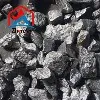
Ferrosilicon granules are used in steelmaking and foundry production as a silicon-bearing material for deoxidation, alloying and, when specially formulated, cast iron inoculation. Produced by crushing and screening ferrosilicon lumps, these granules provide controlled particle sizes for different feeding and melting processes. Their performance depends on silicon content, chemical composition, particle size and the application method.
Quick Answer
The main uses of ferrosilicon granules include steel deoxidation, silicon alloying, foundry inoculation and other metallurgical additions. Steelmakers primarily evaluate chemical composition and silicon recovery, while foundries pay closer attention to inoculant chemistry, particle size and graphite nucleation performance.
Table of Contents
- What Are Ferrosilicon Granules?
- Ferrosilicon Granules vs. Pellets and Briquettes
- Main Applications of Ferrosilicon Granules
- Ferrosilicon Granules in Foundry Inoculation
- How to Select the Right Grade and Particle Size
- Chemical Composition and Quality Requirements
- Packaging, Storage and Handling
- Purchasing Checklist
- Frequently Asked Questions
1. What Are Ferrosilicon Granules?
Ferrosilicon granules are small, screened particles produced by crushing larger ferrosilicon blocks or lumps into specified size fractions. They contain silicon and iron as their principal components, together with controlled amounts of other elements such as aluminium, calcium, manganese, phosphorus and sulphur.
Compared with large ferrosilicon lumps, granular material offers more flexibility in feeding, dosing and distributing the alloy throughout a metal bath. Its relatively uniform particle size can also make automated addition and batch handling easier.
The final product specification depends on the intended application. Granules for steelmaking deoxidation are generally selected according to silicon content and impurity limits, whereas foundry inoculants may require additional active elements to obtain the desired graphite nucleation behaviour.
View Ferrosilicon 75 Product Specifications
2. Ferrosilicon Granules vs. Pellets and Briquettes
The terms granules, pellets and briquettes are sometimes used inconsistently in commercial descriptions. Buyers should identify the manufacturing method and physical form rather than relying on the product name alone.
| Product form | Manufacturing method | Typical characteristics |
|---|---|---|
| Ferrosilicon granules | Crushing and screening | Irregular particles with specified size ranges. |
| Ferrosilicon pellets | May involve compaction or other forming processes, depending on the supplier. | Formed particles with dimensions and mechanical properties specified by the producer. |
| Ferrosilicon briquettes | Pressing or compaction | Larger, compacted pieces designed for handling and furnace or ladle additions. |
These forms are not automatically interchangeable. Their suitability depends on dissolution behaviour, mechanical strength, feeding equipment and the requirements of the metallurgical process.
For procurement, buyers should confirm whether the material is crushed ferrosilicon or a compacted product, together with its particle dimensions, chemical composition and any binder content.
3. Main Applications of Ferrosilicon Granules
3.1 Deoxidation in Steelmaking
One of the main applications of ferrosilicon granules is deoxidation during steel production. Dissolved oxygen in molten steel can cause oxide inclusions and other quality problems if it is not properly controlled.
Silicon has a strong chemical affinity for oxygen. When ferrosilicon is introduced into molten steel, silicon reacts with dissolved oxygen to form silicon oxide (SiO₂), which can subsequently become part of the slag or inclusion system.
Granular ferrosilicon can be used as a silicon-bearing addition where its particle size is compatible with the feeding and melting conditions.
Its practical performance depends on several factors:
- Silicon content and chemical composition.
- Particle size and dissolution behaviour.
- Steel temperature and bath mixing conditions.
- Slag composition and deoxidation practice.
- Feeding position and addition sequence.
The objective is to achieve consistent silicon recovery and effective oxygen control without introducing unnecessary impurities.
3.2 Silicon Alloying in Steel Production
Ferrosilicon granules can also serve as a silicon-bearing alloy addition when steelmakers need to adjust the silicon content of molten steel.
Silicon contributes to the mechanical and physical properties of different steel grades. Depending on the steel composition and production process, it can influence strength, hardness, elasticity and electrical properties.
Typical steel categories using silicon-bearing additions include:
- Low-alloy structural steel.
- Spring steel.
- Electrical silicon steel.
- Selected heat-resistant steels.
- Other silicon-containing specialty steels.
The required ferrosilicon grade should be determined by the target silicon content, impurity restrictions and expected alloy recovery. A higher silicon grade may reduce the amount of material required, but the final selection must also consider cost and other chemical elements.
3.3 Foundry Inoculation in Cast Iron Production
In foundry production, specially formulated ferrosilicon granules are used as inoculants to promote graphite nucleation in molten cast iron.
Inoculation helps improve graphite distribution and reduce the tendency toward carbide or chill formation, particularly in thin sections and other areas where rapid cooling can affect the casting structure.
Specialized inoculant grades may contain controlled amounts of calcium, barium, strontium or other active elements. These additions influence nucleation behaviour and the effectiveness of the inoculation treatment.
It is important to distinguish inoculation from spheroidization. Inoculation promotes graphite nucleation, while spheroidization is a separate treatment, commonly involving magnesium, that changes graphite morphology in ductile iron.
Therefore, ordinary ferrosilicon granules should not automatically be treated as a substitute for a formulated foundry inoculant or a spheroidizing alloy.
3.4 Other Metallurgical Applications
Depending on its composition and particle size, ferrosilicon in granular form can also be used as a silicon-bearing raw material in other metallurgical processes.
For example, high-silicon ferrosilicon is used as a reducing agent in the production of certain low-carbon ferroalloys. Its suitability depends on the reduction process, required silicon content and impurity restrictions.
Not every granular ferrosilicon grade is suitable for every application. Buyers should match the material specification to the actual production process instead of selecting a product based only on its physical appearance.
4. How Ferrosilicon Granules Work in Foundry Inoculation
Inoculation is an important treatment in grey and ductile iron production. Its purpose is to improve graphite nucleation conditions and obtain a more consistent casting microstructure.
When a suitable ferrosilicon-based inoculant is added to molten iron, its active elements contribute to the formation of nucleation sites. These sites help graphite precipitate during solidification.
The main benefits of effective inoculation include:
- Promoting a more uniform graphite distribution.
- Reducing chill and carbide formation.
- Improving microstructural consistency.
- Supporting more predictable casting properties.
- Reducing the risk of hardness variations caused by uneven solidification.
Inoculation effectiveness is influenced by the chemical composition of the inoculant, particle size, addition method, treatment temperature and time between inoculation and pouring.
Inoculation fading is another important consideration. The effectiveness of an inoculant can decrease with time after treatment. Foundries therefore need to coordinate the addition method and pouring schedule to maintain consistent results.
For this reason, foundry buyers should evaluate specialized inoculant grades according to casting requirements rather than assuming that a standard FeSi75 grade will provide identical performance.
5. How to Select the Right Grade and Particle Size
Selecting ferrosilicon granules involves more than checking the silicon percentage. The appropriate specification depends on the intended application and the equipment used for material addition.
5.1 Select the Appropriate Silicon Grade
Common commercial ferrosilicon grades include FeSi75, FeSi72, FeSi65 and FeSi45. Each grade has a different silicon content and may be selected according to the required alloy addition and production economics.
| Grade | Nominal silicon designation | Selection considerations |
|---|---|---|
| FeSi75 | 75 | Higher silicon content for controlled alloy additions. |
| FeSi72 | 72 | An alternative silicon grade for steelmaking and foundry applications. |
| FeSi65 | 65 | Used where the required silicon recovery and overall charge economics justify this grade. |
| FeSi45 | 45 | Selected for specific metallurgical formulations and processes. |
These grade designations are not substitutes for contractual chemical limits. Buyers should confirm the actual silicon content and impurity limits through the supplier's specification and batch-specific Certificate of Analysis (COA).
5.2 Choose the Correct Particle Size
Particle size affects how ferrosilicon granules are handled, fed and dissolved. An appropriate size distribution helps match the material to the addition equipment and process conditions.
| Selection factor | Why it matters |
|---|---|
| Particle size range | Must match the feeding system and addition method. |
| Size distribution | Controls the proportions of undersize and oversize material. |
| Particle integrity | Excessive breakage can generate fines during handling. |
| Addition method | Influences the required particle dimensions and dissolution behaviour. |
For a reliable purchase, specify the required size in millimetres and define acceptable oversize and undersize percentages. Avoid relying only on descriptions such as fine granules or standard granules.
6. Chemical Composition and Quality Requirements
Chemical composition is one of the most important factors affecting ferrosilicon performance. Even when two batches carry the same grade designation, differences in impurity levels can affect their suitability for particular steelmaking or foundry applications.
Buyers should pay attention to the following elements:
| Element | Quality consideration |
|---|---|
| Silicon (Si) | Determines the main alloying contribution and grade. |
| Aluminium (Al) | Must meet the application-specific impurity or process requirements. |
| Calcium (Ca) | Important in certain steelmaking and foundry inoculant formulations. |
| Manganese (Mn) | Should be controlled according to the required alloy specification. |
| Phosphorus (P) | A controlled impurity, particularly where clean steel requirements apply. |
| Sulphur (S) | Should remain within the limits specified for the application. |
| Carbon (C) | Relevant to the overall alloy chemistry and customer requirements. |
For foundry inoculants, additional elements such as barium and strontium may also need to be specified. Their required levels depend on the casting process and the desired inoculation effect.
Quality Inspection Before Shipment
A reliable quality inspection should cover both chemical and physical characteristics.
- Chemical analysis: Verify the composition against the agreed specification.
- Screen analysis: Check particle size distribution and the proportions of oversize and undersize material.
- Visual inspection: Check for excessive dust, foreign matter and visible contamination.
- Moisture inspection: Confirm that the material meets the agreed handling and storage requirements.
- Batch verification: Ensure the supplied material corresponds to the COA and purchase specification.
Buyers should request a representative sample and a batch-specific COA before approving bulk shipments.
7. Packaging, Storage and Handling
Proper packaging and storage help maintain the physical condition of ferrosilicon granules during transportation and warehouse storage.
Packaging Options
Depending on particle size, order quantity and customer requirements, ferrosilicon granules can be supplied in different packaging formats, including:
- 25 kg bags.
- 50 kg bags.
- Jumbo bags, commonly around 1,000 kg.
- Customized packaging according to transportation and handling requirements.
Packaging specifications should identify the net weight, product grade, batch number and other necessary shipping information.
Storage and Safety Precautions
Ferrosilicon should be stored in a dry, well-ventilated area and protected from rain, condensation and direct contact with water.
Moisture exposure can deteriorate the material and, depending on impurities present in the alloy, may create hazardous gases. Buyers and warehouse operators should follow the product Safety Data Sheet (SDS), applicable handling procedures and local safety regulations.
Additional precautions include:
- Keep bags properly sealed and protected from moisture.
- Avoid unnecessary handling that generates excessive fines and dust.
- Maintain clear batch identification and inventory records.
- Use suitable personal protective equipment during handling.
- Follow appropriate ventilation and dust-control procedures.
8. Purchasing Checklist for Ferrosilicon Granules
Before placing an order, industrial buyers should confirm the following details with their supplier.
| Item | Information to confirm |
|---|---|
| Product type | Crushed granules, compacted pellets or briquettes. |
| Grade | FeSi75, FeSi72, FeSi65, FeSi45 or another agreed specification. |
| Chemical composition | Si and maximum limits for relevant impurities. |
| Particle size | Required millimetre range and screening tolerances. |
| Quality documents | COA, inspection records and SDS. |
| Packaging | Bag weight, jumbo bag requirements and moisture protection. |
| Shipment | Order quantity, delivery schedule and destination port. |
A clearly defined purchase specification reduces misunderstandings between the buyer and supplier and makes incoming material inspection more reliable.
9. Frequently Asked Questions
Q1. What are ferrosilicon granules mainly used for?
Ferrosilicon granules are mainly used for steel deoxidation, silicon alloying and foundry applications. Specially formulated granular ferrosilicon is also used as an inoculant in cast iron production.
Q2. What is the difference between ferrosilicon granules and ferrosilicon pellets?
Granules generally refer to particles produced by crushing and screening larger ferrosilicon pieces. Pellets may refer to formed or compacted products. Since commercial terminology varies, buyers should confirm the manufacturing method and physical specification.
Q3. Can ferrosilicon granules be used as a foundry inoculant?
Yes, when the material has an appropriate inoculant formulation. Specialized ferrosilicon inoculants may contain controlled amounts of calcium, barium or strontium to promote graphite nucleation. Ordinary ferrosilicon granules are not automatically equivalent to these formulations.
Q4. Which ferrosilicon grade should buyers choose?
Common choices include FeSi75, FeSi72, FeSi65 and FeSi45. The correct grade depends on the target silicon content, impurity limits, recovery requirements and production economics. Buyers should confirm the actual chemical composition through the COA.
Q5. Why is particle size important for ferrosilicon granules?
Particle size affects feeding, handling, dissolution and material distribution. The required size should match the addition equipment and metallurgical process. Buyers should specify both the target size range and acceptable screening tolerances.
Q6. How should ferrosilicon granules be stored?
Store ferrosilicon granules in dry, well-ventilated conditions, protected from rain and moisture. Follow the supplier's SDS and appropriate safety procedures during storage and handling.
10. Ferrosilicon Supply from ZhenAn
ZHEN AN INTERNATIONAL CO., LIMITED supplies ferrosilicon products for steelmaking, foundry and other metallurgical applications. Our product range includes different silicon grades and physical forms to meet varying production and purchasing requirements.
When requesting a quotation, buyers can provide their required grade, silicon content, particle size, chemical limits, packaging and order quantity. This information helps us identify a suitable product specification and prepare a quotation based on the actual requirements.
Our production and quality control process covers raw material inspection, chemical composition testing, particle size screening and pre-shipment inspection. Batch-specific quality documentation can be provided according to the agreed order requirements.
Looking for Ferrosilicon Granules?
Send us your required grade, particle size, chemical composition and order quantity. Our team can help you identify a suitable ferrosilicon specification for your production process.
ZHEN AN INTERNATIONAL CO., LIMITED | Ferrosilicon Products for Steelmaking and Foundry Applications