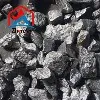
High-Purity Ferrosilicon for Automotive Steel
High-purity ferrosilicon is used in automotive steel production when steelmakers need controlled silicon additions and tighter limits on residual elements. Its value is not simply a higher silicon percentage. The actual purchasing requirement depends on the target steel composition, deoxidation practice, inclusion control and the limits specified for elements such as aluminum, phosphorus, sulfur and carbon.
In automotive steel production, ferrosilicon supplies silicon for deoxidation and alloy adjustment. Silicon also contributes to the properties of selected advanced high-strength steels, spring steels and electrical steels used in vehicle structures and electric motors. However, a suitable FeSi grade must be selected according to the downstream steelmaking route rather than assuming that one high-purity specification fits every automotive application.
Quick Answer: What Makes Ferrosilicon Suitable for Automotive Steel?
High-purity ferrosilicon is defined by its agreed chemical composition, particularly the silicon content and maximum permitted levels of unwanted or tightly controlled elements. Automotive steelmakers should specify Si, Al, P, S and C limits according to the steel grade, together with particle size, batch COA and inspection requirements. FeSi75 and FeSi72 are common grades to evaluate, but the correct choice depends on the required silicon contribution and actual batch chemistry.
Contents
- What Does High-Purity Ferrosilicon Actually Mean?
- Where Is Ferrosilicon Used in Automotive Steel?
- Which Chemical Elements Should Buyers Control?
- FeSi75 vs FeSi72 for Automotive Steelmaking
- How to Specify High-Purity Ferrosilicon
- How Ferrosilicon Is Used in Automotive Steel Production
- COA, Inspection and Batch Traceability
- How to Evaluate a Ferrosilicon Supplier
- Frequently Asked Questions
What Does High-Purity Ferrosilicon Actually Mean?
In ferroalloy purchasing, high purity does not necessarily mean that ferrosilicon contains 99.9% silicon. Ferrosilicon is an iron-silicon alloy, and its commercial grades are identified by their silicon content and other chemical requirements.
For automotive steel production, the more relevant question is whether the alloy introduces unwanted elements beyond the limits permitted by the steelmaking process.
Two batches can both be classified as FeSi75 but have different aluminum, carbon, phosphorus and sulfur contents. Their suitability for a particular steelmaking application may therefore differ.
| Quality Factor | What It Means | Why Buyers Should Check It |
|---|---|---|
| Silicon content | The actual percentage of Si in the ferrosilicon. | Determines the silicon input per tonne of alloy. |
| Aluminum content | The amount of aluminum introduced with the alloy. | Important when the steelmaking route has strict aluminum or inclusion-control requirements. |
| Phosphorus content | A residual element carried into the steelmaking process. | Relevant to steel toughness, ductility and residual-element control. |
| Sulfur content | A residual element that can contribute to sulfide inclusions. | Relevant to cleanliness, formability and the steel grade's sulfur limit. |
| Carbon content | The carbon introduced through the alloy addition. | Important for steel grades with narrow carbon specifications. |
| Other controlled elements | Ca, Mn, Cr and other elements specified by the buyer. | Prevents unexpected changes in the final steel chemistry. |
High Silicon Content Is Not the Same as High Chemical Purity
A higher silicon percentage does not automatically mean that a batch has lower impurity levels.
For example, an FeSi75 batch may have a higher silicon concentration than an FeSi65 batch, but the two products must still be compared element by element. If a steelmaker requires Al ≤0.5%, simply ordering FeSi75 does not guarantee compliance with that requirement.
This is why high-purity ferrosilicon should be purchased against a defined chemical specification rather than a general product description.
For an overview of the manufacturing stages behind the alloy, see our Ferrosilicon Production Process.
Where Is Ferrosilicon Used in Automotive Steel?
Automotive steel is not a single material category. Vehicle manufacturing uses different steel grades for body panels, structural reinforcements, suspension systems, transmission components and electric motor cores.
Each application has different chemical and mechanical requirements. Ferrosilicon contributes mainly through deoxidation and silicon alloying, while the final properties are determined by the complete steel composition, processing route and heat treatment.
1. Advanced High-Strength Steel (AHSS) for Vehicle Structures
Advanced high-strength steels are used in body-in-white structures, reinforcement components and safety-related vehicle parts where strength, weight and crash performance must be balanced.
Silicon can contribute to these steel grades in two ways.
- Solid-solution strengthening: Silicon dissolved in ferrite contributes to the strength of the steel matrix.
- Transformation control: In selected TRIP and related multiphase steel designs, silicon can suppress cementite precipitation during bainitic transformation, helping carbon enrich the retained austenite.
These effects depend on the complete alloy design and thermal processing route. Silicon is not a universal grain-refining additive, and the required amount varies between steel grades.
For automotive steelmakers, the ferrosilicon addition must deliver the required silicon without introducing residual elements that conflict with the final composition or downstream processing requirements.
2. Electrical Steel for Electric Vehicle Motors
Electrical steel is used in the stator and rotor cores of electric vehicle traction motors.
Silicon is an important alloying element in electrical steel because it increases electrical resistivity. Higher resistivity helps reduce eddy-current losses when the magnetic field changes during motor operation.
However, silicon concentration must be balanced against other material requirements. Increasing silicon too far can make the steel more brittle and difficult to process, particularly during rolling and stamping.
In this application, ferrosilicon serves as a silicon carrier during steelmaking. The steel producer must control the final silicon concentration and the other elements according to the electrical steel grade.
3. Spring Steel for Suspension and Mechanical Components
Spring steels are used in suspension systems and other automotive components that undergo repeated elastic loading.
Silicon contributes to solid-solution strengthening and tempering resistance in selected spring steel compositions. These effects help steelmakers design materials with the required elastic properties and resistance to permanent deformation.
For this application, the addition of ferrosilicon should be calculated according to the target silicon content, initial melt composition and expected silicon recovery.
Phosphorus, sulfur and other residual elements must also remain within the limits established for the selected steel grade.
4. HSLA Steel for Chassis and Structural Components
High-strength low-alloy (HSLA) steels are used in vehicle frames, chassis structures and other load-bearing components.
Silicon acts as a solid-solution strengthening element and can also participate in the deoxidation practice used during steel production.
However, the grain refinement and precipitation strengthening of HSLA steels are primarily associated with controlled alloying and processing involving elements such as niobium, vanadium and titanium.
Ferrosilicon should therefore be regarded as a silicon-bearing deoxidizer and alloying material, not as a replacement for the microalloying system.
| Automotive Steel Application | Role of Silicon | Purchasing Focus for Ferrosilicon |
|---|---|---|
| AHSS / TRIP steel | Solid-solution strengthening and transformation control in selected compositions. | Si recovery and residual-element control. |
| Electrical steel | Increases electrical resistivity and helps reduce eddy-current losses. | Accurate silicon input and chemistry consistency. |
| Spring steel | Contributes to strengthening and tempering resistance. | Si content, P/S limits and batch consistency. |
| HSLA chassis steel | Solid-solution strengthening and deoxidation. | Controlled Si addition and compatibility with the microalloying system. |
Which Chemical Elements Should Buyers Control?
For automotive steel applications, buyers should not evaluate ferrosilicon based on silicon content alone. The acceptable chemistry depends on the steel grade, the other alloying additions and the steelmaker's inclusion-control practice.
Aluminum (Al): Control the Additional Aluminum Input
Aluminum is a strong deoxidizer in steelmaking and can also be deliberately added to certain steel grades.
However, excessive or poorly controlled aluminum can contribute to alumina formation and inclusion-related problems. The actual effect depends on the deoxidation sequence, oxygen level, slag chemistry and subsequent inclusion-removal practice.
For steelmakers with tight aluminum control, the maximum Al content in ferrosilicon should be specified numerically.
For example, an inquiry requesting Al ≤0.5% is more useful than simply asking for low-aluminum ferrosilicon.
Phosphorus (P): Control Residual Phosphorus
Phosphorus can segregate during solidification and affect the toughness and ductility of certain steel grades.
Automotive steelmakers producing components that require reliable forming and mechanical performance generally need to control phosphorus throughout the entire raw-material and refining chain.
Ferrosilicon is only one potential source of phosphorus input, so its maximum P content should be considered together with the limits for scrap, pig iron and other alloying materials.
Sulfur (S): Consider Sulfide Inclusion Control
Sulfur combines with iron and manganese to form sulfide inclusions. Their quantity, morphology and distribution can influence mechanical properties and processing behavior.
For steel grades with stringent cleanliness requirements, buyers should specify the maximum sulfur content of incoming ferrosilicon rather than assuming that all FeSi75 batches have identical sulfur levels.
Carbon (C): Avoid Unintended Carbon Pickup
Carbon is a major steel composition variable. Even though ferrosilicon is primarily purchased for its silicon content, its carbon level can matter when producing steel grades with narrow carbon limits.
Where low-carbon steel or tightly controlled automotive steel is involved, the carbon contribution from every alloy addition should be included in the material balance.
Calcium, Manganese and Chromium: Confirm the Intended Chemistry
Calcium, manganese and chromium should not automatically be treated as unwanted contaminants in every application.
Depending on the steel grade and process, some elements may be deliberately controlled or introduced through other alloying materials.
The buyer should therefore identify which elements need maximum limits and which are permitted as part of the agreed alloy composition.
| Element | Primary Purchasing Concern | Recommended Specification Approach |
|---|---|---|
| Si | Required silicon input. | Set a minimum content or an agreed range. |
| Al | Additional aluminum input and inclusion control. | Specify maximum Al content. |
| P | Residual phosphorus control. | Specify maximum P content. |
| S | Sulfide inclusion and cleanliness requirements. | Specify maximum S content. |
| C | Unintended carbon input. | Set a maximum according to the steel grade. |
| Ca / Mn / Cr | Process-specific alloy composition. | Specify individual limits where required. |
FeSi75 vs FeSi72 for Automotive Steelmaking
FeSi75 and FeSi72 are both potential choices for automotive steel production. The selection should be based on the silicon concentration required in the final steel, the actual chemical analysis of the alloy and the cost of delivering the required silicon units.
When Should Buyers Consider FeSi75?
FeSi75 contains a higher nominal silicon concentration than FeSi72. Therefore, less alloy is theoretically required to supply the same amount of silicon, assuming comparable recovery.
This can be useful when:
- The steel grade requires a relatively high silicon addition.
- The plant wants to reduce the mass of alloy introduced for a given silicon target.
- The agreed FeSi75 chemistry satisfies the aluminum and residual-element limits.
When Should Buyers Consider FeSi72?
FeSi72 may be suitable when its actual silicon content and chemical composition meet the steelmaker's requirements at a competitive delivered cost.
It should not be rejected simply because its nominal silicon content is lower. The relevant comparison is the amount of silicon delivered to the steel after accounting for recovery and the complete alloy specification.
| Comparison | FeSi75 | FeSi72 |
|---|---|---|
| Nominal grade | 75 grade | 72 grade |
| Silicon input per tonne | Higher at comparable actual chemistry. | Lower at comparable actual chemistry. |
| Required addition weight | Generally lower for the same silicon input. | Generally higher for the same silicon input. |
| Impurity requirements | Must be specified separately. | Must be specified separately. |
| Purchasing decision | Compare cost per recovered silicon unit. | Compare cost per recovered silicon unit. |
Compare Cost per Recovered Silicon Unit
A useful purchasing comparison is the cost of the silicon actually retained in the steel, rather than the price per tonne of ferrosilicon alone.
The calculation should consider:
- Actual Si content shown on the batch COA.
- The purchase price per tonne.
- Expected silicon recovery under the plant's operating conditions.
- The cost implications of additional impurities, fines and handling losses.
A slightly cheaper grade is not necessarily more economical if it requires a substantially larger addition or introduces elements that conflict with the steel specification.
How to Specify High-Purity Ferrosilicon for Automotive Steel
The term high-purity ferrosilicon is not a complete purchasing specification. Buyers should translate their steelmaking requirements into measurable acceptance criteria.
Example: FeSi75 Chemical Specification Reference
The following table illustrates one commercial FeSi75 option currently listed in our product information. It is a product reference, not a universal automotive steel specification or a guarantee that every batch has the same chemistry.
| Element | Reference Requirement | Purchasing Significance |
|---|---|---|
| Si | 72.0–80.0% | Main alloying element. |
| Al | ≤0.5% | Low-aluminum commercial option. |
| P | ≤0.04% | Residual phosphorus limit. |
| S | ≤0.02% | Residual sulfur limit. |
| C | ≤0.2% | Carbon input control. |
These values represent one published commercial specification option. Actual automotive steel requirements may be tighter or may specify different limits. The applicable order specification and batch COA must determine acceptance.
View our Ferrosilicon 75 Product Specifications for additional chemistry options and available sizes.
Define Particle Size According to the Feeding System
Chemical purity and physical consistency are separate purchasing requirements. Even when the chemical analysis is satisfactory, excessive fines or oversized particles may cause problems in alloy handling and feeding.
| Physical Form | Example Commercial Sizes | Purchasing Considerations |
|---|---|---|
| Lump | 10–30 mm, 30–50 mm, 50–100 mm | Suitable size range for the charging equipment and handling system. |
| Granule | 1–3 mm, 3–8 mm | Controlled feeding and fines tolerance. |
| Powder | Specified mesh sizes | Specialized feeding and dust-control requirements. |
| Briquette | Customized dimensions | Mechanical strength and compatibility with charging equipment. |
For conventional bulk additions in steelmaking, lump ferrosilicon is often evaluated first. Granules, powder and briquettes should be selected according to the actual feeding method.
In the purchase order, specify:
- Nominal particle-size range.
- Maximum permitted undersize material.
- Maximum permitted oversized material.
- Whether a separate fines report is required.
- Packaging and moisture-protection requirements.
Which Standard Should Be Used?
Ferrosilicon specifications should reference the standard agreed between the supplier and buyer.
For example, ASTM A100-07(2024), Standard Specification for Ferrosilicon, covers ferrosilicon grades for steelmaking and foundry applications. Its requirements address chemical composition and available sizes.
However, an industry standard does not automatically establish a special automotive-grade purity requirement. If the end user requires a lower aluminum or phosphorus limit than the selected standard grade, that requirement must be written separately into the purchase order.
Purchasing rule: Never combine the chemical limits of different standards or commercial grades into one assumed specification. Identify the applicable standard, grade designation, individual element limits and inspection basis before ordering.
How Ferrosilicon Is Used in Automotive Steel Production
Ferrosilicon is introduced into the steelmaking process as part of the deoxidation and alloy-adjustment practice. Its addition must be coordinated with oxygen control, slag conditions and other alloying materials.
Step 1: Determine the Target Silicon Content
The steelmaker first identifies the target silicon concentration for the steel grade and measures the initial silicon content of the melt.
The difference between these two values establishes the required net silicon increase.
Step 2: Check the Actual Ferrosilicon Chemistry
Use the batch COA rather than the nominal grade designation when calculating the alloy addition.
For example, two FeSi75 batches may have different actual silicon contents. The batch with the lower measured silicon content requires a larger addition to supply the same theoretical amount of silicon, assuming comparable recovery.
Step 3: Coordinate Deoxidation and Alloy Addition
Silicon reacts with dissolved oxygen to form silicon dioxide:
[Si] + 2[O] → SiO2
Silicon deoxidation reaction
The resulting oxide must be managed through the steelmaking and slag-refining practice.
The timing of ferrosilicon addition influences the amount of silicon consumed by oxidation. Adding the alloy under strongly oxidizing conditions can reduce the silicon retained in the steel.
The exact addition sequence depends on the steel grade, the use of aluminum or other deoxidizers, and whether the addition takes place in the EAF or during ladle treatment.
Step 4: Verify the Final Steel Chemistry
After the addition and subsequent refining operations, the steel should be sampled and analyzed to verify the final silicon concentration.
If the measured result differs from the target, the steelmaker should review the actual alloy input, silicon recovery, slag oxidation and other silicon-bearing additions before deciding on a correction.
Step 5: Record the Results by Heat and Batch
Linking the incoming FeSi batch number to the production heat number makes it easier to investigate differences in silicon recovery or unexpected changes in steel chemistry.
This information is also useful when comparing suppliers, reviewing COAs and evaluating whether a change in the alloy specification produces a measurable improvement.
Calculating Ferrosilicon Addition for Automotive Steel
The required FeSi addition depends on the steel mass, the difference between initial and target silicon content, the actual silicon percentage of the alloy and the expected recovery.
Theoretical FeSi Addition Formula
FeSi (kg) =
Steel Mass × Required Si Increase
────────────────────────────────
Actual FeSi Si Fraction × Silicon Recovery
For example, consider a hypothetical 100-tonne steel heat with the following conditions:
- Steel mass: 100,000 kg.
- Initial silicon: 0.10%.
- Target silicon: 0.30%.
- Actual FeSi silicon content: 75.5%.
- Assumed silicon recovery: 90% for calculation purposes only.
The required net silicon increase is:
100,000 × (0.30% − 0.10%) = 200 kg of silicon.
The estimated FeSi addition is:
200 ÷ (0.755 × 0.90) = 294.5 kg of FeSi.
This is an illustrative calculation, not a recommended fixed addition rate. Actual recovery must be established from the steelmaker's production records. Other silicon-bearing additions and changes in steel mass must also be accounted for.
COA, Inspection and Batch Traceability
For automotive steel production, incoming ferrosilicon should be verified against the agreed purchase specification. A general product certificate is not sufficient if the buyer needs to confirm the chemistry of a specific delivery batch.
What Should a Ferrosilicon COA Include?
| COA Information | Verification Purpose |
|---|---|
| Product name and grade | Confirms the delivered alloy matches the purchase order. |
| Batch or lot number | Connects the analysis to the supplied material. |
| Actual Si content | Confirms the silicon concentration used for addition calculations. |
| Al, P, S and C results | Checks compliance with individual impurity limits. |
| Other specified elements | Verifies any additional chemical requirements. |
| Testing date and method | Identifies the analysis basis. |
| Laboratory or issuer | Identifies the organization responsible for the analysis. |
COA vs Third-Party Inspection
A supplier-issued COA and an independent inspection report serve different purposes.
- COA: Reports the chemical analysis of a defined batch.
- Size inspection: Confirms whether the supplied particles meet the agreed screening requirements.
- Third-party inspection: Provides independent sampling or testing according to the agreed inspection scope.
- Traceability: Connects the batch number, inspection record and shipping documents.
For a detailed explanation of the information buyers should check, read our guide: Ferrosilicon 75 COA: What to Check in a Certificate of Analysis.
Automotive Supplier Quality Requirements
Automotive manufacturers and their steel suppliers may operate under quality-management and supplier-audit frameworks such as IATF 16949 and VDA 6.3.
These frameworks address quality-management systems and manufacturing-process assessment. They do not independently define the chemical composition of ferrosilicon.
For ferroalloy procurement, the product chemistry, sampling method, testing requirements and batch acceptance criteria must still be specified separately.
How to Evaluate a High-Purity Ferrosilicon Supplier
When purchasing ferrosilicon for automotive steel production, buyers should evaluate the supplier's ability to meet the agreed chemical specification consistently, rather than relying only on a general high-purity claim.
1. Chemical Specification Control
Ask the supplier to confirm the actual Si content and maximum Al, P, S and C levels available for the required grade.
If your steelmaking process requires a special impurity limit, request written confirmation before placing the order.
2. Batch Analysis and Inspection
Confirm whether a batch-specific COA is available and whether the supplier can support the required sampling and inspection procedure.
For critical orders, agree on whether independent inspection is required and which test results will govern acceptance.
3. Particle-Size Consistency
Check whether the supplier can deliver the required lump, granule or powder size and provide information about undersize and oversize material.
4. Packaging and Export Documentation
Ferrosilicon should be packed to reduce moisture exposure and prevent unnecessary breakage during transportation.
Depending on the order, buyers may request:
- 25 kg bags.
- 1 MT jumbo bags.
- Customized moisture-resistant inner packaging.
- Commercial invoice and packing list.
- Bill of lading and certificate of origin.
- Batch COA and agreed inspection documents.
5. Production and Supply Capability
For repeat automotive steelmaking orders, the supplier should be able to explain its production arrangements, product processing, quality-control procedures and batch identification system.
ZHEN AN INTERNATIONAL CO., LIMITED was established in 1993 and operates within the ferroalloy and metallurgical materials industry. Our company profile includes approximately 30,000 m² of production facilities, 8 furnaces and exports to more than 100 countries and regions.
For ferrosilicon inquiries, we focus on confirming the required grade, chemical composition, particle size, packaging and documentation before quotation. Special low-impurity requirements should be evaluated against the available production specification and confirmed for the relevant order.
Looking for High-Purity Ferrosilicon for Automotive Steel?
Send us your required FeSi grade, silicon content, maximum aluminum and residual-element limits, particle size and order quantity. Our team can review your specification and discuss the available product options and batch documentation.
Get Ferrosilicon QuoteFrequently Asked Questions About High-Purity Ferrosilicon
1. What is high-purity ferrosilicon?
High-purity ferrosilicon refers to ferrosilicon supplied against a defined chemical specification with controlled levels of elements such as aluminum, phosphorus, sulfur and carbon. There is no single universal impurity limit that applies to every automotive steel application.
2. Why is high-purity ferrosilicon used in automotive steelmaking?
It supplies silicon for steel deoxidation and alloy adjustment while allowing the steelmaker to control the additional elements introduced into the melt. This is particularly relevant when producing steel grades with strict chemical composition and cleanliness requirements.
3. What is the difference between FeSi75 and FeSi72?
FeSi75 has a higher nominal silicon concentration than FeSi72. It generally supplies more silicon per tonne of alloy, but the purchasing decision should also consider actual Si content, impurity limits, silicon recovery and delivered cost.
4. Does high silicon content automatically mean high-purity ferrosilicon?
No. Silicon content and impurity content are separate chemical parameters. A high-silicon product can still contain aluminum, phosphorus, sulfur or carbon above the limits required by a particular steelmaking process.
5. Which impurities are most important when purchasing ferrosilicon for automotive steel?
Aluminum, phosphorus, sulfur and carbon are common elements to check. Their individual limits depend on the steel grade and deoxidation practice. Calcium, manganese, chromium and other elements should also be included when required by the purchase specification.
6. Is FeSi75 suitable for electrical steel production?
FeSi75 can serve as a silicon-bearing alloy addition during steelmaking, but suitability depends on the final electrical steel composition and the steelmaker's production route. The final silicon content, not the FeSi grade name alone, determines the electrical steel chemistry.
7. What particle size is suitable for automotive steelmaking?
The appropriate size depends on the charging and feeding equipment. Lump ferrosilicon is commonly evaluated for bulk additions, while granules and powder require compatible feeding systems. Buyers should specify the nominal size and permitted fines and oversize fractions.
8. Can a FeSi75 COA prove that the product is suitable for automotive steel?
A COA can confirm the chemical analysis of a specific batch, but it cannot independently establish suitability for every automotive steel grade. The actual results must be compared with the buyer's purchase specification and downstream steelmaking requirements.
9. Which standard should buyers use for high-purity ferrosilicon?
Buyers should use the standard agreed in the purchase contract, such as the applicable ferrosilicon grade requirements under ASTM A100 or another recognized specification. Additional low-impurity requirements should be written separately because a general grade designation does not automatically establish special automotive chemistry limits.
10. Can ZhenAn supply low-aluminum FeSi75?
Our published FeSi75 product information includes commercial chemistry options with different aluminum limits, including an Al ≤0.5% option. The required silicon range, other impurity limits and batch availability should be confirmed before ordering.
11. What information is needed for a high-purity ferrosilicon quotation?
Provide the FeSi grade, applicable standard, minimum Si content, maximum Al/P/S/C limits, particle size, fines tolerance, quantity, packaging, destination port and inspection requirements. If the alloy is intended for a particular automotive steel grade, including the application helps clarify the required chemistry.
Related Ferrosilicon Resources
For additional technical information and product specifications, explore the following resources:
- Ferrosilicon Production Process – Understand the raw materials, submerged arc furnace smelting and processing stages.
- Ferrosilicon 75 Product Specifications – Review FeSi75 chemistry options, aluminum limits and available lump sizes.
- What to Check in a Ferrosilicon 75 Specification – Learn how to evaluate chemical limits and particle-size requirements.
- Ferrosilicon 75 COA: What to Check – Understand batch-specific chemical analysis and inspection documentation.
Discuss Your Ferrosilicon Specification with ZhenAn
Whether you require FeSi75, FeSi72 or a specific low-aluminum composition, send us your chemical requirements and intended application. We can discuss product specifications, available sizes, batch COA and export packaging.
Get Ferrosilicon Quote