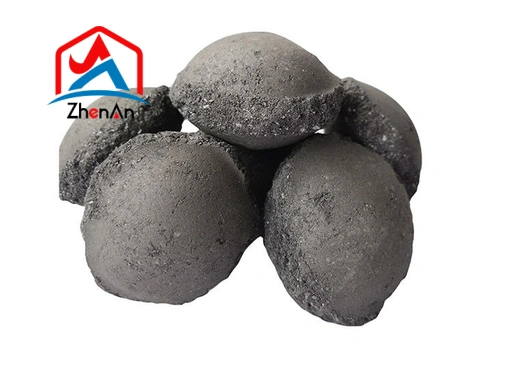
Ferrosilicon balls, also known as ferrosilicon briquettes or FeSi briquettes, are compacted ferroalloy materials primarily used for deoxidation and silicon adjustment in steelmaking and selected foundry processes. They are commonly produced by compressing ferrosilicon fines or powder with an appropriate binder to form briquettes suitable for industrial handling and furnace addition.
The principal applications of ferrosilicon balls are steelmaking deoxidation, silicon alloying and cast iron composition adjustment. However, their performance depends on more than silicon content. Briquette strength, binder composition, moisture, particle size and effective silicon recovery should also be considered before selecting a product.
This guide explains the main applications of ferrosilicon balls, compares them with conventional ferrosilicon lumps and provides practical selection and inspection guidance for steel mills, foundries and industrial buyers.
Quick Answer: What Are Ferrosilicon Balls Used For?
Ferrosilicon balls are mainly used in the following applications:
- Steelmaking deoxidation: Silicon reacts with dissolved oxygen in molten steel, contributing to oxygen control during steel production.
- Silicon alloying: Ferrosilicon briquettes provide silicon for adjusting the chemical composition of molten steel.
- Cast iron production: Suitable grades can be used for silicon adjustment in selected foundry melting processes.
- Ferrosilicon fines utilization: Briquetting converts suitable fine ferrosilicon material into compact units that can be handled and charged more conveniently.
Key purchasing factors: Finished-product Si content, impurity limits, binder composition, briquette dimensions, mechanical strength, moisture, fines content and verified silicon recovery.
Table of Contents
- What Are Ferrosilicon Balls?
- Main Applications of Ferrosilicon Balls
- Ferrosilicon Balls vs Ferrosilicon Lumps
- Ferrosilicon Briquette Specifications
- How to Select Ferrosilicon Balls
- Silicon Recovery and Cost Evaluation
- Quality Inspection, Packaging and Storage
- Ferrosilicon Balls Purchasing Checklist
- Frequently Asked Questions
1. What Are Ferrosilicon Balls?
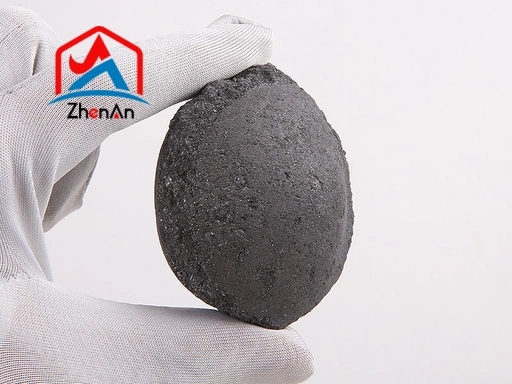
Ferrosilicon balls are an agglomerated form of iron-silicon alloy. Unlike conventional ferrosilicon lumps, which are produced by solidifying molten ferrosilicon and then crushing or sizing the alloy, ferrosilicon briquettes are manufactured by compacting suitable ferrosilicon fines or powder into a defined shape.
The briquetting process generally involves raw material selection, mixing, pressing and drying or curing. A binder may be used to provide sufficient strength for handling, transportation and furnace charging.
How Are Ferrosilicon Briquettes Produced?
A typical ferrosilicon briquetting process includes the following steps:
- Raw material preparation: Ferrosilicon fines or powder are checked for chemical composition, particle size and contamination.
- Batch formulation: The alloy material is mixed with an appropriate binder or other specified ingredients.
- Briquetting: The prepared mixture is compressed into balls or briquettes using suitable forming equipment.
- Drying or curing: The formed briquettes are processed to obtain sufficient handling strength and meet moisture requirements.
- Screening and inspection: Broken pieces and excess fines are separated, and the finished briquettes are checked against the agreed specification.
- Packaging: Qualified material is packed and identified for storage and transportation.
The exact process depends on the briquette formulation and manufacturing equipment. Not all ferrosilicon balls use the same binder, and the finished chemical composition may differ from that of the original ferrosilicon powder.
Important Product Distinction
Ferrosilicon briquettes should not automatically be treated as equivalent to silicon slag briquettes, silicon-carbon balls or conventional ferrosilicon lumps. These products may differ in silicon availability, carbon content, slag-forming constituents, binder content and metallurgical performance. Buyers should verify the actual finished-product specification rather than relying only on the commercial name.
2. Main Applications of Ferrosilicon Balls
The main industrial applications of ferrosilicon balls are concentrated in steelmaking and foundry operations. In these processes, silicon is used primarily for deoxidation and chemical composition adjustment.
The following table summarizes the most relevant application scenarios and their technical requirements.
| Application | Main Function | Key Selection Factors |
|---|---|---|
| Steelmaking Deoxidation | Supplies silicon that participates in removing dissolved oxygen from molten steel. | Si content, addition stage, binder impurities, dissolution and recovery. |
| Silicon Alloying | Adjusts the final silicon concentration in the steel. | Finished-product Si analysis, effective recovery and composition consistency. |
| Cast Iron Production | Provides silicon for composition adjustment in suitable foundry melting processes. | Iron grade, impurity limits, charging conditions and melting behaviour. |
| Ferrosilicon Fines Utilization | Converts suitable fine alloy material into compact units for handling and industrial use. | Feedstock quality, binder type, briquette strength and fines generation. |
2.1 Ferrosilicon Balls for Steelmaking Deoxidation
Deoxidation is one of the principal functions of ferrosilicon in steelmaking. During steel production, dissolved oxygen must be controlled to achieve the required steel composition and quality.
Silicon has a strong chemical affinity for oxygen. When ferrosilicon is introduced into molten steel under suitable process conditions, silicon can react with dissolved oxygen to form silicon-containing oxides that may be incorporated into the slag or otherwise removed during refining.
Ferrosilicon balls can serve as a silicon-bearing addition material in suitable deoxidation practices. However, their effectiveness depends on the briquette formulation, addition position and melting conditions.
Factors affecting deoxidation performance include:
- Silicon content: Determines the silicon available in the finished briquette.
- Binder composition: May introduce additional non-metallic constituents or impurities.
- Briquette strength: Influences breakage and fines generation during handling.
- Addition position: Affects how the material contacts molten steel and slag.
- Slag conditions: Influence silicon oxidation and the proportion of silicon retained in the steel.
- Melting and dissolution: Determine how the briquette releases its alloying components.
For example, some steelmaking operations may evaluate briquette additions during tapping or ladle treatment. The appropriate addition practice must be determined according to the steel grade, refining sequence and equipment configuration.
Ferrosilicon balls should not be assumed to produce the same deoxidation result as an equal nominal mass of ferrosilicon lumps. The finished silicon content and actual metallurgical recovery must be verified.
2.2 Ferrosilicon Balls for Silicon Alloying
Silicon is used as an alloying element in many steel grades. Depending on the steel specification, silicon additions may contribute to the required chemical composition and associated mechanical or magnetic properties.
Ferrosilicon briquettes can supply silicon for composition adjustment when their chemistry and melting behaviour meet the requirements of the steelmaking process.
The quantity added should be calculated from the required silicon increase, the silicon content of the finished briquettes and the expected recovery under actual operating conditions.
For alloying applications, a buyer should verify:
- Minimum or specified silicon content of the finished briquette.
- Permitted carbon, phosphorus, sulphur and aluminium levels.
- Any additional elements introduced by the binder or other ingredients.
- Consistency of chemical composition between batches.
- Actual silicon recovery during production trials.
A briquette with a lower price per tonne may not be more economical if it contains less usable silicon or produces greater material losses during handling and smelting.
2.3 Ferrosilicon Balls in Cast Iron Foundries
Ferrosilicon is widely used in cast iron production as a source of silicon and, in specially formulated forms, as an inoculating material.
For suitable ferrosilicon briquettes, one potential foundry application is adjusting the silicon content of molten iron. The material must be compatible with the foundry's melting process, charging practice and final cast iron specification.
However, ordinary ferrosilicon balls should not automatically be classified as foundry inoculants.
Inoculation performance depends on more than total silicon content. Elements such as calcium, aluminium and other intentionally controlled active constituents may influence graphite nucleation and inoculation effectiveness.
Unless a ferrosilicon briquette has been specifically designed and validated for inoculation, it should be evaluated primarily as a silicon-bearing alloy addition rather than assumed to provide a guaranteed inoculating effect.
Foundry Selection Note: For gray iron and ductile iron production, confirm the intended function of the ferrosilicon balls. Silicon adjustment and inoculation are different metallurgical operations, and their material specifications should not be treated as interchangeable.
2.4 Recycling and Utilization of Ferrosilicon Fines
Ferrosilicon crushing, screening and handling can generate fine particles that may be unsuitable for certain direct furnace-charging methods.
Briquetting provides a possible method for converting suitable ferrosilicon fines into larger, mechanically handled units.
The resulting briquettes can be evaluated for industrial use when their chemical composition, binder content, moisture, strength and melting characteristics satisfy the relevant process requirements.
This approach may improve the handling and utilization of suitable fine material, but the benefits depend on the feedstock quality and briquetting process.
Briquetting itself does not increase the amount of elemental silicon contained in the original ferrosilicon material. The final usable silicon content must be determined from the finished briquette composition and its metallurgical recovery.
3. Ferrosilicon Balls vs Ferrosilicon Lumps
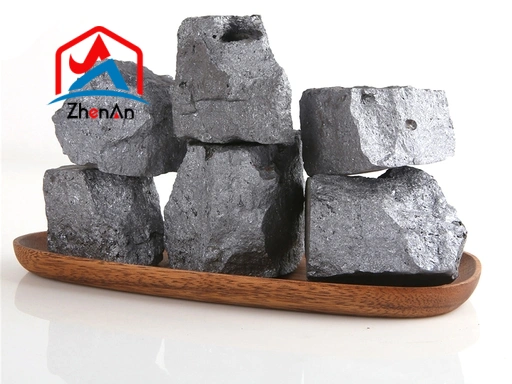
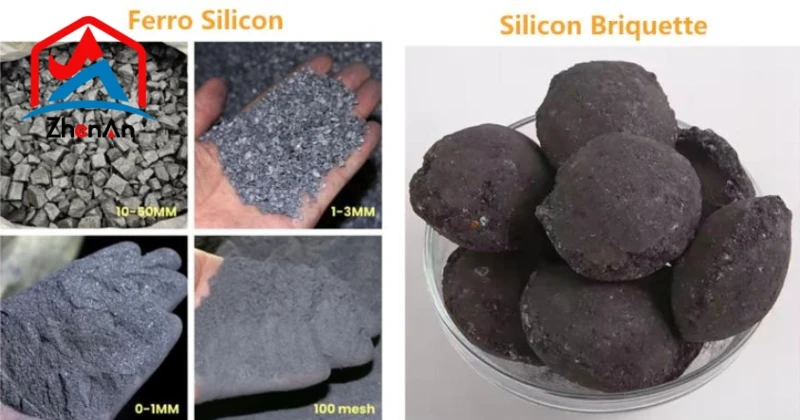
Both ferrosilicon balls and ferrosilicon lumps can serve as silicon-bearing alloy additions. However, they differ in manufacturing method, physical structure and potential behaviour during transportation and melting.
Understanding these differences is important when considering whether briquettes can replace conventional ferrosilicon lumps in an existing production process.
| Comparison | Ferrosilicon Balls / Briquettes | Ferrosilicon Lumps |
|---|---|---|
| Manufacturing Method | Compaction of suitable ferrosilicon fines or powder, generally with a binder. | Crushing and sizing of solidified ferrosilicon alloy. |
| Physical Structure | Compacted particles held together by the briquetting formulation. | Solid alloy pieces without a briquetting binder. |
| Silicon Content | Depends on the starting alloy, binder and final composition. | Depends on the specified ferrosilicon alloy grade. |
| Mechanical Strength | Depends on compaction pressure, binder, curing and briquette formulation. | Depends on alloy characteristics, size and friability. |
| Binder Content | May contain binder and associated additional constituents. | No briquetting binder added during lump production. |
| Handling Losses | Depend on briquette strength and fines generation. | Depend on alloy friability, particle size and handling. |
| Metallurgical Recovery | Must be verified under the customer's operating conditions. | Must also be verified for the actual alloy grade and addition practice. |
| Typical Purchasing Focus | Finished chemistry, binder, strength, moisture and recovery. | Alloy chemistry, particle size, fines and recovery. |
Are Ferrosilicon Balls Better Than Ferrosilicon Lumps?
Neither product form is automatically superior for every steelmaking or foundry application.
Briquettes may offer advantages when a production process needs compact units made from fine ferrosilicon material. However, binder composition, mechanical strength and actual silicon recovery can influence their suitability.
Conventional ferrosilicon lumps provide a direct solid-alloy form without briquetting additives, but they can also generate fines during crushing, storage and transportation.
A meaningful comparison should use products with known finished compositions and should evaluate them under equivalent melting conditions.
For information on conventional alloy grades and sizes, visit our Ferrosilicon Products and Grades page.
4. Ferrosilicon Briquette Specifications
Ferrosilicon briquettes should be purchased according to a complete technical specification rather than silicon grade alone.
The finished briquette composition may be affected by the original ferrosilicon powder, binder, additional ingredients and manufacturing process.
For this reason, buyers should verify both chemical composition and physical properties.
4.1 Chemical Composition Requirements
Important chemical indicators include silicon, carbon, aluminium, phosphorus, sulphur and any other elements relevant to the customer's steel or cast iron specification.
| Chemical Parameter | What Buyers Should Confirm | Why It Matters |
|---|---|---|
| Silicon (Si) | Finished-briquette silicon content and accepted tolerance. | Determines the available silicon for deoxidation and alloying. |
| Carbon (C) | Maximum permitted carbon content. | Important for steel grades with restricted carbon levels. |
| Aluminium (Al) | Maximum permitted aluminium content. | May influence steel cleanliness and inclusion control. |
| Phosphorus (P) | Maximum permitted phosphorus content. | Important for meeting finished-steel impurity limits. |
| Sulphur (S) | Maximum permitted sulphur content. | Important for steel quality and downstream properties. |
| Other Constituents | Ca, Mn, binder-derived constituents, ash and other specified impurities. | Helps evaluate suitability for the intended melting process. |
The website's existing Ferrosilicon Briquette Specifications page provides reference chemical grades including FeSi65, FeSi72 and FeSi75.
Those grade designations should not be interpreted as a guarantee that every finished briquette contains the same silicon percentage as the input alloy. The final composition should be verified through the corresponding batch Certificate of Analysis (COA).
4.2 Physical Properties and Briquette Size
Physical properties are particularly important because ferrosilicon balls must withstand packaging, transportation, unloading and furnace charging without excessive breakage.
| Physical Parameter | Specification Requirement | Purpose |
|---|---|---|
| Briquette Dimensions | Agreed length, width, diameter or equivalent size range. | Ensures compatibility with feeding and handling equipment. |
| Mechanical Strength | Agreed compression or drop-strength acceptance criteria. | Reduces breakage during transportation and charging. |
| Moisture Content | Maximum permitted moisture before delivery. | Supports storage quality and safe handling. |
| Fines Content | Maximum allowed fines below the specified size threshold. | Controls material losses and feeding consistency. |
| Binder Type | Agreed binder chemistry or restriction on undesirable constituents. | Prevents unexpected chemical additions. |
| Batch Consistency | Defined sampling and inspection requirements. | Supports predictable performance across deliveries. |
A nominal briquette size such as 10–50 mm may be used as a preliminary reference, but the final dimensions and allowable fines content should be confirmed with the supplier.
The most suitable size depends on the feeding equipment, addition position and melting conditions.
Specification Reminder: Chemical composition, briquette size and mechanical strength should be agreed independently. A product that meets its silicon specification may still be unsuitable if it generates excessive fines or contains binder-derived impurities that conflict with the customer's steel specification.
5. How to Select Ferrosilicon Balls for Steelmaking
Choosing the appropriate ferrosilicon balls begins with the intended metallurgical function, rather than simply selecting the lowest-priced grade.
Step 1: Identify the Primary Application
Determine whether the material will be used primarily for deoxidation, silicon alloying or cast iron composition adjustment.
Different applications may require different silicon contents, impurity limits and addition methods.
Step 2: Define the Required Chemical Composition
Specify the required silicon content and maximum acceptable levels of carbon, phosphorus, sulphur, aluminium and other relevant elements.
For sensitive steel grades, buyers should evaluate all chemical inputs introduced by the briquette, including the binder.
Step 3: Match the Briquette Size to the Feeding System
Choose dimensions compatible with the charging equipment and melting practice.
Oversized briquettes may be inconvenient for some addition systems, while very small or weak briquettes may generate excessive fines during transportation.
Step 4: Evaluate the Binder and Mechanical Strength
Ask the supplier to explain the binder type and the relevant finished-product quality requirements.
Mechanical strength should be evaluated using an agreed inspection method. If the product breaks down substantially during transport or charging, the effective amount delivered to the intended reaction zone may be reduced.
Step 5: Verify Silicon Recovery in Production Trials
Before replacing an established ferrosilicon addition material, conduct trials using representative briquette samples.
The trials should evaluate silicon recovery, process compatibility, additional impurities, slag behaviour and practical handling losses.
Where possible, compare briquettes and conventional ferrosilicon lumps under equivalent operating conditions.
6. How to Evaluate Silicon Recovery and Cost
Silicon recovery is an important parameter when comparing ferrosilicon balls with conventional alloy additions.
It describes the proportion of silicon introduced by an addition that is ultimately retained in the molten metal under the defined process conditions.
Actual recovery depends on the grade, product form, addition stage, slag chemistry, oxygen conditions and other operational factors.
6.1 Silicon Addition Calculation
For preliminary alloying calculations, the required ferrosilicon briquette quantity can be estimated using:
Required Briquette Addition (kg)
= Required Silicon Addition (kg) ÷ [Finished Briquette Si Fraction × Expected Si Recovery Fraction]
The calculation should use the silicon content of the finished briquette, not merely the silicon grade of the original ferrosilicon fines.
6.2 Illustrative Calculation for a Steelmaking Batch
Consider a simplified example in which a steel plant wants to increase silicon content in 100 metric tonnes of molten steel by 0.10 percentage points.
Assume the following conditions:
- Molten steel weight: 100 tonnes (100,000 kg).
- Required Si increase: 0.10 percentage points.
- Finished briquette Si content: 65%.
- Assumed silicon recovery: 75%.
Step 1: Calculate the required silicon retained in the steel.
100,000 kg × 0.001 = 100 kg Si
Step 2: Calculate the required briquette mass.
100 ÷ (0.65 × 0.75) ≈ 205 kg
Illustrative Result: Approximately 205 kg
Under these simplified assumptions, approximately 205 kg of the specified ferrosilicon briquettes would be needed to supply the required retained silicon. The 75% recovery rate is a hypothetical calculation input, not a tested recovery value or performance guarantee for ZhenAn briquettes.
This example assumes a constant steel mass and does not account separately for silicon contributions from other materials, silicon losses before or after addition, sampling differences or changes in process conditions.
Actual addition quantities should be determined using the steel plant's material balance, operating practice and verified recovery data.
6.3 Comparing Cost per Kilogram of Recovered Silicon
A simple comparison of purchase prices per tonne may not reflect the actual economic value of different silicon-bearing products.
For an alloy addition intended primarily to increase silicon content, buyers can calculate an indicative cost per kilogram of recovered silicon:
Cost per kg of Recovered Silicon
= Delivered Material Price per kg ÷ [Finished Si Fraction × Measured Si Recovery Fraction]
For example, two materials may have different purchase prices, silicon contents and recovery rates. The product with the lower price per tonne is not necessarily the one with the lower cost per kilogram of recovered silicon.
A complete economic comparison should also consider:
- Handling and fines losses.
- Additional slag-forming constituents.
- Unwanted chemical additions.
- Changes in melting or refining time.
- Inspection and processing requirements.
- Freight, packaging and other delivered costs.
For primary deoxidation applications, silicon recovery alone may not fully describe the material's value because a portion of the silicon is intentionally consumed by oxidation reactions.
In those cases, oxygen control, slag behaviour and the overall refining outcome should also be considered.
7. Quality Inspection, Packaging and Storage
Quality control for ferrosilicon balls should cover both the chemical composition and the physical integrity of the finished material.
A briquette may meet its target silicon content but still cause difficulties if it contains excessive moisture, weak bonding or a high proportion of broken material.
7.1 Chemical Composition Inspection
The finished-product COA should identify the relevant batch and provide the chemical composition results required by the purchase specification.
Buyers should verify that the analysis represents the delivered briquettes rather than only the ferrosilicon powder used before binder addition.
7.2 Mechanical Strength Inspection
Depending on the purchasing specification, mechanical strength may be evaluated through compressive strength testing, drop testing or other agreed inspection methods.
The acceptance criteria should be defined before shipment. Test results from different methods should not be compared without considering the test conditions.
7.3 Fines Content and Package Condition
Excessive breakage during transportation may create fine material and affect the usable quantity received by the buyer.
Therefore, the contract should specify the permitted proportion of fines, the measurement method and the point at which acceptance is evaluated.
7.4 Moisture and Storage Requirements
Ferrosilicon balls should be stored in a dry, covered location and protected from rain, water ingress and damp storage conditions.
Moisture control is particularly important when the briquette contains fine alloy particles and a binder whose strength may be affected by water exposure.
Ferrosilicon materials can present moisture-related hazards depending on their composition and impurities. Buyers should review the product-specific Safety Data Sheet (SDS) and follow applicable handling, ventilation and transportation requirements.
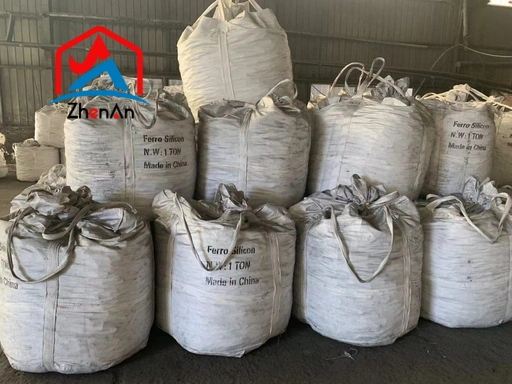
The packaging configuration should be agreed according to the order quantity, product strength, storage period and transportation route.
| Inspection Item | Recommended Check |
|---|---|
| Chemical Composition | Verify the finished batch against agreed elemental limits. |
| Briquette Size | Check dimensions and size distribution. |
| Strength | Use an agreed compression or drop-test method. |
| Moisture | Confirm the maximum permitted moisture content. |
| Fines Content | Measure material below the agreed fines threshold. |
| Packaging | Inspect bag condition, package weight and markings. |
| Traceability | Check batch identification and supporting inspection records. |
8. Ferrosilicon Balls Purchasing Checklist
When requesting a quotation for ferrosilicon balls, buyers should provide both the intended application and the required technical specifications.
This information helps identify whether the proposed briquette formulation is compatible with the customer's process.
| Purchasing Requirement | Information to Provide |
|---|---|
| Application | Steelmaking deoxidation, silicon alloying or foundry composition adjustment. |
| Required Si Content | Specified silicon range for the finished briquette. |
| Impurity Limits | Maximum acceptable C, Al, P, S and other relevant elements. |
| Briquette Size | Required dimensions and size tolerance. |
| Binder Requirements | Permitted binder types or restrictions on additional constituents. |
| Physical Quality | Moisture, mechanical strength and fines limits. |
| Order Quantity | Required metric tonnes and expected purchasing schedule. |
| Inspection | COA, sampling, testing methods and any agreed third-party inspection. |
| Destination | Destination port or delivery address and required Incoterms. |
What Documents Should Buyers Request?
Depending on the application and purchase agreement, buyers may request:
- Certificate of Analysis (COA): To verify the chemical composition of the finished briquettes.
- Physical Inspection Report: To confirm dimensions, strength, moisture and fines content where specified.
- Safety Data Sheet (SDS): To review handling, storage and safety requirements.
- Packing List: To confirm package count, net weight and gross weight.
- Pre-Shipment Inspection Records: When required by the purchasing contract.
For an initial order, sample evaluation and a small-scale production trial may help establish whether the proposed material is suitable before larger-volume purchases.
Ferrosilicon Supply and Product Selection with ZhenAn
ZHEN AN INTERNATIONAL CO., LIMITED supplies ferrosilicon and other metallurgical materials for steelmaking, foundry and industrial applications.
When evaluating ferrosilicon balls or briquettes, buyers should first confirm the required silicon content, impurity limits, dimensions, physical strength and intended use.
Briquette formulations and supply options should be confirmed according to the actual order requirements. A finished-product specification and supporting inspection documents should be agreed before commercial delivery.
For related technical information, you can explore:
- Ferrosilicon Briquette Specifications - reference chemical composition and product sizing.
- Ferrosilicon Products and Grades - conventional ferrosilicon alloy specifications and available forms.
-
Need Ferrosilicon Balls for Steelmaking?
Tell us your required silicon content, briquette size, chemical limits, intended application and order quantity. Contact ZhenAn to discuss suitable ferrosilicon supply options and technical requirements.
Request a Ferrosilicon Quotation View Ferrosilicon Products9. Frequently Asked Questions
1. What are ferrosilicon balls used for?
Ferrosilicon balls are primarily used for deoxidation and silicon adjustment in steelmaking and selected foundry melting processes. Their suitability depends on the finished silicon content, binder composition, physical strength and operating conditions.
2. What is the difference between ferrosilicon balls and ferrosilicon briquettes?
The terms are often used interchangeably in industrial trade. Both commonly refer to compacted ferrosilicon fines or powder formed into larger units. The exact shape, size, binder and composition depend on the product specification.
3. Can ferrosilicon balls replace ferrosilicon lumps?
Ferrosilicon balls may replace or supplement conventional ferrosilicon lumps in suitable applications, but substitution should not be assumed to be equivalent on a one-to-one mass basis. Buyers should compare finished silicon content, impurities, handling losses and actual metallurgical recovery through production trials.
4. Are ferrosilicon balls suitable for cast iron production?
Suitable ferrosilicon briquettes can be considered for silicon composition adjustment in cast iron production. However, ordinary briquettes should not automatically be treated as specialized foundry inoculants. Inoculation suitability must be validated through the appropriate composition and foundry trials.
5. What specifications should buyers check before ordering?
Buyers should check silicon content, carbon, phosphorus, sulphur and other impurity limits, binder composition, briquette dimensions, mechanical strength, moisture and fines content. The agreed requirements should be supported by appropriate finished-product inspection documents.
6. How is the required quantity of ferrosilicon briquettes calculated?
For silicon alloying, a preliminary addition quantity can be calculated by dividing the required retained silicon mass by the finished briquette's silicon fraction and the expected silicon recovery fraction. The recovery value should be based on the steel plant's actual process data rather than an unverified supplier claim.
7. What affects the strength of ferrosilicon briquettes?
Briquette strength depends on the size and quality of the starting particles, binder formulation, compaction conditions and drying or curing process. Strength should be assessed using a defined inspection method and agreed acceptance limits.
8. How should ferrosilicon balls be stored?
Ferrosilicon balls should be stored in dry, covered conditions and protected from water exposure. Packaging should prevent excessive breakage and fines generation. Follow the product-specific SDS and applicable transportation and handling requirements.
Conclusion: Choosing Ferrosilicon Balls for Industrial Applications
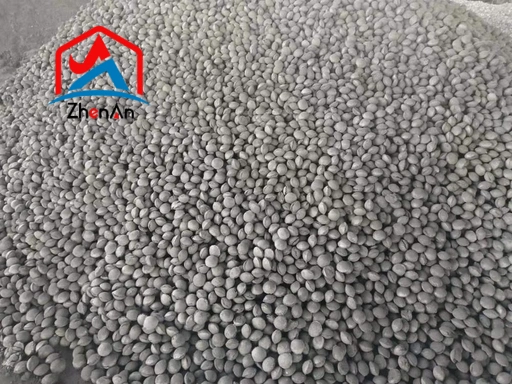
Ferrosilicon balls are primarily used as silicon-bearing additions in steelmaking and selected foundry processes. Their principal functions include deoxidation, silicon alloying and composition adjustment, while briquetting also provides a possible method for utilizing suitable ferrosilicon fines.
Unlike conventional ferrosilicon lumps, briquettes may contain binders and have different mechanical characteristics. Consequently, their suitability should be evaluated using finished-product chemical composition, physical strength, moisture, fines content and actual metallurgical performance.
For steel mills and foundries, the most reliable purchasing approach is to define the intended process, confirm the required chemical and physical specifications, and validate silicon recovery under representative operating conditions.
Explore our Ferrosilicon Products or contact ZhenAn to discuss your application, specifications and purchasing requirements.
Find Ferrosilicon for Your Production Process
Share your target silicon content, impurity limits, product dimensions, order quantity and destination. Our team can help you review the relevant product specifications and available quotation options.
Get a Ferrosilicon QuoteTechnical References
Reference 1: ASTM International. ASTM A100-07(2024): Standard Specification for Ferrosilicon. Covers chemical composition and sizing requirements for ferrosilicon used in steelmaking and foundries. Specific briquette acceptance requirements must be separately agreed where applicable. ASTM Standard Information.
Reference 2: Piptiuk, V. et al. Experimental Study of Increased Productivity of Ferro-Silicon Briquettes for Steel Production. Modern Problems of Metallurgy. The study investigates briquetting of fine ferrosilicon and its behaviour in steel production. View Research.
Reference 3: Borowski, G. et al. Conditions for the Preparation of Stable Ferrosilicon Dust Briquettes. Research addressing binder selection and mechanical stability in briquetting ferrosilicon fines. View Research Information.
Technical note: Product applications and selection principles in this guide describe general metallurgical practices. The illustrative silicon recovery calculation is not a measured performance result for ZhenAn ferrosilicon briquettes. Actual chemical composition, physical properties, available specifications and metallurgical recovery must be confirmed for the finished product and the customer's operating conditions.