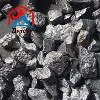
What Low-Carbon Ferrochrome Is
Low-carbon ferrochrome, commonly called LC chrome, is a ferroalloy of chromium and iron produced by reducing chromite ore. It is an essential raw material for stainless steel and special alloy steel production because it adds chromium without adding large amounts of carbon. The carbon content is the defining feature of the grade: high-carbon ferrochrome carries carbon levels around 4 to 8 percent, while low-carbon ferrochrome is held well below that, typically at 0.25 percent or less, and some grades reach as low as 0.03 percent.
Chromium Content
Chromium is the main value element in LC chrome, and commercial grades normally contain 55 to 70 percent chromium. The most common grades traded in the market contain about 60 to 65 percent chromium, with the remainder made up of iron and small amounts of impurities. The chromium content determines how much alloy must be added to reach the target chromium level in the final steel, so the buyer should confirm the guaranteed minimum chromium value and the tolerance on the certificate of analysis.
Carbon and Other Impurity Limits
The carbon limit is what separates LC chrome from other ferrochrome grades. In international trade, low-carbon ferrochrome is commonly defined by maximum carbon levels of 0.10, 0.15 or 0.25 percent, and micro-carbon grades go down to 0.03 percent or lower. Silicon, phosphorus and sulfur are the other controlled impurities: silicon usually ranges from 0.5 to 3 percent depending on the grade, phosphorus is limited to about 0.03 percent or less, and sulfur to about 0.03 percent. The Chinese standard GB/T 5683 for ferrochromium provides a widely used grade framework, and buyers should specify the exact limits in the contract rather than relying on grade names alone.
How LC Chrome Is Produced
Low-carbon ferrochrome cannot be made by simple carbothermic reduction in a submerged arc furnace, because that route produces high-carbon alloy. Instead, it is made by silicothermic reduction: chromium ore is melted with ferrosilicon or silicon-chromium alloy, which reduces the chromic oxide while keeping the carbon content low. Some producers also use a refining step with oxygen blowing followed by vacuum treatment for the very low carbon grades. The production cost is therefore higher than for high-carbon ferrochrome, which is reflected in the price of LC chrome.
Typical Applications
LC chrome is used wherever the steelmaker needs chromium without carbon. Stainless steel grades such as 304 and 316 contain 18 percent chromium and about 0.08 percent carbon, so adding high-carbon ferrochrome would force the steelmaker to remove carbon in an expensive decarburisation step. Using LC chrome or micro-carbon ferrochrome avoids this problem and is standard practice for austenitic stainless, heat-resistant alloys, tool steels and high-chromium castings. The low carbon also protects the weldability and corrosion resistance of the final product.
How to Specify LC Chrome
When buying LC chrome, the specification should state the chromium content, the carbon maximum, the limits for silicon, phosphorus and sulfur, the size range and the packing. A typical order might specify chromium 60 percent minimum, carbon 0.10 percent maximum, silicon 2 percent maximum, phosphorus 0.03 percent maximum, sulfur 0.03 percent maximum, size 10 to 50 millimetres, packed in one-tonne bags. The buyer should request a certificate of analysis for each lot and agree the sampling and test methods, normally by reference to the relevant international or national standard.
Frequently Asked Questions
Q: What is the difference between LC chrome and HC chrome?
LC chrome, or low-carbon ferrochrome, has a carbon content of about 0.25 percent or less, while HC chrome, or high-carbon ferrochrome, carries 4 to 8 percent carbon.
Q: How much chromium is in LC chrome?
Commercial LC chrome normally contains 55 to 70 percent chromium, with the most common grades at about 60 to 65 percent.
Q: Why is low carbon important in ferrochrome?
Adding carbon to stainless steel degrades corrosion resistance and requires an expensive decarburisation step, so steelmakers use low-carbon ferrochrome to add chromium cleanly.
Q: How is low-carbon ferrochrome made?
It is made by silicothermic reduction of chromite ore with ferrosilicon or silicon-chromium alloy, which keeps the carbon content low, unlike carbothermic smelting.
Q: What impurities are controlled in LC chrome?
The main controlled impurities are carbon, silicon, phosphorus and sulfur, each with a maximum limit agreed in the purchase contract.
Q: Which steel grades need LC chrome?
Austenitic stainless steels such as 304 and 316, heat-resistant alloys, tool steels and high-chromium castings typically use LC chrome to control carbon.