One Product, Two Application Logics
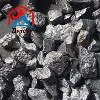
Electrolytic manganese metal flake, often abbreviated EMM, is produced by electrolysis of manganese sulphate solution, giving a thin brittle flake that is stripped, crushed and packed. The product is the same nominal material whatever the end use, but the way it is judged changes completely depending on whether it goes into a steel ladle or an aluminium melting furnace.
In steelmaking, manganese is a bulk functional addition. In aluminium, it is a minor alloying element added in small quantities where the dissolution behaviour and the cleanliness of the addition matter as much as the manganese content itself.
Manganese in Steelmaking
Steel consumes the great majority of electrolytic manganese flake. Its roles are threefold. It is an alloying element, raising hardenability and contributing to strength, toughness and wear resistance. It is a deoxidiser, although in most shops cheaper manganese carriers such as silicomanganese and ferromanganese do the bulk of that work. It is also a sulphur control aid, because manganese combines with sulphur to form manganese sulphide, reducing the risk of hot shortness during rolling.
Because the addition is large relative to the heat size and because the bath is vigorously stirred, complete dissolution is rarely the limiting problem. Steelmakers therefore prioritise consistent manganese content, controlled sulphur and phosphorus, and lot-to-lot reproducibility, so that the alloy addition calculation stays predictable. Grades are commonly specified at 99.7 percent manganese minimum, consistent with the manganese metal grade families defined in GB/T 2774, where designation such as DJMn99.7 indicates the minimum manganese content.
Manganese in Aluminium Alloys
In aluminium, manganese is added at much lower levels, typically as one element of a carefully balanced composition, and the economics of a lost addition are severe. Aluminium melts are held at lower temperatures than steel, so the flake dissolves more slowly, and any undissolved manganese reports as a hard inclusion and a compositional shortfall at the same time.
The priorities therefore shift. Purity matters more than throughput, with low iron, silicon and heavy metal content being central to the specification because these elements are either restricted in the alloy or degrade properties. Flake size and thickness matter because they govern the dissolution rate, and the accepted practice is to add the manganese early, into a well-stirred bath, often in a basket or through a plunger rather than floating material onto the surface.
| Point of comparison | Use in steel | Use in aluminium alloys |
|---|---|---|
| Function | Alloying, deoxidation, sulphur control | Alloying for strength and corrosion behaviour |
| Addition level | Bulk, tonnes per heat | Minor, low percentage of the melt |
| Process temperature | High, well above the melting point of manganese | Lower, dissolution is the limiting step |
| Dissolution risk | Low, vigorous bath agitation | High, undissolved flake becomes an inclusion |
| Primary specification focus | Stable Mn content, S and P control, lot consistency | High purity, low Fe and Si, controlled flake size |
| Typical quality evidence | Lot certificate with full element breakdown | Lot certificate plus size distribution and screening record |
Sourcing Checks for Both Routes
The first check is whether the grade designation matches the intended use, because a grade optimised for bulk steelmaking may carry higher iron and silicon than an aluminium melt can accept. The second is the certificate basis: a lot-based certificate stating manganese, iron, silicon, carbon, sulphur and phosphorus is the minimum, and for aluminium use the buyer should also ask about non-metallic residue and screening practice.
The third check concerns the physical condition of the consignment. Flake is brittle and friable, so handling generates fines; a high fines fraction is a sign of rough handling and changes the dissolution behaviour on the shop floor. Packing should be moisture-resistant, since electrolytic manganese will oxidise and pick up moisture if it is stored in the open.
Frequently Asked Questions
Q: Are the electrolytic manganese flakes used for steel and for aluminium the same product?
A: The base material is the same manganese metal flake, commonly supplied at 99.7 percent manganese minimum, but the specification priorities and the acceptable impurity levels differ by application.
Q: What are the main functions of manganese in steel?
A: Alloying to improve hardenability and mechanical properties, deoxidation during refining, and sulphur control through manganese sulphide formation.
Q: Why is dissolution a bigger concern in aluminium than in steel?
A: Aluminium melts are held at much lower temperatures and the addition is small, so the flake dissolves slowly and any undissolved residue becomes an inclusion and a composition shortfall.
Q: Which impurities matter most for aluminium use?
A: Iron and silicon, because they are tight in many aluminium alloy specifications, along with heavy metals and non-metallic residue.
Q: What does a grade such as DJMn99.7 mean?
A: It is a manganese metal designation in the GB/T 2774 series where the number indicates the minimum manganese content of 99.7 percent.
Q: Does flake size affect results?
A: It does. Smaller, thinner flake dissolves faster, while coarse flake is easier to handle. A high fines fraction from rough handling changes feeding behaviour and should be reported.