1. Core Classification and Current National Standard for Metallurgical Grade Silicon Metal
When evaluating metallurgical grade silicon metal, the grade number on a quotation sheet is never enough. Once the material enters procurement, inspection, and furnace charging, the real control points are the execution standard, chemical composition, particle size, appearance, and batch stability.
The current national standard for industrial silicon is GB/T 2881-2023 Industrial Silicon. This standard places the grades, chemical composition, inspection rules, packaging marks, and quality certificates of industrial silicon under one unified technical framework. When purchasing regular grades such as 553, 441, 421, and 3303, the execution standard in the contract must be written clearly. Otherwise, once Fe, Al, or Ca deviates, powder content exceeds tolerance, or particle size fails to match the agreed specification, accountability becomes difficult.
The logic behind the grade numbers is straightforward. For example, 553 silicon metal usually means Fe ≤ 0.5%, Al ≤ 0.5%, and Ca ≤ 0.3%; 441 silicon metal usually means Fe ≤ 0.4%, Al ≤ 0.4%, and Ca ≤ 0.1%. These three numbers are not marketing labels. They are the basic boundary conditions that determine whether the material can run steadily at the furnace and whether the final product will develop quality problems.
In actual trade, 553 has the largest consumption volume and the highest price sensitivity. Grade 441 is cleaner than 553, especially with much lower calcium, making it more suitable for aluminum alloy plants that require better melt cleanliness, flowability, and casting quality. During procurement, do not only ask, "What is the price per metric ton for 553?" It is more important to ask for the actual tested Fe, Al, and Ca values of the current batch, whether the material has been screened, and whether the powder content can be controlled.
2. Chemical Composition Requirements: Strict Limits on Iron, Aluminum, and Calcium
| Grade | Reference Si Content (%) | Fe Max (%) | Al Max (%) | Ca Max (%) | Common Procurement Applications |
|---|---|---|---|---|---|
| 553 | Around 98.5 | 0.50 | 0.50 | 0.30 | General aluminum alloys, secondary aluminum, metallurgical charging |
| 441 | Around 99.1 | 0.40 | 0.40 | 0.10 | Die-casting aluminum, mid-to-high-end aluminum alloys, low-calcium charging |
| 421 | Around 99.3 | 0.40 | 0.20 | 0.10 | Silicone production, refined aluminum alloy charging |
| 3303 | Around 99.3 | 0.30 | 0.30 | 0.03 | Alloy systems with strict low-calcium requirements |
Iron, aluminum, and calcium may look like small decimal figures on paper. At the aluminum alloy furnace, they directly become issues of flowability, slag consumption, inclusions, grain structure, and fracture risk.
Fe is the impurity most easily underestimated. A slightly higher iron level may still appear to fall within the range on a certificate, but after the aluminum-silicon alloy solidifies, the morphology of iron-bearing phases can become problematic. Especially in heats with a high proportion of return scrap, short refining time, or insufficient cooling rate, needle-like iron-bearing phases can cut through the matrix. The elongation of extruded profiles drops quickly, and thin-wall areas of die-cast parts become more prone to brittle cracking. Furnace operators usually dislike silicon batches with unstable Fe values. That is not being picky; that is experience earned from previous failures.
The influence of Al is more like disturbing the recipe. Aluminum plants add silicon metal to adjust Si content to the target range. If the Al content in silicon metal fluctuates noticeably, furnace-side batching has to be adjusted accordingly. One adjustment is manageable. If several heats in a row require correction, the production rhythm becomes unstable. For common alloys such as A356 and ADC12, once the balance among Si, Fe, Mg, and Mn is disrupted, relying on later refining to compensate increases both cost and risk.
Ca is more of an experience-based problem. Silicon lumps with higher calcium often produce a stickier slag phase after charging, and the furnace surface does not clean up as easily. Operators can feel it during slag skimming. Even after refining, small inclusions may remain in the castings. For ordinary charging, a wider Ca tolerance may still be acceptable. For die-casting aluminum, wheels, thin-wall parts, or products sensitive to pinholes, Ca should not be purchased close to the upper limit.
Therefore, the difference between 553 and 441 is not just "one higher grade." Grade 553 suits cost-first applications with a wider impurity window. Grade 441 costs more, but in some aluminum alloy plants, the melt cleanliness advantage brought by lower calcium can directly offset the price difference.
For buyers comparing 553 and 441, request the latest batch report before confirming price.
3. Physical Specifications and Particle Size Requirements
Particle size is not a minor issue for silicon metal. The chemical composition may be qualified, but if the lump size is irregular and powder content is high, the material will still be difficult to use at the furnace.
The two most common particle size specifications for metallurgical grade silicon metal in trade are 10mm-50mm and 10mm-100mm natural lumps. The 10mm-50mm size is more suitable for automatic feeding systems or plants requiring faster melting. The lump size is more uniform, and the furnace reaction is more stable. The 10mm-100mm natural lump specification is more common and suitable for ordinary aluminum plants and bulk metallurgical charging, provided that screening is clean and too much undersize material is not mixed in.
| Particle Size | Common Industry Name | Suitable Applications | Inspection Focus |
|---|---|---|---|
| 10mm-50mm | Small lumps, uniform lumps | Automatic feeding, silicon adjustment at aluminum alloy furnaces | Concentrated size range, low powder content, stable melting |
| 10mm-100mm | Natural lumps, standard lumps | Ordinary aluminum plants, bulk metallurgical charging | No excessive oversize lumps or undersize material mixed in |
| 0mm-10mm | Crushed material, undersize material | Low-cost charging or reprocessing | Must be priced separately and must not be passed off as standard lumps |
Powder content is usually controlled within 5%. This clause must be written into the contract and cannot rely only on verbal promises. The more fine powder there is, the larger the oxidized surface area becomes, and the easier it is for the material to absorb moisture. After charging, fine powder oxidizes first and floats into slag first, reducing the effective silicon recovery rate. The purchasing side may appear to save dozens of dollars per metric ton, but the smelting side may pay more in slag loss, energy consumption, and furnace correction.
Uneven particle size also causes composition segregation inside the furnace. Fine material has already melted while large lumps are still not fully dissolved. When furnace stirring is insufficient, Si values can vary depending on the sampling point. The most troublesome batch is not material that is completely unqualified, but material that "looks qualified on the test report yet performs unstably in use." This type of batch slows production and often triggers disputes between the purchasing team and the plant.
4. Appearance Quality and Commercial Acceptance Standards
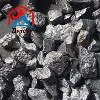
Qualified metallurgical grade silicon metal should look clean, dry, and clearly lump-shaped at first sight. It must not be mixed with soil, slag, wood chips, woven bag fragments, iron wire, refractory debris, or other foreign matter. Silicon lumps and slag pieces sometimes have similar colors, especially inside jumbo bags. Without careful turning and checking, they are easy to miss. Once excessive slag is discovered only after charging, it is usually already too late.
The fracture surface matters during inspection. Good silicon lumps, once broken, show a clear metallic luster. The color is usually silver-gray to dark gray, and the crystal surface is relatively distinct. If the fracture surface looks earthy, dull, or lacks crystalline texture, it usually indicates unstable furnace conditions, excessive slag inclusion, or heavy oxidation. Slight surface oxidation does not necessarily affect use, but large areas of white oxidation, yellowish contamination, sticky powder, or damp agglomeration should not be accepted directly as normal standard lumps.
Packaging usually uses 1MT or 1.25MT jumbo bags. For export cargo, moisture protection is especially important. Jumbo bags should not be stored outdoors for a long time. Before container loading, the bag bottom should be checked for moisture, and the container should be inspected for cleanliness, odor, standing water, rust, and residual powder. During rainy-season shipments, loading photos, batch numbers, bag marks, seal numbers, and third-party sampling records must all be kept. Silicon metal is not a delicate cargo, but once it becomes damp, powdered, or contaminated with slag, the handling cost at destination can be very high.
Commercial acceptance must focus on details: chemical composition depends on batch test results; particle size depends on screening and sampling; powder content depends on the contract tolerance; packaging depends on jumbo bag weight and bag marks; quality documents depend on furnace batch number, origin, inspection date, and third-party certificate. For B2B buyers, the value of a stable supply chain is often not proven by the first shipment, but by whether the third and fifth shipments can still maintain the same specifications.
Suitable for buyers who need current stock, third-party inspection documents, and port arrival pricing.