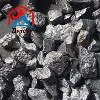
Manganese and silicon are the main alloying elements used in carbon steel. Manganese is the main deoxidizer* in the steelmaking process. Almost all steel types require manganese for deoxidation.
Because the oxygen product generated when manganese is used for deoxidation has a low melting point and is easy to float; manganese can also increase the deoxidation effect of strong deoxidizers such as silicon and aluminum. All industrial steels need to add a small amount of manganese as a desulfurizer so that the steel can be hot rolled, forged and other processes without breaking. Manganese is also the most important alloying element in various steel types, and 15% is also added to alloy steels. The above manganese increases the structural strength of steel. Silicon is the most important alloying element in pig iron and carbon steel after manganese.

In steel production, silicon is mainly used as a deoxidizer for molten metal or as an alloy additive to increase the strength of steel and improve its properties. Silicon is also an effective stone grinding medium, which can turn the carbon in cast iron into free stone grinding carbon. Silicon can be added to standard gray cast iron and ductile iron up to 4%. A large amount of manganese and silicon are added to the molten steel in the form of ferroalloys: ferromanganese, silicon-manganese and ferrosilicon.

The raw materials for producing silicon-manganese alloy include manganese ore, manganese-rich slag, silica, coke, dolomite (or limestone), and fluorite. The production of silicon-manganese alloys can use one manganese ore or a mixture of several manganese ores (including manganese-rich slag). Since silicon-manganese alloy requires lower iron and phosphorus content than high-carbon ferromanganese, the manganese ore for smelting silicon-manganese alloy is required to have a higher manganese-iron ratio and manganese-phosphorus ratio. The higher the manganese content of the manganese ore used, the better the various indicators.