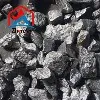
Ferrosilicon 72 is bought on specification but delivered on capability. Two suppliers can quote the same grade and the same size class and still hand over very different material, because consistency comes from furnace control, raw material discipline and documented testing rather than from the grade name on the invoice. The framework below sets out what to verify before the first order, and how to weight the answers.
Start With the Specification, Not the Price
Before comparing offers, fix the technical requirement in writing: the silicon content bracket, the aluminium, carbon, sulphur and phosphorus ceilings, the size class and the permitted fines fraction. The Chinese ferrosilicon product standard GB/T 2272 is the usual reference for grade designation in this market, and every quotation should be accompanied by a certificate of analysis stating the measured chemistry of the specific lot. A supplier who cannot state those figures for the lot being offered is selling tonnage rather than material.
Criterion 1: Production Scale and Technical Level
Scale and technology translate directly into consistency. Producers that operate their own submerged arc furnaces with an integrated raw material and crushing circuit are far more likely to hold a stable silicon content from lot to lot than traders or small converters who buy and blend. Useful questions include: how many furnaces are in operation, what is the annual output, is handling and screening integrated on site, and how does the plant cope with power rationing or seasonal electricity constraints? Because electricity dominates ferrosilicon conversion cost, a supplier with secured power arrangements is a more reliable long-term partner than one exposed to spot supply.
Criterion 2: Quality System and Documentation
| Evidence to request | What it tells the buyer |
|---|---|
| Quality management certification | Documented process control and traceability rather than ad hoc inspection |
| Environmental and safety certification | Lower risk of supply interruption through regulatory action |
| Lot-level certificate of analysis | Chemical compliance against the ordered grade |
| Batch to shipping lot traceability | Ability to investigate and settle a quality claim |
| Independent inspection reports | Verification by an agency not owned by the seller |
Documentation is also the cheapest form of risk control. A supplier that produces dated certificates for previous lots, and keeps retention samples, is demonstrating that it can answer a technical question years after shipment.
Criterion 3: Sampling, Size Control and Lot Acceptance
Agree in advance how quality will be judged. Sampling and sample preparation should follow the sampling clause of the applicable product standard, the referee laboratory should be named in the purchase order, and a retention sample should be held by both sides until the lot is formally accepted. Size is the other half of the specification: natural block, lump, granule and powder classes behave differently in the customer's furnace, so the contract should state the size class, the screen analysis method and the allowance for undersize material. Where the material is destined for continuous charging, an agreed fines ceiling prevents feeding problems that no chemical certificate will reveal.
Criterion 4: Commercial Terms and Delivery Reliability
Price should rest on a transparent basis covering silicon content, size class, packing and delivery term, so a low headline number cannot hide an inferior grade.
Delivery performance matters more than a marginal price advantage, because a late cargo stops a furnace and costs far more than the saving.
Packing and tare weight should be defined, with weight determined at loading in a manner acceptable to both parties.
Payment terms, the quality dispute procedure and remedies for off-specification lots should be agreed before the first order.
A stable monthly shipping schedule is worth more than a single opportunistic cargo at a sharp price.
The usual failure is buying on price alone and then finding that the delivered silicon content sits at the bottom of the band, the fines fraction is high, or the declared packing weight is optimistic. Each of those turns an apparently cheap tonne into an expensive one.
Supplier Evaluation Scorecard
| Evaluation area | Suggested weight | Evidence required |
|---|---|---|
| Specification compliance and consistency | 25% | Lot certificates plus historical variability data |
| Production capability and power security | 20% | Furnace count, annual output, energy arrangements |
| Sampling and testing transparency | 15% | Named referee laboratory and retention samples |
| Delivery reliability | 15% | On-time shipment record over recent quarters |
| Commercial terms | 15% | Price basis, delivery term, packing, payment terms |
| Technical support and response | 10% | Metallurgical advice and claim handling |
Score candidates against the same evidence, keep the completed scorecards, and re-score annually. A supplier that slips on size control usually slips on delivery soon afterwards.
Frequently Asked Questions
Q: What is the most important factor when choosing a ferrosilicon 72 manufacturer?
Consistency of the delivered chemistry and size class, because an unstable silicon content forces the customer to rebalance the charge on every lot.
Q: Which documents should be requested before ordering?
Lot certificates of analysis covering silicon, aluminium, carbon, sulphur and phosphorus, quality and environmental certification, and evidence of batch traceability.
Q: Should price be the deciding factor?
No. Price should be compared only on an identical specification and delivery basis; a cheaper grade can consume more alloy per tonne of steel and cost more overall.
Q: How should size class be specified?
State the size class, the screen analysis method and the maximum undersize or fines fraction, then verify it on arrival by screening a representative sample.
Q: How can quality disputes be avoided?
Name a referee laboratory in the purchase order, use the sampling clause of the applicable product standard, and hold retention samples until the lot is accepted.
Q: Why does power supply matter to a ferrosilicon buyer?
Electricity is the dominant conversion cost, so a producer with secure power is less likely to interrupt supply or reprice unexpectedly during peak tariff periods.
Q: How many suppliers should be qualified?
Qualifying at least two producers with similar specifications spreads risk and gives a real basis for annual price and performance comparison.