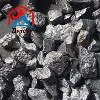
What Does Strength Mean for 90% Silicon Carbide
In industrial applications, strength is a comprehensive concept, not a single physical parameter. For silicon carbide 90%, strength includes hardness, compressive strength, wear resistance, oxidation resistance, and thermal stability. Silicon carbide 90% has a hardness close to 9 on the Mohs scale, making it one of the hardest industrial materials available. More importantly, it maintains structural integrity and performance under high temperatures and repeated thermal cycling.
Hardness and Wear Resistance
Silicon carbide 90% exhibits excellent hardness and abrasion resistance due to its strong covalent crystal structure, allowing it to resist mechanical wear, erosion, and impact far better than many conventional materials. In real-world applications, it can withstand prolonged contact with molten metal, slag, and abrasive materials without rapid degradation, contributing to longer service life and reduced maintenance frequency.
High-Temperature Performance
Silicon carbide 90% demonstrates outstanding thermal stability, retaining its mechanical properties even at extremely high temperatures. It has a high melting point and strong resistance to thermal shock, allowing it to endure rapid temperature changes without cracking. Compared with lower-grade silicon carbide, the 90% grade shows improved oxidation resistance, making it more reliable in long-term high-temperature operation.
Suitability for Demanding Applications
Silicon carbide 90% is suitable for steelmaking as a deoxidizer and alloy additive, where stable reaction behavior and predictable dissolution are critical; for foundry operations, where it supports consistent melt chemistry and improved casting quality; and for refractory systems, where its strength translates into enhanced wear resistance, thermal shock resistance, and extended service life.
Comparison with Lower Grades
Compared with silicon carbide 88%, the 90% grade contains lower impurity levels, which improves chemical stability and reduces unwanted reactions under strict process conditions. While both grades offer high hardness, silicon carbide 90% provides more consistent performance and better long-term stability, especially in applications where tighter quality control is required.
Frequently Asked Questions
What is the Mohs hardness of silicon carbide 90%? Close to 9, one of the hardest industrial materials.
Why is 90% SiC more stable than 88%? Lower impurity levels improve chemical stability and reduce unwanted reactions.
Is 90% SiC suitable for refractory use? Yes, its thermal stability and wear resistance support long service life in furnaces and refractory systems.
What does strength mean for silicon carbide 90%? It is a comprehensive concept combining hardness, compressive strength, wear resistance, oxidation resistance, and thermal stability rather than one single parameter.
Why can 90% SiC survive rapid temperature changes? It has a high melting point and strong resistance to thermal shock, so it endures rapid heating and cooling without deformation or cracking.