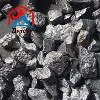
Silicon carbide 88% is widely recognized as a strong and durable industrial material used in metallurgy, foundry, and refractory applications. When buyers ask about its "strength," they are usually referring not only to hardness, but also to how well the material performs under high temperature, mechanical stress, and long-term industrial use.
Although silicon carbide 88% is not the highest-purity grade available, it offers a practical balance between mechanical strength, thermal stability, and cost efficiency. Understanding what "strength" really means in industrial applications helps users determine whether silicon carbide 88% is suitable for their production needs.
In industrial use, the strength of silicon carbide 88% is not defined by a single parameter. Instead, it refers to a combination of hardness, compressive strength, wear resistance, and thermal stability.
Silicon carbide 88% has a hardness close to 9 on the Mohs scale, making it significantly harder than most traditional industrial materials. At the same time, it maintains structural integrity under high temperatures and repeated thermal cycling. These combined properties allow it to perform reliably in harsh industrial environments.
Silicon carbide 88% is known for its excellent hardness and abrasion resistance. Its strong covalent crystal structure makes it highly resistant to mechanical wear, erosion, and impact during industrial processes.
In practical applications, this means silicon carbide 88% can withstand continuous contact with molten metal, slag, and abrasive materials without rapid degradation. This level of wear resistance is one of the main reasons it is widely used in steelmaking furnaces, ladles, and foundry systems.
Thermal performance is another key aspect of strength. Silicon carbide 88% exhibits excellent thermal stability, maintaining its mechanical properties even at very high temperatures.
It has a high melting point and strong resistance to thermal shock, allowing it to endure rapid temperature changes without cracking or structural failure. This makes silicon carbide 88% suitable for high-temperature metallurgical and refractory applications where other materials may soften or degrade.
For most steelmaking and foundry operations, silicon carbide 88% provides sufficient strength and performance. It is commonly used as a deoxidizer and additive, where it must dissolve efficiently and react steadily in molten metal.
In foundries, silicon carbide 88% contributes to stable melt chemistry and improved mechanical properties of cast iron. Its strength in these applications is reflected not only in laboratory data, but also in consistent production results and reliable service life under demanding conditions.
Compared with silicon carbide 90% or higher-purity grades, silicon carbide 88% contains slightly higher impurity levels. This may result in marginal differences in chemical stability under extremely strict process conditions.
However, in terms of practical mechanical strength and durability, silicon carbide 88% remains more than adequate for most large-scale industrial applications. Many users choose the 88% grade because it delivers reliable strength while offering better cost efficiency for high-volume consumption.

Conclusion
Silicon carbide 88% is a strong, wear-resistant, and thermally stable industrial material well suited for metallurgical, foundry, and refractory applications. Its strength is demonstrated not only by hardness values, but also by its ability to perform reliably under high temperature, mechanical stress, and long-term industrial use.
While higher-purity grades offer incremental performance improvements, silicon carbide 88% provides an excellent balance between strength and cost efficiency. By choosing a reliable supplier with strong production control, quality assurance, and logistics capability, industrial users can fully realize the value of silicon carbide 88% in demanding operating environments.
Our company's advantages in supplying silicon carbide
As an experienced supplier in the metallurgical raw materials industry, we focus on providing silicon carbide 88% with consistent strength and stable performance, tailored to real industrial requirements.
With long-term experience in production and processing, we operate integrated smelting, crushing, and screening systems. This allows us to control raw material selection, furnace conditions, and particle size distribution, ensuring uniform quality and reliable mechanical performance across different batches.
Unlike suppliers who rely mainly on spot trading, our production-based supply model enables us to offer stable long-term supply and flexible specifications, including customized particle sizes for steelmaking, foundry, and refractory applications.
We also place strong emphasis on packaging and transportation, which directly affect product performance. Our silicon carbide 88% is packed in moisture-resistant, durable packaging such as 25 kg bags or 1 MT jumbo bags, designed to protect material integrity during long-distance transportation. With extensive export experience, we are familiar with international logistics standards and ensure safe and reliable delivery to global customers.
By combining controlled production, consistent quality, and professional export service, we help customers maintain stable production performance and reduce operational risks.