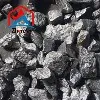
High carbon ferrochrome is the principal chromium carrying charge used in steelmaking. It is produced in a submerged arc furnace by carbothermic reduction of chromite ore with coke, so it contains a high level of carbon that is well matched to stainless steel melting and to the alloying of carbon rich steels. Chromium content in the commercial grades is generally in the range of 60 to 70% with carbon between about 6 and 10%, and the grade family is covered by GB/T 5683 in China. Understanding what the material does in each melt shop is the basis for selecting the right grade and the right ore blend.
Alloying Agent for High Carbon Steels
The largest direct use is as an alloying agent for ball steel, tool steel and high speed steel with a higher carbon content. Added to the ladle or the furnace, ferrochrome raises hardenability so that thick sections harden through rather than only at the surface. Wear resistance and hardness rise with the chromium addition, and because the steel already carries carbon, the high carbon grade introduces chromium without diluting the carbon level that these grades require. The result is better cutting and forming performance in tooling and longer life in grinding media.
Raw Material for Stainless Steel Smelting
High carbon ferrochrome is the raw material base for stainless steel smelted by the oxygen blowing method. Carbon in the ferroalloy is used deliberately as an energy and reducing source in the converter, and the carbon is then removed by oxygen blowing, which also decarburises the melt. Charging a carbon rich chromium unit therefore captures chromium early and cheaply, and refining in the converter takes the carbon down to the level required by the stainless grade. This two stage practice is what makes the high carbon grade economical for stainless production.
Additive for Cast Iron
In cast iron the material acts as an additive that improves wear resistance and hardness while giving the casting good heat resistance. Chromium stabilises carbides in the iron matrix, so the surface resists abrasion and the part retains strength at elevated temperature, which is why chromium bearing irons are selected for mill liners, rolls and furnace parts. Dosing is kept within the range that keeps the iron castable, since too much chromium promotes hard, difficult to machine white iron structures.
Feedstock for Refined Ferroalloys and Electrolytic Chromium
Chromium bearing feed for silicon chromium alloy production.
Charge material for medium carbon, low carbon and micro carbon ferrochrome made by the slag free process, where the high carbon grade is refined in a converter.
Chromium unit feed for the electrolytic production of metallic chromium.
In each case the high carbon grade is chosen because it is the cheapest high chromium unit available and because downstream refining can lower carbon and adjust composition. Consistent chromium to iron ratio and low sulphur and phosphorus are what the downstream operation actually pays for.
Ore Selection and Burden Practice
Smelting good quality high carbon ferrochrome depends heavily on ore preparation. Gravity separation is the main beneficiation method in production, using shaking tables and jig separators, and the gravity concentrate is sometimes further cleaned by low intensity magnetic separation or by high intensity magnetic separation to raise the grade and the chromium to iron ratio of the concentrate. When the burden is being matched, three principles matter. First, block size must be mixed: using only powdered ore causes sintering in the charge, blocks gas permeability at the surface and damages the furnace atmosphere, while using only large ore slows reduction. Second, melting performance must be balanced: a burden of only easily fusible ore forms slag before reduction is complete, so melting outruns reduction and chromium is lost to the slag, while a burden of only refractory ore leaves unreduced ore cores, thickens the slag layer and makes smelting erratic. Third, the mix must be designed for the target carbon, which is influenced by the ore blend, the coke rate and the operating voltage.
Frequently Asked Questions
Q: What is high carbon ferrochrome used for?
It is used as an alloying agent for carbon rich ball, tool and high speed steels, as the raw material for oxygen blown stainless steel melting, and as an additive for cast iron.
Q: How much chromium and carbon does it contain?
Commercial high carbon grades typically carry 60 to 70% chromium with carbon in the range of about 6 to 10%, depending on the specification ordered.
Q: What can it be further processed into?
It is the chromium feed for silicon chromium alloy, for medium, low and micro carbon ferrochrome made by the slag free process, and for electrolytic metallic chromium.
Q: Why is ore blending so important?
Because block size distribution and melting behaviour control gas permeability and reduction speed; a poorly matched burden either sinters, forms slag too early or leaves unreduced ore.
Q: How is chromite ore beneficiated?
Gravity separation with shaking tables and jigs is standard, and the concentrate is often re cleaned by magnetic separation to raise grade and the chromium to iron ratio.
Q: What happens if slag forms too early?
Melting then runs ahead of reduction, chromium is retained in the slag and recovery falls, which is why fusible and refractory ores are blended together.