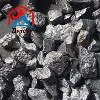
Quick Answer: Selecting the right graphitized petroleum coke recarburizer for foundry use depends on the furnace type, charging method, molten iron conditions and time available for carbon dissolution. Smaller GPC particles generally provide more external surface area, but excessive fines may increase handling losses. Larger particles may require longer contact with molten iron before the target carbon content is reached.
For reliable GPC particle size selection, compare the actual size distribution, fines and oversize limits, chemical composition and carbon recovery under your foundry's operating conditions. No single particle size is ideal for every induction furnace or melting process.

What Should You Know Before Selecting GPC Particle Size?
Graphitized petroleum coke (GPC) is used as a carbon additive in gray iron and ductile iron production. It supplies carbon to help bring molten iron to the required chemical composition, particularly when steel scrap or other relatively low-carbon materials form part of the furnace charge.
Before choosing a GPC size, define how and when the recarburizer will contact molten iron. This is more useful than selecting a particle size based only on a supplier's general recommendation.
| Information to Confirm | Why It Matters |
|---|---|
| Iron Grade and Target Carbon | Establishes the required carbon adjustment and relevant impurity limits. |
| Furnace Type and Capacity | Defines the melting equipment, charge conditions and operating constraints. |
| Charging Method | Determines whether GPC is added with solid charge materials, to molten iron or through a dedicated feeding system. |
| Temperature and Melt Movement | Influence carbon-particle wetting, contact with molten iron and dissolution behavior. |
| Available Dissolution Time | Determines how much time remains for the carbon additive to be incorporated before tapping or further treatment. |
| Current Recarburizer | Provides a baseline for comparing size distribution, recovery and handling losses. |
For example, adding GPC together with the solid furnace charge is different from making a small carbon correction shortly before tapping. The same particle size may not give the same results in both situations.
If your foundry is changing from another carbon raiser to GPC, record the existing material grade, particle size, addition quantity and achieved carbon adjustment before beginning a comparison.
How Does Particle Size Affect GPC Performance?
GPC particles must be heated, brought into contact with molten iron and dissolved for carbon to enter the melt. Their size affects the available contact area and the time required for dissolution.
In general, smaller particles provide a larger external surface area per unit of mass. Under comparable wetting and mixing conditions, this can support faster carbon dissolution.
However, selecting a finer material is not always the best practical choice. Handling losses, dust generation, particle agglomeration and charging methods also influence the result.
Smaller Particles: Dissolution and Handling Considerations
Fine GPC particles can expose more carbon surface to molten iron. Where effective contact is maintained, this may help reduce the time required for carbon dissolution.
But very fine material may also create operational problems. Some particles can be carried away by air movement during charging, while others may remain near the melt surface or form agglomerates rather than dispersing effectively.
If you are considering a finer graphite petroleum coke recarburizer, evaluate the following:
- Whether the material can be charged without excessive dust or material loss.
- Whether particles contact molten iron rather than remaining on the slag or melt surface.
- Whether the selected charging method creates sufficient contact and dissolution time.
- Whether the nominal particle size includes an excessive proportion of very fine material.
A fine grade should therefore be selected for its verified operating performance, not simply because it has a smaller particle diameter.
Larger Particles: Contact and Available Dissolution Time
Coarser GPC particles generally have less external surface area per unit of mass than finer particles of similar shape and density.
Under otherwise comparable conditions, this can increase the time needed for carbon dissolution.
Larger particles may still be suitable where the charging sequence, furnace operation and available melting time allow them to dissolve sufficiently.
However, when the carbon adjustment must be completed within a short remaining period, coarse particles may not be the most practical starting point for a trial.
Fine vs Coarse GPC: Selection Considerations
| Factor | Finer GPC | Coarser GPC |
|---|---|---|
| External Surface Area | Generally larger per unit of mass | Generally smaller per unit of mass |
| Dissolution Time | Potentially shorter with effective wetting and contact | May require more time under comparable conditions |
| Dust and Handling | Greater concern when excessive fines are present | Generally less prone to fine-particle dust loss |
| Charging Suitability | Depends on material handling and feeding arrangements | Depends on charging method and available melt contact time |
| Final Selection | Confirm through comparable melting trials and an agreed particle-size distribution. | |
Key Point: Particle size influences dissolution, but it does not independently determine carbon recovery. Furnace conditions, melt movement, temperature, recarburizer characteristics and operating practices must also be considered.
How to Select GPC Size by Furnace and Addition Method
The appropriate recarburizer size for an induction furnace depends partly on the stage at which the material is added.
Foundries commonly distinguish between adding carbon during the initial charging and melting process and making a smaller carbon correction after molten iron has formed.
GPC Added with the Charge in an Induction Furnace
When GPC is included with solid charge materials, it may have a longer period to heat and dissolve as melting progresses.
The charging sequence, amount of steel scrap, furnace loading and melt movement all influence how the carbon additive interacts with the iron.
For an induction furnace using GPC during initial charging, begin by checking the particle size already used successfully in a comparable melting practice.
If that information is unavailable, you may evaluate commercially listed ranges such as 1–3 mm or 1–5 mm, provided the supplier confirms their availability and the trial is appropriate for your furnace.
These sizes are examples for comparison, not universal recommendations. The best candidate should be established from the charging conditions, dissolution results and acceptable handling losses.
GPC Used for Late Carbon Adjustment
Late carbon adjustment is used when the measured carbon content of molten iron is below the required target and a correction is needed before the next production stage.
In this situation, the available time for dissolution may be shorter than during initial furnace charging.
A finer GPC distribution may be worth evaluating when rapid carbon incorporation is necessary, but only if the material can achieve effective contact with molten iron.
Before selecting a late-adjustment size, confirm the remaining processing time, the required carbon increase, the melt temperature and the furnace's established operating procedure.
Carbon particles that remain poorly wetted or separated from molten iron by slag may not dissolve as expected, regardless of their nominal size.
Dedicated Feeding or Injection Systems
Some melting operations use mechanical feeding or specialized carbon-addition systems. In these cases, particle size must also match the equipment's conveying and feeding requirements.
Review the equipment manufacturer's specified particle-size range, allowable fines content and feeding limitations before choosing GPC.
A particle size suitable for manual furnace charging should not automatically be considered suitable for pneumatic injection or another specialized delivery method.
GPC Size Selection by Operating Scenario
| Foundry Scenario | Selection Priority | What to Test |
|---|---|---|
| Induction Furnace Charge Addition | Charge composition, particle contact and melting cycle | Candidate size distributions, dissolution time and carbon adjustment |
| Late Carbon Correction | Remaining dissolution time and effective melt contact | Carbon adjustment, undissolved material and operational losses |
| Dedicated Feeding System | Equipment-specific particle-size and conveying requirements | Feeding stability, material losses and actual carbon recovery |
The table provides a selection framework. It does not assign one GPC size to every foundry operating under the same furnace category.
Why Does GPC Particle Size Distribution Matter?
When buying GPC for foundry applications, nominal size alone may not fully describe the supplied material.
A product sold as 1–5 mm GPC can contain a distribution of particles within that range, together with some smaller or larger particles depending on the agreed screening tolerance.
For consistent furnace operation, the actual GPC particle size distribution should be included in the purchasing specification when it is important to the process.
Nominal Size, Fines and Oversize
Nominal size describes the stated particle-size range, such as 1–5 mm.
Fines are particles smaller than the agreed lower size limit. Excessive fines can create handling and charging concerns.
Oversize refers to particles larger than the agreed upper size limit. Excessive oversized material may require additional dissolution time or create feeding problems.
When purchasing screened GPC, specify how much undersize and oversize material can be accepted instead of relying only on a size label.
What to Check in a Sieve Analysis Report
A sieve analysis separates a representative material sample into particle-size fractions. The mass collected in each fraction is measured and expressed as a percentage of the tested sample.
The following table is an illustrative example only of how a 1–5 mm GPC shipment might be described in a sieve report. These numbers are not actual ZHENAN batch data and do not establish recommended acceptance limits.
| Particle Fraction | Example Mass Percentage | Interpretation |
|---|---|---|
| Below 1 mm | 6% | Undersize / fines |
| 1–3 mm | 44% | Within nominal range |
| 3–5 mm | 48% | Within nominal range |
| Above 5 mm | 2% | Oversize |
| Total | 100% | 92% within the nominal 1–5 mm range |
Illustrative calculation: 44% + 48% = 92% of sample mass falls within the stated 1–5 mm range. Actual limits must be agreed between buyer and supplier.
A useful sieve report should identify the tested material, sample or batch, sieve openings, mass percentages and applicable test method.
If your furnace is sensitive to very fine material or oversized particles, include separate acceptance limits for these fractions in the purchase agreement.
Which Other Specifications Should Foundries Check?
Particle size is only one part of selecting a graphitized petroleum coke recarburizer. The chemical composition also needs to meet your iron-grade and production requirements.
For gray iron and ductile iron applications, review the following indicators alongside the particle-size distribution.
- Fixed Carbon: Confirm the minimum carbon content and the reporting basis used in the analysis.
- Sulfur: Check the maximum acceptable sulfur input, particularly for ductile iron melting and magnesium treatment control.
- Nitrogen: Verify the required nitrogen limit and whether the test result is reported in ppm or percentage.
- Ash: Review the non-carbon mineral residue against your quality requirements.
- Volatile Matter: Confirm the specified maximum and the applicable test method.
- Moisture: Check the moisture limit and storage conditions.
- Batch COA: Confirm that the certificate and sieve report correspond to the relevant product grade and batch.
A GPC product with a suitable particle size may still be unsuitable if its sulfur, nitrogen or other impurity levels exceed your production limits.
You can review our graphitized petroleum coke products and specifications to compare the listed carbon grades and particle-size options.
For foundry purchasing, use the actual product specification and batch analysis rather than assuming that all graphitized petroleum coke has the same chemical composition.
How to Validate a GPC Size Before Bulk Purchasing
After identifying one or more possible particle sizes, the next step is to evaluate them under representative melting conditions.
A foundry trial should compare the proposed GPC with the currently used recarburizer or another candidate while keeping other relevant conditions as consistent as practical.
Step 1: Record Your Current Melting Conditions
Document the furnace type, charge composition, initial carbon content, current recarburizer, addition method and typical operating conditions.
This provides a baseline against which any change in GPC particle size can be evaluated.
Step 2: Define the Candidate GPC Sizes
Choose the candidate particle-size distributions and confirm their sieve reports. If possible, compare materials with similar chemical specifications so that differences in composition do not obscure the effects of particle size.
Step 3: Run Comparable Melting Trials
For each trial, record the amount of recarburizer added, the charging stage, relevant furnace conditions and the time allowed for carbon dissolution.
Follow your foundry's established operating and sampling procedures. Avoid changing several important variables simultaneously if the objective is to understand particle-size effects.
Step 4: Measure the Results
Measure the initial and final melt carbon contents and record other relevant carbon sources, additions, losses or mass changes.
Also observe whether material remains undissolved, whether excessive dust is generated and whether the process achieves the required carbon adjustment within the available time.
When calculating recarburizer carbon recovery, account for other carbon contributions and relevant changes in melt mass. A simple before-and-after carbon percentage comparison is not always sufficient to isolate recovery from the GPC addition.
Step 5: Confirm the Purchasing Specification
Compare the results across representative heats. Then determine the acceptable particle-size range, fines and oversize limits, chemical composition and required quality documentation.
The final specification should reflect repeatable production requirements rather than a single favorable trial.
GPC Foundry Trial Record Template
Use the following template to compare your current recarburizer with candidate GPC sizes. Fill in the actual test results from your melting trials.
| Trial Item | Current Material | GPC Trial A | GPC Trial B |
|---|---|---|---|
| Particle Size / Sieve Distribution | Record | Record | Record |
| Batch / COA Reference | Record | Record | Record |
| Furnace and Charge Details | Record | Record | Record |
| Initial Carbon (%) | Record | Record | Record |
| GPC / Recarburizer Added (kg) | Record | Record | Record |
| Addition Stage / Dissolution Time | Record | Record | Record |
| Final Carbon (%) | Record | Record | Record |
| Calculated Carbon Recovery (%) | Record | Record | Record |
| Handling / Dust / Residue Observations | Record | Record | Record |
Trial Evaluation: The preferred particle size should provide acceptable carbon adjustment, manageable material losses and repeatable results under your actual foundry conditions.
If the trial results differ significantly, review the furnace conditions and charging practice before attributing the difference solely to particle size.
What Information Should You Send When Requesting GPC?
To select an appropriate graphitized petroleum coke for foundry use, send the following information with your inquiry:
- Iron Grade: Gray iron, ductile iron or another specified casting material.
- Furnace: Furnace type and nominal capacity.
- Charging Method: Initial charge addition, late carbon adjustment or specialized feeding.
- Target Carbon: Current and required carbon content.
- Particle Size: Preferred size range and acceptable fines or oversize limits.
- Chemical Limits: Required fixed carbon, sulfur, nitrogen, ash, volatile matter and moisture.
- Quantity: Trial quantity or expected bulk requirement.
- Documents: COA, sieve analysis or other inspection requirements.
Providing these details helps us review the available GPC grades and discuss which particle-size distributions are appropriate to evaluate in your melting process.
Related GPC Product Information
For available carbon grades and product information, visit our Graphite Petroleum Coke product range.
If you also need information about batch-to-batch quality requirements, see our consistent quality graphitized petroleum coke product page.
Frequently Asked Questions
Is 1–5 mm GPC the best size for every induction furnace?
No. The appropriate particle size depends on the charging method, furnace operating conditions, available dissolution time and material handling requirements. A 1–5 mm GPC product may be a candidate for evaluation, but its suitability should be confirmed through trial results.
Why can fine GPC particles give poor carbon recovery?
Fine particles provide more external surface area, but excessive fines may be lost during handling or charging. Particle agglomeration, poor wetting and limited contact with molten iron can also affect dissolution. Carbon recovery should be evaluated under the actual furnace conditions.
Should a sieve analysis report be required for bulk GPC orders?
A sieve analysis is useful when particle-size consistency matters to your furnace operation. You can specify the nominal size range, permitted fines and oversize percentages, sampling requirements and batch reporting conditions before placing an order.
Confirm GPC Size for Your Foundry Application
Choosing GPC for gray iron or ductile iron production? Send us your furnace type, charging method, chemical requirements and preferred particle size. We can help you review available specifications and documentation for your foundry.
Discuss Your GPC Requirements →Email: sale@zanewmetal.com
Technical References
The following independent technical references provide background on recarburizer dissolution, particle-size effects and sieve analysis. Actual GPC selection should be validated under the specific operating conditions of your foundry.
- International Journal of Metalcasting (2026). Toward a More Complete Quantitative Model of Recarburizer Dissolution in Liquid Iron . Research discussing the effects of particle size, melt agitation, temperature and foundry operating conditions on carbon dissolution.
- ASTM International - ASTM E11-24. Standard Specification for Woven Wire Test Sieve Cloth and Test Sieves . Technical requirements for test sieves used in particle-size classification and analysis.
- Wikipedia - Sieve Analysis. Sieve Analysis and Particle Size Distribution . An introductory explanation of sieve analysis, particle-size fractions and percentage-based reporting.