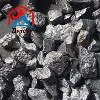
Direct Answer
Ferrovanadium 80 reduces slag in induction furnaces because it introduces more vanadium with less total alloy mass, which means less silicon-rich and low-value accompanying material enters the bath, less oxide generation occurs during alloying, and the intensity of slag-forming side reactions is reduced. In practical melting, this improves alloy cleanliness, supports more stable vanadium recovery, and lowers the risk that excess slag will trap metal and increase alloy loss.
Why Does Slag Control Matter in Induction Furnace Melting?
Induction furnaces do not have the same refining flexibility as large integrated steelmaking routes, which means that unnecessary slag generation becomes a direct cost and quality problem. When excessive slag forms, metallic yield falls because liquid steel and alloy droplets are mechanically entrapped. At the same time, furnace operation becomes less stable because the slag layer interferes with observation, temperature control, and clean alloy assimilation.
This matters even more in alloy steel melting, where each addition changes not only chemistry, but also the oxide balance of the bath.
Why Does Ferrovanadium Grade Affect Slag Formation?
The difference begins with concentration. FeV80 contains much more vanadium per unit mass than lower-grade ferrovanadium, so the steel plant needs fewer kilograms of alloy to reach the target vanadium content. Because less material is charged, the furnace receives a smaller burden of non-vanadium constituents, including elements that can contribute to oxide formation or unfavorable slag growth.
This is the key mechanism.
When a lower-grade alloy is used, more total material must be added. Because that extra material is not vanadium, it becomes part of the melt as residual mass, oxide precursor, or slag-forming burden. In an induction furnace, where process simplicity and melt cleanliness are important, that additional burden can quickly become visible in the slag phase.


How Does Ferrovanadium 80 Reduce Oxide-Related Slag?
Slag in induction furnace melting often increases when alloy additions introduce more oxidizable residual elements than the bath can absorb cleanly. Silicon and aluminum are especially relevant because they readily form stable oxides, while other impurities can alter slag viscosity, slag volume, or inclusion behavior.
Because FeV80 is a higher-purity alloying input, the steelmaker usually introduces less total silicon-bearing and oxide-generating material per unit of vanadium added. As a result, oxide formation is reduced, and the melt produces a smaller secondary slag burden during alloy adjustment.
The effect is not cosmetic. Less oxide generation usually means:
- less slag volume
- lower alloy loss into slag
- cleaner bath conditions
improved yield from the same alloy addition
Why Is Less Alloy Mass Important in an Induction Furnace?
Induction furnaces are efficient melting units, but they are not designed to compensate for avoidable alloy burden. When more alloy mass is added than necessary, the furnace must absorb additional thermal load, dissolve more non-productive material, and tolerate a larger reactive surface between the alloy and the melt.
Because FeV80 delivers more vanadium in less mass, it reduces that burden at the source.
This leads to several operational benefits. Charging is simpler. Dissolution is cleaner. Slag build-up is lower. Furnace operators can control the melt more easily because less secondary material interferes with the bath.
In short, concentrated alloying usually produces a more disciplined melting process.
How Does Slag Affect Vanadium Recovery?
Vanadium recovery is influenced by temperature, timing, oxygen potential, and alloy quality, but slag is one of the most important loss channels. When slag volume increases, the probability that vanadium-bearing droplets or partially dissolved alloy particles will be trapped or oxidized also increases. Once vanadium reports to slag instead of steel, the buyer pays for alloy that does not contribute to final chemistry.
Because FeV80 typically generates a lower slag burden per unit of useful vanadium, it often supports better practical recovery in induction furnace melting. This is one reason why comparing ferrovanadium only by quoted ton price gives an incomplete picture. A cheaper alloy that creates more slag may produce a higher real melting cost.
Why Is This Especially Important for Special Steel?
In special steel melting, slag is not only a yield issue. It is also a cleanliness issue. Excess slag often correlates with more oxide activity, greater inclusion risk, and less predictable alloy assimilation. For grades such as tool steel, alloy structural steel, and wear-resistant steel, this matters because microstructural consistency depends on controlled chemistry and controlled non-metallic behavior.
Because FeV80 helps reduce unnecessary slag formation, it can support cleaner melting conditions and more stable steel quality. That advantage becomes more important as the product value per ton rises.
Does Ferrovanadium 80 Also Help with Furnace Efficiency?
Yes. A concentrated alloy improves more than chemistry. Because fewer kilograms are required, logistics inside the melt shop become more efficient. Charging time can be reduced. Material handling becomes simpler. Storage per unit of contained vanadium improves. Most importantly, the furnace spends less time and heat dissolving unnecessary alloy mass.
That is why experienced steel plants often evaluate ferrovanadium by total process effect rather than nominal purchase price.
Why Does Supplier Quality Matter?
The benefit of FeV80 depends on stable production quality. If particle size is inconsistent, if impurity control is poor, or if the alloy contains excessive fines or surface contamination, the theoretical advantage of a higher-grade ferrovanadium can be weakened in actual melting practice. Buyers therefore need a supplier that can provide controlled chemistry, consistent sizing, suitable packaging, and reliable batch stability.
In this context, ZHEN AN INTERNATIONAL CO., LIMITED supplies metallurgical and refractory products with integrated production, processing, and export support. For induction furnace users, this matters because slag control is linked not only to nominal vanadium content, but also to impurity discipline, lot consistency, and delivery reliability.
What Is the Practical Recommendation?
If the steel plant is using an induction furnace and wants to reduce slag, improve alloy recovery, and keep the melt cleaner, Ferrovanadium 80 is usually the more effective choice, especially in alloy steels where vanadium performance and bath control matter. The reason is straightforward: more vanadium is added with less total material, which reduces slag-forming burden and lowers the chance of alloy loss through oxidation or slag entrapment.
The useful procurement question is therefore not simply which alloy costs less per ton. It is which alloy introduces vanadium with the least process penalty. In many induction furnace applications, the answer is FeV80.
FAQ
Q:What are ferrovanadium uses in industry?
A:Ferrovanadium is mainly used as an alloying element in steelmaking, especially in tool steel, high-speed steel, and high-strength low-alloy (HSLA) steel. It improves hardness, wear resistance, and mechanical strength by forming stable vanadium carbides.
Q:What is ferrovanadium alloy?
A:Ferrovanadium is an iron-vanadium alloy containing typically 50%–80% vanadium. It is used to introduce vanadium into steel, enhancing properties such as strength, toughness, and resistance to wear and high temperatures.
Q:What is the ferrovanadium formula?
A:Ferrovanadium does not have a fixed chemical formula because it is an alloy rather than a compound. It is generally represented as FeV, with varying vanadium content depending on the grade, such as FeV50 or FeV80.
Q:What industries use ferrovanadium?
A:Ferrovanadium is widely used in:
- steel and metallurgy industry
- tool and die manufacturing
- aerospace and automotive sectors
- construction and infrastructure
👉 It is especially critical in tool steel production where high performance is required.
Q:What is ferrovanadium production process?
A:Ferrovanadium is typically produced by reducing vanadium oxides (such as V₂O₅) using aluminum or silicon in a controlled smelting process. The result is a ferroalloy that can be directly added to molten steel.
Q:What is the HS code for ferrovanadium?
A:The HS code for ferrovanadium is 72029210, which is used for international trade and customs classification.
Q:What affects ferrovanadium price?
A:Ferrovanadium price is influenced by several factors, including:
- vanadium content (FeV50 vs FeV80)
- raw material cost (vanadium oxides)
- supply and demand in the steel industry
- energy and production costs
Q:Where can I get the latest ferrovanadium price?
A:Ferrovanadium prices change frequently depending on market conditions, specifications, and order quantity. It is recommended to contact suppliers directly for real-time quotations.📩 sale@zanewmetal.com