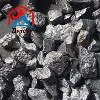
Looking for high-performance ferrovanadium for tool steel? FeV80 enhances hardness through carbide formation, improves red hardness in high-speed steels, and refines grain structure. With a lower melting point (~1480°C), it ensures efficient dissolution and stable alloying. Request factory quotation now.
Why Tool Steel Requires Ferrovanadium
Tool steels are designed to operate under extreme conditions, including high stress, friction, and temperature. To achieve this, the microstructure must be carefully controlled. This is where ferrovanadium for tool steel becomes critical.
When FeV80 is added to molten steel, vanadium reacts with carbon to form vanadium carbides. These carbides are extremely hard and uniformly distributed within the steel matrix. Unlike other alloying elements, vanadium does not simply strengthen the matrix-it creates a reinforced microstructure that directly improves wear resistance and load-bearing capacity.
At the same time, vanadium prevents grain coarsening during heat treatment. Fine grain size is essential in tool steel because it improves both strength and toughness. Without vanadium, tool steel would lose stability under repeated mechanical and thermal stress.
How FeV80 Improves Hardness and Wear Resistance in Tool Steel
The primary reason ferrovanadium for tool steel is widely used lies in its ability to form vanadium carbides (VC). These carbides are significantly harder than iron-based phases and remain stable even at elevated temperatures.
In high-speed steels, these carbides contribute to red hardness, meaning the tool can maintain its hardness even under high cutting temperatures. This is critical for machining operations where heat generation is unavoidable.
In cold work tool steels, FeV80 improves abrasion resistance by distributing fine carbides throughout the structure. This reduces wear and extends tool life, especially in applications such as stamping and forming.
The effectiveness of FeV80 is not only in hardness itself, but in how that hardness is maintained over time and under stress.


Why FeV80 Is More Effective Than Other Vanadium Sources
From a practical steelmaking perspective, not all vanadium sources perform equally. FeV80 is preferred because it provides both metallurgical efficiency and process stability.
Pure vanadium has a very high melting point, making it difficult to dissolve efficiently in molten steel. Vanadium pentoxide, on the other hand, cannot be directly used without additional processing steps.
FeV80 offers a lower melting point, allowing it to dissolve quickly and distribute evenly. This ensures that vanadium is fully utilized during alloying, resulting in a higher recovery rate and more consistent performance.
In tool steel production, where composition control is critical, this consistency directly translates into better product quality.
Performance Advantages of FeV80 in Different Tool Steel Types
The role of ferrovanadium for tool steel varies depending on the steel grade, but its core function remains the same: microstructure control and performance enhancement.
In high-speed steels, FeV80 improves resistance to softening at high temperatures, ensuring that cutting tools retain their hardness during operation. In cold work steels, it enhances wear resistance and compressive strength, making tools more durable under repeated mechanical loading.
In hot work tool steels, vanadium helps stabilize the structure under cyclic heating and cooling, reducing the risk of thermal fatigue and cracking. Across all these applications, the consistent presence of vanadium carbides is what defines performance.
Why Consistency Matters in Ferrovanadium for Tool Steel
For tool steel manufacturers, consistency is often more important than nominal composition. Variations in vanadium content or impurity levels can lead to uneven carbide distribution, which directly affects performance.
- High-quality FeV80 ensures:
- stable vanadium content
- low impurity levels (P, S, Al)
- uniform dissolution behavior
This stability allows steelmakers to maintain tight control over mechanical properties, reducing variability between batches and improving overall reliability.
Technical Specifications of FeV80
ZhenAn ferrovanadium for tool steel is produced with strict quality control to meet industrial requirements. The vanadium content is typically above 80%, with controlled levels of carbon, silicon, phosphorus, sulfur, and aluminum to ensure clean alloying performance.
The material is available in lump form, typically 10–50 mm, which is suitable for direct addition into molten steel. Customized sizes can also be provided based on process requirements.
| Chemical Composition (Typical Values) | |
|---|---|
| Element | Specification (%) |
| Vanadium (V) | ≥ 80.0 |
| Carbon (C) | ≤ 0.10 |
| Silicon (Si) | ≤ 1.5 |
| Phosphorus (P) | ≤ 0.05 |
| Sulfur (S) | ≤ 0.05 |
| Aluminum (Al) | ≤ 2.0 |
Conclusion: Why Ferrovanadium for Tool Steel Is Irreplaceable
Ferrovanadium for tool steel is not just an additive-it is a key factor that determines whether the steel can meet performance requirements.
By forming hard carbides, refining grain structure, and improving thermal stability, FeV80 enables tool steels to perform reliably under extreme conditions. Its efficient dissolution and consistent alloying behavior make it the preferred vanadium source in modern steelmaking.
For manufacturers seeking higher performance, longer tool life, and stable production, FeV80 remains the most practical and effective solution.
Get Technical Support and Latest Price
Choosing the right ferrovanadium for tool steel depends on your steel grade, process, and performance requirements.
E-mail: sale@zanewmetal.com
FAQ
Q:What are ferrovanadium uses in industry?
A:Ferrovanadium is mainly used as an alloying element in steelmaking, especially in tool steel, high-speed steel, and high-strength low-alloy (HSLA) steel. It improves hardness, wear resistance, and mechanical strength by forming stable vanadium carbides.
Q:What is ferrovanadium alloy?
A:Ferrovanadium is an iron-vanadium alloy containing typically 50%–80% vanadium. It is used to introduce vanadium into steel, enhancing properties such as strength, toughness, and resistance to wear and high temperatures.
Q:What is the ferrovanadium formula?
A:Ferrovanadium does not have a fixed chemical formula because it is an alloy rather than a compound. It is generally represented as FeV, with varying vanadium content depending on the grade, such as FeV50 or FeV80.
Q:What industries use ferrovanadium?
A:Ferrovanadium is widely used in:
- steel and metallurgy industry
- tool and die manufacturing
- aerospace and automotive sectors
- construction and infrastructure
👉 It is especially critical in tool steel production where high performance is required.
Q:What is ferrovanadium production process?
A:Ferrovanadium is typically produced by reducing vanadium oxides (such as V₂O₅) using aluminum or silicon in a controlled smelting process. The result is a ferroalloy that can be directly added to molten steel.
Q:What is the HS code for ferrovanadium?
A:The HS code for ferrovanadium is 72029210, which is used for international trade and customs classification.
Q:What affects ferrovanadium price?
A:Ferrovanadium price is influenced by several factors, including:
- vanadium content (FeV50 vs FeV80)
- raw material cost (vanadium oxides)
- supply and demand in the steel industry
- energy and production costs
Q:Where can I get the latest ferrovanadium price?
A:Ferrovanadium prices change frequently depending on market conditions, specifications, and order quantity. It is recommended to contact suppliers directly for real-time quotations.📩 sale@zanewmetal.com