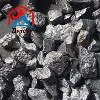
Silicon carbide has become an essential material in both steelmaking and foundry industries as production standards continue to rise. Among the various grades available, 88% and 90% silicon carbide are the most commonly used due to their balanced performance, availability, and cost efficiency.
Although these two grades share similar functions, their purity levels and performance characteristics make them suitable for slightly different applications. Understanding how 88% and 90% silicon carbide are applied in steelmaking and foundry operations helps producers choose the right grade to improve efficiency, quality, and process stability.
In steelmaking, both 88% and 90% silicon carbide are primarily used as deoxidizers and alloy additives. When added to molten steel, silicon carbide reacts with oxygen, reducing oxygen content and improving steel cleanliness.
The 88% grade is widely applied in large-scale steel production where cost efficiency and stable performance are key priorities. The 90% grade, with higher purity and lower impurity levels, is often used in applications requiring tighter control of chemical composition and inclusion levels.
Melt quality is a critical factor in both steelmaking and foundry operations. Silicon carbide improves melt quality by providing a controlled and steady reaction during deoxidation and alloying.
Both grades contribute silicon and carbon gradually, reducing sudden chemical fluctuations. The 90% grade offers more consistent reaction behavior, while the 88% grade provides reliable improvement in melt quality for standard steel grades and high-volume production.
In foundry operations, silicon carbide is widely used as a carbon and silicon source in cast iron production. It helps stabilize melt chemistry, improve carbon recovery, and enhance mechanical properties of castings.
The 88% grade is commonly used in gray iron and ductile iron production where cost control and volume efficiency are important. The 90% grade is often selected for foundries that require higher consistency, better chemical control, and improved casting quality.
Both 88% and 90% silicon carbide contribute to improved process stability due to their thermal resistance and controlled dissolution behavior. Their use reduces the need for multiple additives, simplifying material handling and reducing operational complexity.
By combining deoxidation and alloy addition in one material, silicon carbide helps shorten processing time, improve furnace efficiency, and reduce energy consumption. This leads to smoother operations and more predictable production outcomes.
Choosing between 88% and 90% silicon carbide depends on production scale, quality requirements, and cost considerations.
- The 88% grade is suitable for large-scale production with stable process tolerance and cost sensitivity.
- The 90% grade is better suited for applications requiring higher consistency, cleaner chemistry, and stricter quality control.
In both cases, consistent quality, proper particle size, and reliable supply are more important than purity alone.

Conclusion
88% and 90% silicon carbide are widely used in steelmaking and foundry industries due to their ability to improve melt quality, process stability, and production efficiency. While both grades serve similar functions, their differences in purity and consistency make them suitable for different production needs.
By understanding their specific applications and working with a reliable supplier that offers strong production control, flexible specifications, and professional logistics support, steelmakers and foundries can fully realize the benefits of silicon carbide in modern metallurgical operations.
Our company's advantages in supplying silicon carbide
As an experienced supplier in the metallurgical raw materials industry, we specialize in providing 88% and 90% silicon carbide tailored for steelmaking and foundry applications.
With long-term production and processing experience, we operate integrated smelting, crushing, and screening systems. This allows us to control raw materials, furnace parameters, impurity levels, and particle size distribution, ensuring stable chemical behavior and consistent performance.
Unlike suppliers that rely mainly on spot trading, our production-based supply model enables us to offer stable long-term supply, flexible specifications, and consistent batch quality.
We also place strong emphasis on packaging and transportation. Our silicon carbide is packed in moisture-resistant, durable packaging such as 25 kg bags or 1 MT jumbo bags, protecting material quality during storage and long-distance transportation. With extensive export experience, we ensure reliable delivery to steel plants and foundries worldwide.
By combining controlled production, consistent quality, and professional export service, we help customers improve production stability, reduce operational risk, and achieve better overall performance.