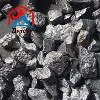
1. The Silicon Purity Ladder
The electronics industry depends on silicon in progressively purer forms. Metallurgical-grade silicon (about 98 to 99% purity) is produced in submerged arc furnaces and is the raw material for the whole chain. Through chemical purification and refining, it is converted into semiconductor-grade polysilicon with purity of 99.9999999% (9N) or higher, and then grown into monocrystalline ingots that are sliced into wafers for device fabrication. Each step adds value and demands tighter impurity control.
2. Integrated Circuits and Discrete Devices
Monocrystalline silicon wafers are the substrate on which integrated circuits are fabricated. Transistors, logic chips, memory and power devices are built into the wafer surface through doping, lithography and layering processes. Discrete devices such as diodes, rectifiers and power transistors also use silicon wafers or epitaxial layers. The quality of the silicon substrate directly affects the yield and performance of every device made on it.
3. Photovoltaic Cells
The solar industry is the second large consumer of high-purity silicon. Solar-grade silicon, typically 6N to 9N purity, is used to produce monocrystalline and multicrystalline wafers for photovoltaic cells. While the purity requirement is lower than for advanced logic chips, the volume is much larger, and the cost per kilogram of purified silicon is a major driver of solar module prices.
4. Silicon-Based Sensors and Special Devices
Silicon is used for a wide range of sensors, including temperature sensors, pressure sensors, accelerometers and image sensors, taking advantage of the material's mechanical and electrical properties. Silicon carbide and silicon nitride, derived from the same silicon supply chain, are used in power electronics and MEMS devices where higher temperature or robustness is required.
5. The Manufacturing Chain
Purification: metallurgical-grade silicon is converted to trichlorosilane and reduced to electronic-grade polysilicon.
Crystal growth: Czochralski or float-zone growth produces monocrystalline ingots with controlled doping.
Wafering: ingots are sliced, lapped, polished and cleaned into wafers.
Fabrication: wafers are processed into devices in cleanrooms.
6. Quality and Supply Considerations
For buyers in the electronics supply chain, the critical parameters are purity level, dopant control, crystal quality and the consistency of the material. Prices and lead times follow the balance between semiconductor demand, solar demand and polysilicon capacity. Buyers should verify the certificate of analysis and the grade specification against the intended application, and should understand that metallurgical-grade silicon metal is not directly usable in electronics without further purification.
7. FAQ
Q1: What silicon purity does electronics require? Semiconductor-grade polysilicon reaches 99.9999999% (9N) or higher, while solar cells typically use 6N to 9N material.
Q2: Is silicon metal directly used in chips? No, metallurgical-grade silicon must be purified into electronic-grade polysilicon and grown into monocrystalline wafers before chip fabrication.
Q3: What are the main electronics applications of silicon? Integrated circuits, discrete power devices, photovoltaic cells, sensors and MEMS devices.
Q4: What is solar-grade silicon? High-purity silicon, typically 6N to 9N, used to produce wafers for photovoltaic cells.
Q5: Why does silicon purity matter so much? Impurities create defects and unwanted doping that reduce device yield, performance and reliability.
Q6: How is silicon purified for electronics? Through conversion to trichlorosilane and reduction to electronic-grade polysilicon, followed by crystal growth and wafering.