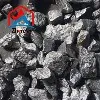
Ferro Vanadium Price Analysis 2026: Why Are Prices Increasing?
This Ferro Vanadium Price Analysis 2026 tracks why ferro vanadium (FeV) prices have been rising, mainly due to strong demand from the steel industry, limited supply of vanadium raw materials, and increasing production costs.
In practical market conditions, the price of FeV is highly sensitive to changes in steel production and vanadium supply. When demand increases and supply tightens, prices tend to move up quickly.

FeV Price Trend In 2026
Over the course of 2026, ferro vanadium prices have shown clear volatility.
- prices increased significantly during periods of strong steel demand
- supply constraints pushed prices even higher
- short-term fluctuations remain common due to market speculation
From industry observations, FeV prices tend to follow cycles linked to construction, infrastructure investment, and global steel output.
For buyers, this means timing and sourcing strategy can have a direct impact on cost.
Ferrovanadium Market Prices (September 2026)
| Product | Spec | Quotation | Change | Unit |
|---|---|---|---|---|
| Ferrovanadium | FeV50 | 83,000–84,000 | ↑ 1,500 | CNY/Ton |
| Ferrovanadium | FeV80 | 132,800–134,400 | ↑ 2,400 | CNY/Ton |
Ex-works China prices, with tax, by acceptance basis. Data reflects early September 2026 market levels and is subject to daily change.
*For the latest pricing on any grade, please contact us at 📧 Email: sale@zanewmetal.com
Key Takeaways
- Upward Momentum: both FeV50 and FeV80 posted gains in early September 2026, with FeV80 up roughly 1.8% and FeV50 up roughly 1.8% week-on-week on an ex-works basis.
- Tight Spot Availability: the consistent upward movement across grades points to constrained spot supply rather than a single one-off event.
- Strategic Advice: with ferro vanadium prices showing continued upward momentum through 2026, we recommend buyers confirm near-term contracts early to hedge against further volatility.
Key Factors Affecting Ferro Vanadium Prices
1. Steel Industry Demand
The steel industry is the largest consumer of ferro vanadium, especially for high-strength low-alloy (HSLA) steel.
When steel production increases:
- demand for FeV rises
- prices move upward
In many regions, infrastructure and construction projects continue to support strong demand.
2. Raw Material Supply
Vanadium is not mined independently in most cases. It is usually a by-product of steel slag or other processes.
This means:
- supply is limited and unstable
- any disruption can quickly impact prices
When vanadium supply tightens, FeV prices increase rapidly.
3. Production Costs
The cost of producing ferro vanadium is influenced by:
- energy prices
- raw material costs
- environmental regulations
Higher production costs are often passed directly to the market, pushing prices higher.
4. Market Speculation And Inventory
Like many alloy materials, FeV prices can also be affected by:
- trader activity
- inventory levels
- market expectations
Short-term price spikes are often linked to speculative buying or supply concerns.
👉 Note that alloy price alone does not determine your real cost per ton of steel - recovery rate and addition efficiency matter just as much. See our analysis of why ferro vanadium cost varies even at the same price for the full picture.

Common Grades Of Ferro Vanadium In The Market
Ferro vanadium is classified according to its vanadium content. Different grades are used depending on the steelmaking process and metallurgical requirements. The most commonly traded grades in the global market include FeV40, FeV50, FeV60, and FeV80 ferro vanadium.
These grades allow steel manufacturers to precisely control alloy composition during steel production.
FeV40 Ferro Vanadium
FeV40 ferro vanadium typically contains approximately 38–45% vanadium. This grade is widely used in general steelmaking applications and structural steel production.
Because of its balanced vanadium content, FeV40 is often used to improve steel strength while maintaining cost efficiency.
FeV50 Ferro Vanadium
FeV50 ferro vanadium contains around 48–55% vanadium and is one of the most commonly used grades in steelmaking.
This grade is frequently used in the production of high-strength low-alloy steels (HSLA), pipeline steels, and automotive components.
FeV60 Ferro Vanadium
FeV60 ferro vanadium provides a higher vanadium concentration, typically between 55–65%. It is commonly used in metallurgical processes that require stronger alloying effects.
Steel produced with FeV60 ferro vanadium often exhibits improved strength and fatigue resistance.
FeV80 Ferro Vanadium
FeV80 ferro vanadium is a high-purity grade containing approximately 75–85% vanadium. It is usually used in the production of specialty steels and advanced alloy materials.
Because of its higher vanadium concentration, FeV80 is often used in demanding engineering applications that require high mechanical performance. If you're weighing FeV80 against FeV50 for a premium application, see our FeV80 vs FeV50 cost and efficiency comparison.
Is Ferro Vanadium Price Expected To Rise Further In 2026?
Based on current market conditions, ferro vanadium prices are likely to remain relatively strong through the rest of 2026.
Key reasons include:
- continued demand from the steel sector
- limited expansion of vanadium supply
- increasing focus on high-performance steel materials
However, price fluctuations are still expected, especially in response to global economic changes.
FAQ
Q: What is the current price of ferro vanadium in 2026?
A: As of early September 2026, China ex-works FeV50 traded around 83,000–84,000 CNY/Ton and FeV80 around 132,800–134,400 CNY/Ton, both trending upward. Prices change frequently, so contact us for a same-day quotation.
Q: Why did ferro vanadium prices rise in 2026?
A: The main drivers are strong steel-sector demand (particularly HSLA steel), limited and unstable vanadium raw material supply, rising production costs, and periodic speculative trading activity.
Q: Will ferro vanadium prices keep rising through the rest of 2026?
A: Based on current demand and supply conditions, prices are likely to stay relatively firm, though short-term fluctuations tied to global economic conditions should still be expected.
Q: Does a higher ferro vanadium price always mean higher steelmaking cost?
A: Not necessarily - recovery rate and addition efficiency affect the real cost per ton of steel as much as the quoted alloy price. See our guide on ferro vanadium cost in steel production for details.
Looking For A Stable Ferro Vanadium Supplier?
With experience supplying ferro alloys to steel and industrial customers, we understand how important stable quality and reliable delivery are.
ZhenAn offers:
- consistent product quality
- flexible supply options
- competitive pricing
👉 Contact us to discuss your requirements or get the latest FeV quotation.
📧 Email: sale@zanewmetal.com