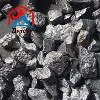
The chemical and physical structure of silicon nitride is contingent upon the ratio of silicon to nitrogen. The crystal structure of this compound is predominantly tetrahedral. Each nitrogen atom is connected to three silicon atoms, thereby forming a network of strong covalent bonds. The microstructure can be modified through the utilisation of disparate synthesis methodologies, thereby yielding diverse morphologies, including granules, powders, and blocks. Each shape is suited to particular industrial requirements.
Silicon nitride is characterised by a high degree of hardness. Silicon nitride is harder than the majority of metals and ceramics, thereby conferring upon it a high degree of resistance to wear.
- Exhibits stability at elevated temperatures: Silicon nitride is capable of withstanding temperatures in excess of 1700°C, rendering it an optimal material for high-temperature applications.
- Resists corrosion: Silicon nitride is resistant to most chemical agents, including acids and alkalis.
- Insulates electricity: Despite its ability to conduct heat, silicon nitride is an effective insulator. This renders it an optimal choice for high-voltage applications.
- Heat conductivity: Its ability to conduct heat makes it a valuable component in thermal management systems.
Silicon nitride can be synthesised in a number of ways, including the following:
- By subjecting it to a high temperature until it decomposes. At elevated temperatures, silicon reacts with ammonia to form silicon nitride.
- Chemical vapour deposition (CVD): A reaction between silicon and ammonia results in the formation of a thin film of silicon nitride.
Reaction sintering is a process whereby the formation of a material is achieved through a chemical reaction between two or more substances. At elevated temperatures, a reaction between silicon powder and ammonia results in the formation of a bulk silicon nitride structure.