Two Different Numbers Are Both Called Recovery Rate
In ferrovanadium production, recovery describes how much of the vanadium contained in the feed ends up in the finished alloy. In steelmaking, the same phrase describes how much of the vanadium added as FeV is retained in the heat rather than reporting to slag and fume. The two figures are measured on different equipment and cannot be compared. Production yield is usually quoted stage by stage, while steelmaking retention depends on deoxidation practice, slag basicity and tapping temperature.
Ferrovanadium itself is rarely the starting point. The commercial chain starts with vanadium-bearing slag from steelmaking, vanadium concentrate, or secondary streams such as spent catalysts and residues.
Stage 1: Extraction from Slag and Concentrate
The dominant industrial route for vanadium-bearing steelmaking slag is salt or calcium roasting followed by water or acid leaching. Roasting converts vanadium into a soluble vanadate; leaching then transfers it into solution; purification by precipitation, ion exchange or solvent extraction produces a technical-grade vanadium oxide. Reported vanadium extraction for a well-run roasting and leaching circuit generally falls in the 80-90% range, with losses split between unreacted spinel phases and solution handling.
Vanadium recovery from secondary resources is more variable. Spent catalyst processing typically reports lower extraction than slag processing because the vanadium is locked in a different matrix and the feed composition varies from lot to lot.
Stage 2: Purification to Vanadium Oxide
Leach liquor is upgraded to vanadium pentoxide flakes or to another fused oxide. Purity at this stage matters more than headline recovery: aluminium, silicon, iron and sodium carried into the reduction step consume reductant and dilute the alloy. Removing these elements usually costs a small amount of vanadium, which is why a circuit reporting 95% recovery to solution may still report only around 90% recovery to acceptable oxide.
| Stage | Feed | Product | Typical Vanadium Yield |
|---|---|---|---|
| Roasting and leaching | Vanadium slag / concentrate | Leach liquor | 80-90% |
| Purification | Leach liquor | Vanadium oxide | 90-95% |
| Aluminothermic reduction | V2O5 + aluminium + iron scrap | FeV50 / FeV80 | 90-95% |
| Crushing and sizing | FeV ingot | 10-50 mm lump | 97-99% |
Stage 3: Aluminothermic Reduction and Smelting Yield
Purified vanadium oxide is reduced with aluminium in the presence of iron or steel scrap in a refractory-lined vessel. The reaction is strongly exothermic and self-propagating; the iron dilutes the alloy to a controlled vanadium level. Reduction of V2O5 with aluminium requires roughly 0.8-1.0 kg of aluminium per kg of contained vanadium in the feed, depending on oxide grade and on the iron content of the charge.
Vanadium losses in this step report to the slag, to dust collected by the fume system and to skull left in the vessel. Yields of about 90-95% are achievable where the charge is dry, well mixed and the oxide grade is consistent; wet or fine oxide feed and poor slag-metal separation are the two most common causes of yield loss. Ferrovanadium grades and their delivery conditions are covered by ASTM A102, ISO 5448 and GB/T 4139, which also define sampling requirements for the alloy.
Stage 4: Crushing, Sizing and Fines Recycle
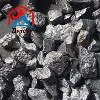
Cast FeV is crushed and screened to a delivery size, most often 10-50 mm. Screening inevitably creates a fines fraction. Fines are not lost material: they are briquetted or recharged into the next reduction run, so a plant's overall vanadium recovery depends heavily on how much of the fines stream is recycled instead of sold at a discount.
When auditing a supplier, the useful questions are which stages are measured, whether the yield is calculated on contained vanadium or on oxide weight, and how fines are handled. A single blended recovery number without a stage breakdown is not verifiable.
Frequently Asked Questions
Q: What is a realistic vanadium recovery from steelmaking slag?
A: Well-run roasting and leaching circuits generally report 80-90% vanadium extraction to leach liquor. The balance reports to unreacted slag phases, residues and solution handling losses.
Q: What recovery can aluminothermic reduction achieve?
A: Around 90-95% in normal operation. Losses go to slag, fume dust and vessel skull; consistent oxide grade and dry, well-mixed feed are the main levers.
Q: Is recovery different for FeV50 and FeV80?
A: The chemical route is the same, but higher vanadium grades require a hotter charge and tighter control of the reductant balance, so smelting yield tends to be slightly lower and more sensitive to feed quality.
Q: How does steelmaking retention differ from production yield?
A: Steelmaking retention measures how much added vanadium stays in the heat. It is governed by deoxidation, slag composition and tapping temperature, and it is a steel plant metric rather than a ferroalloy plant metric.
Q: Does fines generation reduce overall vanadium recovery?
A: Only if the fines are not recycled. Where a plant briquettes and recharges its fines, sizing losses stay below roughly 1-3% of contained vanadium.