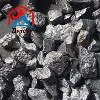
Production metallurgy is the branch of metallurgy that turns ore, concentrate or recycled scrap into metal that can be sold and used. It covers everything between the mine and the melting shop: mining and crushing the feedstock, separating valuable minerals from waste, extracting the metal from its chemical compounds, refining it to a controlled purity, and finally adding alloying elements in the right form and order. The discipline is usually split into three process families, and most industrial flowsheets combine all three.
What Production Metallurgy Covers
Extractive and production metallurgy are often used interchangeably, but production carries a wider meaning: it includes the conversion steps that follow extraction, such as casting, sizing, and the manufacture of master alloys. The three process families are:
Pyrometallurgy: treatment at high temperature, including roasting, smelting, converting and fire refining. It dominates iron, steel, lead and ferroalloy production.
Hydrometallurgy: treatment in aqueous solution, including leaching, solvent extraction and precipitation. It is the standard route for zinc and for many rare and refractory metals.
Electrometallurgy: treatment using electrical energy, including electrolytic refining and electrowinning. Copper and zinc cathodes and primary aluminium are produced this way.
The choice between them follows the chemistry of the ore and the cost of energy. Sulphide ores are usually smelted because the sulphur can be captured as sulphuric acid, while oxide ores that are difficult to reduce thermally are more often leached.
Ferrous and Non-Ferrous Metal Routes
Metals are first divided into ferrous, those based on iron, and non-ferrous, everything else. The table below summarises the route taken by the main industrial metals.
| Metal | Typical feedstock | Main production route | Primary product form |
|---|---|---|---|
| Iron and steel | Hematite and magnetite ore | Blast furnace, basic oxygen furnace | Pig iron, steel, ferroalloys |
| Copper | Sulphide concentrate | Flotation, smelting, electrorefining | Cathode copper, wire rod |
| Zinc | Sulphide ore | Roasting, leaching, electrowinning | Special high grade zinc |
| Aluminium | Bauxite | Alumina refining, molten salt electrolysis | Primary aluminium ingot |
| Titanium | Rutile and ilmenite | Chlorination, magnesium reduction | Sponge titanium |
Ferrous production has the largest tonnage by a wide margin, and it is also the most closely coupled to alloy addition, because almost all steel is adjusted in composition before it is cast. Non-ferrous routes are more often organised around a single metal, with by-products recovered as a secondary revenue stream.
From Ore to Metal: The Process Steps
Although flowsheets differ, most production metallurgy operations follow the same sequence of steps:
Mining and feedstock preparation: ore is drilled, blasted and transported, then blended so that the grade fed to the plant stays steady.
Comminution: crushing and grinding liberate the valuable mineral grains from the surrounding rock and from each other.
Beneficiation and separation: gravity, magnetic and flotation methods concentrate the valuable mineral and reject gangue as tailings.
Extraction: the concentrate is reduced, smelted or leached so that the metal leaves its host compound in metallic or dissolved form.
Refining: fire refining, electrolysis or distillation remove residual impurities to the limits required by the specification.
Alloying and casting: the refined metal is adjusted, degassed and cast into ingots, billets, or master alloys for further processing.
Each step has a recovery figure attached to it, and the product of those figures gives the overall yield. A plant that recovers 92 percent of the metal in beneficiation and 94 percent in smelting returns only about 86 percent of the metal contained in the ore, which is why loss control is treated as a core production function rather than an accounting detail.
Ferroalloys: The Bridge Between Ore and Steel
Most alloying elements cannot be added to steel in their pure form: they melt at very high temperatures, oxidise readily, or cost too much to refine. Instead they are added as ferroalloys, master alloys produced by carbothermic reduction of the oxide together with iron. Although these alloys are a small fraction of steelmaking tonnage, no heat of steel can be finished without them.
| Ferroalloy | Typical main element content | Function in steelmaking |
|---|---|---|
| Ferrosilicon | Silicon 74 to 80 percent | Deoxidation and silicon alloying |
| High-carbon ferromanganese | Manganese 76 to 82 percent | Manganese alloying, sulphur control |
| Ferrovanadium | Vanadium 50 to 80 percent | Microalloying for high-strength structural steel |
| Ferrotungsten | Tungsten 70 to 85 percent | Tool steel and heat-resistant steel |
| Ferromolybdenum | Molybdenum 55 to 65 percent | Hardenability and creep resistance |
Addition rates are set by a straightforward mass balance. To put 0.5 percent manganese into one tonne of steel, five kilograms of manganese are needed in the melt; with high-carbon ferromanganese at 78 percent manganese and a recovery of about 95 percent, the charge is five divided by 0.78 and then divided by 0.95, giving roughly 6.7 kilograms per tonne of steel. The same arithmetic applied to every element gives the charge balance for a heat.
Order of addition matters as much as the quantity. Deoxidisers are added before alloying elements so that oxygen does not consume the more expensive additions, and elements with a high affinity for oxygen are added late in the process, under a slag that protects them from the atmosphere.
Quality Control, Product Forms and Standards
Production metallurgy is a specification-driven industry, so analysis and sampling are built into the process rather than added at the end. Chemical composition is confirmed by spectrometry on every cast, and size distribution is controlled by screening because the dissolution behaviour of a ferroalloy depends strongly on particle size. Management systems such as ISO 9001 and testing laboratory competence under ISO/IEC 17025 are commonly required by customers, while individual products are bought against national or international standards such as GB/T 2272 for ferrosilicon, GB/T 3795 for ferromanganese and GB/T 3648 for ferrotungsten.
Product forms follow the downstream process: lump material for the melting shop, granulated and powder grades for continuous casting and welding consumables, and briquetted or cored wire forms where a controlled, low-loss addition is needed in the ladle. Packing is chosen to limit moisture pickup, since wet additions can cause violent reactions in the melt.
Frequently Asked Questions
Q: What is the difference between production metallurgy and extractive metallurgy?
Extractive metallurgy stops at the point where metal is won from its ore. Production metallurgy includes that step but also covers refining, alloying and casting into saleable forms.
Q: Which process family is used most in industry?
By tonnage, pyrometallurgy leads, because iron, steel, ferroalloys and most base metals are made in furnaces at high temperature. Hydrometallurgy and electrometallurgy handle lower-grade and more complex feedstocks.
Q: Why are metals alloyed in the form of ferroalloys?
Ferroalloys lower the melting point and density of the addition, reduce oxidation losses, and deliver the element in a form that dissolves predictably in liquid steel. They are also cheaper than refining the pure element.
Q: What determines the recovery of an alloying element?
Recovery depends on the affinity of the element for oxygen, the slag chemistry, the addition temperature and the particle size of the ferroalloy. Late addition under a protective slag gives the highest recovery.
Q: How is product quality verified in production metallurgy?
Every cast is analysed for chemical composition, and size, moisture and bulk density are checked against the purchase specification. Traceability records link the delivered lot back to the heat and the raw material batch.
Q: Can recycled scrap replace ore in production metallurgy?
Yes, and in steelmaking it already does a large share of the work. Scrap-based routes bypass mining and reduction entirely, but they depend on sorting to keep unwanted elements such as copper and tin out of the melt.