Definition and Composition
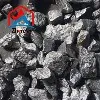
Ferro-tungsten is a master alloy of tungsten and iron, supplied primarily as an alloying additive for steelmaking and casting. It is not a finished material in its own right but a carrier: its purpose is to introduce tungsten into a melt at a cost and in a form that is practical to charge. Because tungsten has a very high melting point, adding the pure metal to a steel bath would be slow and would risk incomplete dissolution; the iron-bearing master alloy melts more readily and dissolves into the bath within normal addition practice.
The tungsten content is specified by grade. GB/T 3648 covers ferrotungsten in the Chinese standard system with grade designations such as FeW80 and FeW75, where the number indicates the nominal tungsten content, and each delivered lot is certified against a defined band around that nominal value. ISO 5451 addresses ferrotungsten specification and conditions of delivery in the international system. Purchasers should work from the current edition of the applicable standard and from the supplier's lot certificate rather than from a nominal figure alone.
Production Route
Ferro-tungsten is made by reducing tungsten-bearing raw materials in the presence of iron under high temperature. The classic route is aluminothermic reduction, in which aluminium powder reduces the tungsten oxide concentrate and the reaction generates enough heat to melt the products, giving a dense regulus that can be crushed and screened. Electric furnace reduction is also used. The choice of route influences the residual aluminium, silicon and carbon content, which is why certificates for the same nominal grade can differ in minor elements.
After solidification the regulus is crushed and sized. Because ferrotungsten is dense and hard, crushing generates a distribution of pieces, and the delivered size range is a commercial variable in its own right.
Behaviour in Steel
Tungsten combines with carbon in steel to form complex, very hard carbides. Those carbides are the reason tungsten-bearing steels retain hardness at temperatures where ordinary carbon steels soften. In high-speed tool steel this is the property that matters most: the cutting edge must stay hard while it is hot, and tungsten carbide stability provides it.
The wider effects recorded in practice include grain refinement, improved red hardness and wear resistance, higher strength limits and yield points, and better resistance to tempering. Tungsten also has a favourable influence on mechanical behaviour at elevated temperature, which is why it appears in heat-resistant grades as well as tool grades. Because the alloy is a carbide former, the carbon balance of the heat matters: tungsten added without regard to carbon will not deliver the intended carbide structure.
The standard families of steel that use ferrotungsten include high-speed tool steel, alloy structural steel, magnetic steel, heat-resistant steel and stainless steel. Addition levels vary widely, and in most shops the alloy is charged early, in the scrap or in the furnace rather than into the ladle, so that dissolution is complete before tapping.
Specification, Sizing and Sourcing
| Item | What is specified | Practical note |
|---|---|---|
| Grade | Nominal tungsten content, for example FeW80 or FeW75 per GB/T 3648 | Certified value must sit inside the band for the grade ordered |
| Minor elements | Aluminium, silicon, carbon, sulphur and phosphorus as applicable | Residuals reflect the reduction route and affect the steel grade balance |
| Size range | Declared lump or crushed cut with oversize and undersize allowance | Match to the charging method; very fine fractions dissolve but dust and oxidise |
| Packing | Steel drums, bags or bulk bags with declared net weight | High density means small volume for weight; weight tickets matter |
| Certification | Lot certificate with tungsten and minor elements | Check that sampling and analysis are accredited or at least traceable |
Two commercial points are specific to this alloy. First, because tungsten is a high-value element, small differences in certified tungsten content translate into large differences in the value of a tonne of material, so the assay is the price basis, not the nominal grade. Second, because ferrotungsten is dense, price per tonne can look high while the volume is small; buyers should compare on a contained-tungsten basis and on recovery in the melt.
Validation is straightforward: check contained tungsten by lot, look for undissolved residue or sieving losses, and track recovery against the alloy addition calculation. A supplier whose recovery is stable is worth more than a marginally cheaper alternative whose assay wanders from lot to lot.
Frequently Asked Questions
Q: What is ferro-tungsten used for?
A: It is the alloying additive that introduces tungsten into tool steel, high-speed steel, heat-resistant steel, magnetic steel and stainless steel, and is also used in casting.
Q: Why not add pure tungsten instead?
A: The iron-bearing master alloy melts and dissolves more readily in a steel bath, giving faster and more complete recovery than the pure metal with its very high melting point.
Q: What does a grade designation such as FeW80 mean?
A: It indicates the nominal tungsten content of the ferrotungsten grade, with the delivered value certified within a defined band around that figure under the applicable standard.
Q: How does tungsten change steel properties?
A: It forms hard stable carbides that improve red hardness, wear resistance and high-temperature strength, and it refines grain structure in tool and heat-resistant grades.
Q: Which standard covers ferrotungsten?
A: GB/T 3648 covers ferrotungsten in the Chinese system with grade designations such as FeW80 and FeW75, and ISO 5451 covers ferrotungsten specification and delivery conditions internationally.
Q: What should be checked on delivery?
A: Certified tungsten content for the lot, minor element levels, the size distribution against the agreed range, net weight against the packing documents and the absence of excess fines.