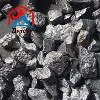
What an Inoculant Does in Molten Iron
An inoculant is a material added to molten iron shortly before casting in order to control the solidification structure. In gray iron, inoculation promotes the formation of graphite and prevents the formation of hard and brittle carbide structures known as chill. Without inoculation, thin sections of a casting cool quickly and tend to form carbides, which are difficult to machine and reduce ductility. The inoculant works by supplying nucleating particles in the melt on which graphite can grow, so the iron solidifies with fine and evenly distributed graphite instead of coarse flakes and carbides.
The same mechanism improves ductile iron, where inoculation increases the number of graphite nodules and reduces the risk of carbides and exploded graphite. In both cases the aim is a well nucleated melt that is still active when the metal enters the mould.
Why Inoculation Fades
Inoculation has a serious practical problem: its effect fades with time. The nucleating particles dissolve or become inactive while the molten iron is held, so the effect is strongest immediately after addition and weakens over the following minutes. In a normal foundry the effect can decay noticeably within 5 to 10 minutes of holding, and after 20 to 30 minutes much of it may be gone. If the melt is held too long before pouring, the casting shows the same defects as if no inoculant had been added at all.
Fade is made worse by high holding temperature, by a long transport distance from the treatment station to the mould, and by late additions that do not have time to dissolve properly. This is why foundries control the time between inoculation and pouring very carefully, and why long acting inoculants were developed.
How Barium and Strontium Extend the Effect
A long acting inoculant is designed to resist fade by adding elements that slow the loss of nucleation. The most important of these are barium and strontium. Barium strengthens the nucleating power of the silicon rich particles and slows their dissolution in the melt, which is why silicon barium inoculants keep working for longer periods. Strontium is especially effective at reducing chill in thin sections of gray iron and is often combined with barium in premium inoculants.
Calcium and aluminium are also present in small amounts in most commercial inoculants, where they help control the reaction and the formation of effective nuclei. A typical long acting inoculant contains 70 to 75 percent silicon, 2 to 6 percent barium, 0.5 to 2 percent strontium, 0.5 to 2.5 percent calcium and 0.5 to 2 percent aluminium, with the balance iron. Rare earth bearing inoculants are used in ductile iron, where cerium and lanthanum help counteract residual elements that interfere with nodularisation.
Grades, Addition Rates and Foundry Practice
Long acting inoculants are supplied in several forms, including lump, granular and fine powder, and the form is matched to the addition method. In mould and in stream inoculation use fine grades, while ladle additions use coarser grades. Typical addition rates are 0.1 to 0.5 percent of the weight of the molten iron, with the exact rate depending on the base iron, the sulphur level and the section thickness of the casting.
Inoculant efficiency is normally checked by measuring chill depth in a wedge test and by examining the graphite structure under a microscope. Because the effect of inoculation always decays, the test must be made on a sample poured at the same time as the production casting. A foundry that pours large moulds slowly, or that holds iron in a transfer ladle, gains the most from a long acting grade. Inoculants are supplied against the chemical requirements of the customer specification, and the supplier certifies the silicon, barium, strontium, calcium and aluminium content for each batch.
Frequently Asked Questions
Q: What is a long acting inoculant?
A long acting inoculant is a silicon based inoculant that contains barium, strontium or both, so that its graphite nucleating effect survives longer in molten iron than the effect of plain ferrosilicon.
Q: How long does a long acting inoculant remain effective?
The effect depends on iron temperature, sulphur level and holding time. Under normal foundry conditions it can still be useful 15 to 30 minutes after addition, while a plain ferrosilicon addition may lose much of its effect within 5 to 10 minutes.
Q: What is the difference between barium and strontium inoculants?
Barium is the stronger anti fade element and suits higher temperature and longer holding conditions. Strontium is particularly good at preventing chill in thin sections and is often chosen where surface finish and machinability matter.
Q: How much long acting inoculant should be added?
Typical rates are 0.1 to 0.5 percent by weight of the molten iron. The correct rate is set by trial castings and by a chill wedge test rather than by a single fixed rule.
Q: Can a long acting inoculant replace late inoculation?
It reduces the need for a very late addition, but the two practices work best together. A long acting grade keeps the melt nucleated during holding, and a small late or in stream addition restores the effect just before the metal enters the mould.