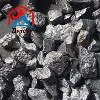
By Zhen An International | Contact us for more details on Vanadium Pentoxide Flake
Vanadium Pentoxide Flake Density: Its Direct Impact on Aluminothermic Reaction
In ferrovanadium production, many buyers focus first on V₂O₅ purity, phosphorus, sulfur and price per ton. These are important, but they do not fully explain whether the material will perform well in the furnace.
For aluminothermic reduction, the bulk density of vanadium pentoxide flake can directly affect charging stability, reaction intensity, splashing risk, dust loss and final vanadium recovery rate.
USGS notes that most 80% grade ferrovanadium is produced by aluminothermic reduction of V₂O₅ in the presence of steel scrap or by direct reduction in an electric arc furnace. This means V₂O₅ flake is not only a chemical input; it is also a physical charge material whose density and form affect the reaction process.
Why Density Is the Hidden Key to Vanadium Recovery
The real value of V₂O₅ Flake 98% is not just the percentage printed on the COA. Its value is decided by how much vanadium can be charged, reduced, separated from slag and finally recovered into ferrovanadium alloy.
Public chemical databases list vanadium pentoxide with a true specific gravity of about 3.36, and OSHA describes vanadium pentoxide as yellow-orange powder or dark-gray odorless flakes dispersed in air.
However, metallurgical buyers should not confuse true density with bulk density.
| Density Type | Meaning | Why It Matters |
|---|---|---|
| True Density / Specific Gravity | Density of V₂O₅ material itself | Useful for chemical identity and physical reference |
| Bulk Density | Density of flakes as packed, charged or fed | Directly affects furnace charging, reaction bed stability and dust loss |
For aluminothermic reduction, bulk density is usually more practical than true density. A high-density V₂O₅ flake charge can form a more stable material bed, while low-density or fragile flakes may create more fines, dust and uneven reaction zones.
How High-Density V2O5 Flake Helps Reduce Splashing Risk
The aluminothermic reaction between V₂O₅ and aluminum is highly exothermic. If the charge bed is too loose, too dusty or unevenly distributed, the reaction may become locally violent. This can increase the risk of splashing, vanadium-bearing droplets escaping from the reaction zone, and unstable slag-metal separation.
High-density V₂O₅ flake helps in three ways:
- It improves charge bed compactness.
- It reduces the amount of loose fine powder.
- It supports a more controlled contact interface between V₂O₅ and aluminum.
- In practical terms, high-density flake behaves more like a stable furnace charge than a loose reactive powder. This can help operators control reaction speed, reduce splashing loss and improve batch-to-batch consistency.
For this reason, some ferrovanadium producers set internal bulk density requirements, such as requesting V₂O₅ flake with bulk density above a specific plant-defined threshold. If a buyer uses a target such as >0.8 g/cm³, it should be verified through supplier batch data or third-party testing rather than treated as a universal industry standard.
Impact of Flake Thickness on Smelting Speed
Flake thickness is another key variable. For many metallurgical V₂O₅ flakes, a controlled thickness range such as 1–3mm is often preferred because it balances reaction speed and physical stability.
| Flake Condition | Furnace Behavior | Possible Risk |
|---|---|---|
| Too thick | Slower reduction | Incomplete reaction or vanadium retention in slag |
| Too thin | Faster reaction, easier breakage | More fines, dust and unstable reaction |
| Controlled 1–3mm flake | Balanced reduction behavior | Better charge stability and process control |
The goal is not to make the flake as thin as possible. The goal is to create a flake structure strong enough to survive handling, but reactive enough to reduce efficiently in the furnace.
For V₂O₅ Flake 98%, thickness control affects:
- smelting speed
- heat release distribution
- fines generation
- slag-metal separation
- vanadium recovery rate in FeV production
Reducing Dust Loss and Secondary Pollution
Low-density or fragile V₂O₅ flake can break during transportation, mixing and furnace charging. Once excessive fines are created, part of the vanadium-bearing material may be lost to dust collection before it fully participates in the aluminothermic reaction.
This is not only a housekeeping problem. NIOSH lists vanadium dust under CAS No. 1314-62-1 and provides occupational exposure information for vanadium dust and fume as V₂O₅, which reinforces the need for dust control when handling vanadium pentoxide.
For ferrovanadium producers, dust control has two benefits:
- Worker protection: less airborne V₂O₅ dust during handling and charging.
- Material efficiency: more purchased vanadium stays in the furnace instead of entering the dust collector.
This is why high-density V₂O₅ flake is often preferred over powder for ferrovanadium smelting, while powder is more suitable for chemical catalysts, dissolution systems or electrolyte preparation.
High Density V2O5 Flake vs Powder for Ferrovanadium
| Item | High-Density V₂O₅ Flake | V₂O₅ Powder |
|---|---|---|
| Dust Loss Risk | Lower | Higher |
| Charging Stability | Better | More difficult to control |
| Reaction Speed | More controlled | Faster but may be unstable |
| Splashing Risk | Lower under proper operation | Higher if feeding is not controlled |
| Best Application | Ferrovanadium smelting | Catalysts, wet chemistry, electrolyte preparation |
Powder has advantages in chemical reactions because of its higher surface area. But in aluminothermic ferrovanadium production, excessive surface area can become a disadvantage if it causes dust loss, fast localized reaction or unstable feeding.
ROI Logic: Why Cheap Low-Density Flake May Cost More
A lower price per ton does not always mean lower ferrovanadium production cost.
For example, low-density or fragile V₂O₅ flake may look attractive if it is cheaper at the purchasing stage. But if it causes higher dust loss, splashing loss or vanadium retention in slag, the real cost per ton of recovered vanadium may become higher.
A practical ROI model should compare:
| Cost Factor | Low-Density / Fragile Flake | High-Density V₂O₅ Flake 98% |
|---|---|---|
| Purchase Price | May be lower | May be higher |
| Dust Loss | Higher risk | Lower risk |
| Splashing Loss | Higher if reaction is unstable | Easier to control |
| Slag Vanadium Retention | More likely if reduction is uneven | Lower risk under proper operation |
| Recovery Stability | More variable | More predictable |
| Real Cost | May increase after process loss | Often more stable per batch |
If a plant observes a 2–3% improvement in metal recovery after switching to high-density V₂O₅ flake, that should be documented through trial data, slag analysis and final FeV composition records. Without plant-level data, it is better to describe the benefit as improved recovery potential and lower process-loss risk, not as a guaranteed number.
What Buyers Should Confirm Before Purchasing V2O5 Flake 98%
Before ordering V₂O₅ Flake 98% for aluminothermic reduction, buyers should confirm both chemical and physical indicators:
- V₂O₅ content: ≥98.0%
- P, S, Fe and moisture
- bulk density
- flake thickness
- fines content
- packing method
- COA availability
- third-party inspection acceptance
- performance in trial furnace batches
For density-related claims, the most reliable evidence is not a public chemical database. It should come from batch testing, supplier inspection records or third-party laboratory verification.
Company Profile

About ZHEN AN INTERNATIONAL
Zhenan is a professional enterprise engaged in metallurgical and refractory materials products, integrating production, processing, sales and import and export. We own our own factory, covering an area of 30,000 square meters, with an annual production and sales volume of over 150,000 tons.


FAQ
Q:What is the ideal bulk density of V2O5 flake for ferrovanadium smelting?
A:There is no single universal value for every furnace. Some producers may set internal targets such as above 0.8 g/cm³, but the ideal bulk density depends on furnace design, charge mix, aluminum ratio, flux system and feeding method. Buyers should request batch data and verify performance through trial production.
Q:Does flake thickness affect the chemical purity of FeV80?
A:Flake thickness does not directly change V₂O₅ chemical purity, but it can affect reduction completeness, fines generation and slag retention. If the flake is too thick, reduction may be slower. If it is too thin and fragile, dust loss and fast local reaction may increase.
Q:How does V2O5 flake density affect vanadium recovery rate in FeV production?
A:Higher bulk density can improve charge stability, reduce dust-related loss and support smoother aluminothermic reaction. These factors may help improve vanadium recovery, but the final recovery rate also depends on temperature, aluminum ratio, slag chemistry and operating control.
Q:How should high-purity V2O5 flake be stored?
A:V₂O₅ flake should be stored in sealed, dry and moisture-resistant packaging. Avoid rough handling, repeated transfer and exposure to humidity, because fragmentation and moisture can affect feeding stability and increase fines generation.