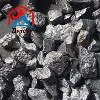
By Zhen An International | Contact us for more details on magnesium ferrosilicon alloy
Silicon magnesium alloy, also known as magnesium ferrosilicon alloy or FeSiMg nodulizer, is a commonly used treatment material in ductile iron production. Its main function is not simply to add one element into molten iron, but to introduce proper amounts of magnesium and rare earth elements during treatment, helping convert flake graphite into spheroidal graphite. This process improves the strength, toughness and structural stability of ductile iron castings.
In actual purchasing, many foundry buyers first pay attention to magnesium content. For example, in Silicon Magnesium SiMg 7-3 alloy, "7" usually refers to about 7% Mg, while "3" refers to about 3% rare earth content. However, from a foundry production perspective, the stability of silicon magnesium alloy does not depend only on Mg content. Si, RE, Ca, Al, Fe and particle size distribution can all affect reaction intensity, magnesium absorption, nodularization fading and final casting quality.

Magnesium (Mg) is the most important active element in silicon magnesium alloy. It directly participates in the nodulizing treatment and promotes the transformation of graphite from flake form to spheroidal form. If Mg content is too low, spheroidization may be insufficient. If Mg content is too high, the reaction may become too violent, causing smoke, splashing and magnesium burning loss. For medium and large ductile iron castings, a medium-Mg grade such as Silicon Magnesium SiMg 7-3 alloy usually provides a better balance between reaction strength and treatment stability.
Silicon (Si) is one of the base elements in magnesium ferrosilicon alloy and usually works as the alloy carrier. Silicon can support inoculation effect and influence graphite formation. In practical use, Si content should still be controlled according to the base iron composition and final casting grade, so that excessive silicon does not negatively affect material properties.
Rare Earth (RE) mainly helps improve anti-fade performance and neutralize interfering elements in molten iron. For long pouring cycles, large castings or unstable base iron conditions, proper RE content can help slow nodularization fading and maintain a more stable graphite structure. For wind power castings, heavy machinery castings and ductile iron pipes, stable RE content is often more important than simply choosing a higher Mg grade.
Calcium (Ca) can influence reaction smoothness and slag behavior during nodulizing treatment. A proper Ca level may help improve treatment stability, but excessive or poorly controlled Ca may cause stronger reaction, more inclusions or unstable results. Therefore, in FeSiMg nodulizer production, Ca should not be treated as "the higher, the better." It needs to be controlled together with Mg and RE.
Aluminum (Al) is an element that should be carefully controlled. A small amount of Al is difficult to avoid in production, but excessive Al may increase the risk of pinholes, gas defects or inclusions in castings. For ductile iron castings that require high structural density and good surface quality, Al control is an important purchasing point.
Iron (Fe) is the balance element in silicon magnesium alloy and mainly works as the alloy matrix. Although it is not the main active element for spheroidization, a stable iron base helps maintain uniform composition and product stability.
From a foundry application perspective, selecting silicon magnesium alloy should not be based only on price or Mg content. More practical evaluation points include whether the Mg/RE ratio is stable, whether Ca and Al are properly controlled, whether the particle size matches the treatment method, whether powder content is too high, and whether each batch can be supplied with a COA test report.
ZHEN AN INTERNATIONAL CO., LIMITED supplies silicon magnesium alloy, ferrosilicon, silicon metal, silicon carbide, cored wire and other metallurgical and foundry materials. For Silicon Magnesium SiMg 7-3 alloy and other nodulizer products, Zhen An focuses on composition stability, particle size screening and batch inspection, rather than simply offering a price. Based on the buyer's base iron sulfur content, treatment method, casting weight and pouring time, Zhen An can recommend suitable grades and particle sizes, with COA support and third-party inspection accepted before shipment.
For Silicon Magnesium SiMg 7-3 alloy, it is more suitable for ductile iron production scenarios that require better anti-fade performance, relatively mild reaction and longer pouring cycles. In medium and large castings, wind power castings, ductile iron pipes and heavy machinery castings, stable composition and suitable particle size are often more valuable than simply pursuing a higher magnesium content.
Company Profile

About ZHEN AN INTERNATIONAL
Zhenan is a professional enterprise engaged in metallurgical and refractory materials products, integrating production, processing, sales and import and export. We own our own factory, covering an area of 30,000 square meters, with an annual production and sales volume of over 150,000 tons.


FAQ
Q:What is silicon magnesium alloy?
A:Silicon magnesium alloy, also known as magnesium ferrosilicon alloy or FeSiMg nodulizer, is a foundry material used in ductile iron production. It introduces magnesium and rare earth elements into molten iron to help convert flake graphite into spheroidal graphite.
Q:What are the main elements in silicon magnesium alloy?
A:The main elements usually include magnesium, silicon, rare earth, calcium, aluminum and iron. Each element affects reaction strength, spheroidization stability, anti-fade performance and casting quality.
Q:Why is magnesium important in silicon magnesium alloy?
A:Magnesium is the key nodulizing element. It promotes graphite spheroidization in molten iron. Too little magnesium may cause insufficient nodulization, while too much magnesium may lead to violent reaction, smoke, splashing and magnesium burning loss.
Q:What is the role of rare earth in FeSiMg nodulizer?
A:Rare earth elements help improve anti-fade performance and neutralize interfering elements in molten iron. Proper RE content is especially useful for large castings, long pouring cycles and ductile iron applications requiring stable graphite morphology.
Q:Why should aluminum be controlled in silicon magnesium alloy?
A:Excessive aluminum may increase the risk of pinholes, gas defects and inclusions in ductile iron castings. For castings requiring good surface quality and structural density, aluminum content should be carefully controlled.
Q:How should buyers evaluate silicon magnesium alloy?
A:Buyers should check Mg/RE ratio, silicon content, calcium and aluminum levels, particle size distribution, powder content and batch COA. The suitable grade should be selected according to base iron sulfur content, treatment method, casting weight and pouring cycle.