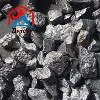
What Ferrosilicon Nitride Is
Ferrosilicon nitride is a nitride ferroalloy produced by nitriding fine ferrosilicon powder in a controlled nitrogen atmosphere. The result is a granular additive that carries silicon nitride phases together with iron silicides, so a single raw material supplies both silicon and nitrogen to a refractory mix. Because the nitrogen is already chemically bound, the additive does not release large volumes of gas when it is wetted and cast, which makes it far easier to control in low-cement castables than un-nitrided silicon powder.
| Constituent | Typical commercial range | Role in the refractory |
|---|---|---|
| Silicon (Si) | 45–52 % | Forms the nitride bonding phase and reacts with carbon and alumina in service |
| Nitrogen (N) | 18–22 % | Supplies the nitrogen for in-situ nitride bonding |
| Iron (Fe) | Balance, usually under 22 % | Carried over from the ferrosilicon feed; keeps the additive compatible with iron-bearing systems |
| Phosphorus and sulphur | Kept low | Reduce the risk of low-melting phases in the hot face |
| Grain size | Fine powder to a few millimetres | Selected according to castable, gunning or ramming practice |
Typical ranges are shown to indicate what the material is; when a lining design depends on a specific value, the supplier's certificate of analysis for that lot should govern the mix design.
Why a Nitrogen-Bearing Additive Improves Hot Performance
In carbon-containing refractories the silicon nitride phases react in situ with the carbon and carbon monoxide that surround the hot face. Silicon carbide and silicon oxynitride crystals grow at the bond points and reinforce the matrix where it matters most, at the grain boundaries. The practical consequences are a higher hot modulus of rupture, better thermal shock resistance and a matrix that keeps its strength instead of softening as temperature rises.
Nitride bonding raises hot strength and creep resistance in the temperature window where a resin or pitch bond has already decomposed.
Silicon carbide formed in situ contributes slag and molten-iron erosion resistance at the working face.
Because the nitrogen is bound, there is less free silicon to oxidise, and the lining tolerates the oxidising conditions of intermittent operation.
The additive does not introduce uncontrolled volatile release during mixing and curing.
Use in Casting Materials
Casting materials are the largest outlet for the additive today, and the three families that dominate consumption are described below.
Aluminium oxide–silicon carbide–carbon (Al2O3–SiC–C) castables for blast furnace iron runners and troughs. Here the additive supports the nitride and carbide network that resists flowing iron and slag while the trough is in tap.
Magnesia-based castables. Magnesia has excellent slag resistance but poor thermal shock resistance; the nitrided additive modifies the matrix so that a magnesia hot face can better survive thermal cycling.
High-alumina castables. Used where the main demand is hot strength and abrasion resistance at the working face rather than slag chemistry control.
In all three families the additive is dosed as part of the dry blend, so it must be matched to the water demand of the castable and to the curing schedule. A coarse grade used in a self-flow mix will behave quite differently from a fine powder used in a vibration-cast mix.
Taphole Clay and Gunning Mixes
Taphole clay, often called gun clay or gunning mix, plugs the blast furnace taphole between taps. When the taphole is drilled, slag and hot metal leave the furnace together, and the plug material has to survive chemical attack, slag and iron erosion, high temperature and the mechanical action of drilling and closing. As furnaces are enlarged and campaign life is extended, those demands increase.
A taphole clay based on a nitrided iron–silicon additive delivers a stable iron flow: the stream shows no abnormal spatter and no bright red spots that indicate a poorly consolidated plug. The material keeps a high flexural strength while hot and resists molten iron erosion, which allows stable tapping for more than 60 minutes followed by a complete seal with no blow-by of wind and flame at the taphole. The key requirements are summarised below.
Chemical resistance to slag and to liquid iron at the taphole face.
Sufficient refractoriness and hot strength for the full tap duration.
Good filling behaviour, so that the clay packs the taphole without voids.
Stability at high temperature, with predictable opening and closing.
Hearth protection during the interval between taps.
Composite Refractory Materials
Composite refractories are made from two or more refractory raw materials with different properties, combined physically or chemically to create new behaviour on a macroscopic or microscopic scale. A nitrided iron–silicon additive fits this design philosophy: the nitride phase and the oxide or carbon phases of the mix are deliberately kept as distinct components so that each contributes a different property, one providing hot strength and the other providing slag resistance or thermal shock tolerance. The composite approach is why the same additive can serve an alumina–silicon carbide–carbon trough mix and a magnesia castable.
Dosing, Handling and Quality Control
Addition level is set by the refractory designer for each mix, based on the required hot strength, the carbon content of the system and the service temperature. Two practical points decide whether the additive performs as intended:
Distribution. The nitrided powder must be dispersed through the dry blend before water is added. Poor dispersion produces localised nitride-rich zones and nitride-poor zones, and the lining then fails at the weak points rather than uniformly.
Storage. The material should be kept dry and used within the shelf life declared by the supplier, because moisture pickup affects both flow behaviour and the nitrogen balance of the mix.
Incoming lots should be checked for nitrogen content, grain size distribution and moisture, since these three variables drive the response of the castable or clay. Recording them against the lining performance of each campaign is the most reliable way to tune the addition level for the next campaign.
Frequently Asked Questions
Q: What is ferrosilicon nitride used for?
It is used as an additive in refractory materials, mainly casting materials such as alumina–silicon carbide–carbon and magnesia castables, taphole clay or gunning mix for blast furnaces, and composite refractories.
Q: Why use a nitrided additive instead of plain silicon powder?
Because the nitrogen is already bound in the nitride phases, the additive supplies silicon and nitrogen together and avoids the strong gas release that plain silicon powder can cause when it reacts in a wet castable.
Q: How does it improve the taphole clay performance?
It raises hot flexural strength and resistance to molten iron erosion, which supports stable iron flow without spatter or red spots and allows complete sealing of the taphole after tapping.
Q: Can it be used in magnesia castables?
Yes. Magnesia systems benefit because the additive modifies the matrix and improves the ability of the lining to tolerate thermal cycling, while the magnesia continues to provide slag resistance.
Q: What should be checked on each incoming lot?
Nitrogen content, grain size distribution and moisture are the three variables that most strongly affect the behaviour of the finished mix, so they should be verified against the supplier's certificate of analysis.
Q: How is the addition level decided?
The level is set by the refractory designer from the required hot strength, the carbon content of the system and the service temperature, then confirmed against campaign results rather than fixed permanently.