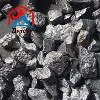
The processing of graphite and calcined petroleum coke.
CPC is manufactured through the heating of crude petroleum coke at temperatures between 1200°C and 1400°C in a rotary kiln. This process, known as calcination, serves to remove volatile substances, thereby rendering the carbon more pure.
The resulting material is graphite petroleum coke. GPC is manufactured from GCC. The process entails subjecting the GPC to temperatures in excess of 3,000 degrees Celsius in an atmosphere devoid of oxygen. This process results in the formation of a regular crystalline structure, known as graphite, composed of carbon atoms.
The properties of graphite petroleum coke (GPC) and calcined petroleum coke (CPC) are as follows: they have low conductivity and density. CPC does not undergo the same ordered graphite structure formation as GPC.
GPC: The more ordered structure of GPC in comparison to graphite results in enhanced electrical and thermal conductivity. Furthermore, it is denser and exhibits a lower coefficient of thermal expansion. GPC exhibits greater strength than GPC.
Graphite Petroleum Coke (GPC) and Calcined Petroleum Coke
Applications: GPC is employed in the manufacture of electrodes for steel and aluminium, titanium dioxide, and as a heating agent in metallurgical processes.
GPC is suitable for use in more challenging applications, including the production of advanced composite materials, as a lubricant, in the nuclear industry and in the manufacture of high-performance electrodes for electric arc furnaces.