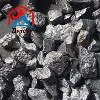
Quick Answer: Match the Silicon Metal Route Before You Compare Price
Before choosing silicon metal for a Si-C anode material trial, you need to confirm the downstream route first.
Some projects prefer silicon metal lump because they have their own crushing and milling system. Some need crushed silicon metal to shorten preparation time. Some need a silicon powder precursor with PSD data for faster powder evaluation. Other projects may discuss a CVD / silane-related nano-silicon route, where trace impurity profile and document consistency become more sensitive.
The right silicon metal route depends on your milling system, target particle size, surface oxygen tolerance, COA requirement, packing method and sample-to-bulk matching plan.
If you need a broader explanation of why high-purity silicon metal affects downstream Si-C anode production, you can also read our main guide on Why High-Purity Silicon Metal Matters in Si-C Anode Production.
Why Route Selection Comes Before Silicon Metal Specification
When a new Si-C anode trial starts, many people first ask about Si content, price or purity grade. These points are important, but they are not the first question.
The first question should be:
Which silicon metal route will your downstream process use?
A silicon metal lump route, crushed silicon route, powder precursor route and CVD-related route do not use the same checklist. Even if the Si content looks similar, the processing risks can be different.
For example, if you use silicon metal lump, you may care more about lump size, Fe/Al/Ca level, batch number and COA. If you use silicon powder precursor, you need to look more closely at PSD, D10, D50, D90, surface oxygen, powder packing and moisture protection. If your project is connected with a silane-related or CVD nano-silicon route, trace elements and document consistency may become more important.
That is why we usually discuss the route first, not the price first. The route decides which silicon metal form is practical, which testing data is useful, and how the trial material should match later bulk supply.
Route 1: Silicon Metal Lump for In-House Crushing and Milling
Silicon metal lump is often suitable when your team has its own crushing, milling or particle size classification system.
In this route, you may not need fine silicon powder from the supplier at the beginning. Instead, you may prefer to control the crushing and milling conditions by yourself. This can help your technical team compare different milling parameters, surface conditions and particle size ranges under your own process.
Silicon metal lump is usually easier to store and handle than fine powder. It also has lower surface exposure before milling. For early raw material screening, this route can be practical when you want to start from a stable upstream silicon source.
For this route, you can usually confirm:
target Si content;
Fe, Al and Ca limits;
lump size range;
visible contamination control;
COA format;
batch number;
packing method;
whether retained sample or pre-shipment sample is needed.
The main risk is that the preparation route is longer. If your project timeline is tight, starting from lump silicon metal may take more time before powder evaluation can begin.
Route 2: Crushed Silicon Metal for Faster Powder Preparation
Crushed silicon metal can be useful when you do not want to start from large lumps, but you still plan to do your own milling or classification.
This route can shorten the preparation step before powder processing. It is often used when a lab or pilot team wants smaller silicon metal pieces for faster grinding, but does not want to receive fully prepared fine powder yet.
Compared with lump silicon metal, crushed silicon metal gives you a more convenient starting material. But because crushing adds another processing step, contamination control and size fluctuation should be checked more carefully.
For crushed silicon metal, you can confirm:
crushed size range;
Si content;
Fe, Al and Ca level;
whether crushing may introduce metallic contamination;
batch consistency;
packing method;
COA and test report;
whether the trial sample size can match later bulk supply.
This route is useful when you need faster lab preparation but still want control over the final powder size.
Route 3: Silicon Powder Precursor for Direct Trial Evaluation
Silicon powder precursor is more suitable when your trial needs faster powder evaluation.
If your downstream process already requires powder, it may not be efficient to start from lump material. In that case, you may discuss a silicon powder route directly. This can help you evaluate PSD, dispersion, surface condition, carbon coating behavior or composite processing more quickly.
However, powder route brings new risks.
Fine silicon powder has much higher exposed surface area than lump silicon metal. After milling, surface oxygen can increase. Fine particles may also bring agglomeration risk, moisture sensitivity and sample-to-bulk fluctuation.
For silicon powder precursor, you need to confirm more than a simple mesh size.
You can check:
silicon powder PSD;
D10, D50 and D90;
fine particle ratio;
oversized particle risk;
surface oxygen in silicon powder;
oxygen testing requirement;
powder agglomeration condition;
moisture-proof packing;
COA and PSD report;
sample-to-bulk consistency.
Mesh size can provide a rough range, but it does not fully show the particle size distribution. If your Si-C anode trial is sensitive to powder behavior, PSD data is more useful than a simple "fine powder" description.
Route 4: CVD / Silane-Related Nano-Silicon Route
Some Si-C anode projects also evaluate nano-silicon or CVD / silane-related routes. This route is different from ordinary mechanical milling.
In a mechanical milling route, the focus is usually on silicon metal form, crushing, milling, PSD, surface oxygen and powder packing. In a CVD or silane-related route, the discussion may move closer to high-purity silicon source control, trace impurity profile and process-specific document matching.
This does not mean every silicon metal grade can directly fit a CVD-related nano-silicon process. The downstream process needs to define whether silicon metal is used as an upstream raw material, a precursor-related material, or only part of a wider silicon source evaluation.
For this route, you may need to confirm:
high-purity silicon metal grade;
B, P and O requirements;
trace impurity profile;
test method;
COA format;
batch stability;
document consistency;
whether third-party testing is required.
This route is usually more sensitive to trace data. If your project involves CVD / silane-related evaluation, it is better to share your technical checklist before quotation, instead of only asking for a general high-purity silicon metal offer.
Silicon Metal Route Comparison Table
The table below can help you compare the main silicon metal routes before a Si-C anode material trial.
| Silicon Metal Route | Suitable For | Main Risk | What to Confirm |
|---|---|---|---|
| Silicon Metal Lump | Teams with in-house crushing and milling system | Longer preparation route | Si purity, Fe/Al/Ca, lump size, COA, batch number |
| Crushed Silicon Metal | Faster lab preparation before milling | Crushing contamination and size fluctuation | Crushed size, metallic impurities, batch control |
| Silicon Powder Precursor | Direct powder evaluation or faster trial | Oxidation, agglomeration, PSD fluctuation | D10/D50/D90, PSD, surface oxygen, packing |
| CVD / Silane-Related Route | Nano-silicon or high-end route evaluation | Trace impurity sensitivity | High purity, B/P/O, test method, document consistency |
This table does not replace your internal process requirement. It helps you decide what information should be checked first.
How Route Choice Changes Your Quality Checklist
Different silicon metal routes need different quality checklists.
If you choose silicon metal lump, the checklist is usually closer to raw material control. You may focus on Si content, Fe/Al/Ca, lump size, visual condition, batch number and COA.
If you choose crushed silicon metal, you still check Si content and metallic impurities, but you also need to care about crushing contamination and size range. The crushing process should not create new uncertainty for later milling.
If you choose silicon powder precursor, the checklist becomes more powder-focused. PSD, D10, D50, D90, surface oxygen, agglomeration and packing protection become more important.
If you choose a CVD / silane-related route, the checklist may become more sensitive to trace elements, test methods and document consistency. B, P and O may need closer review depending on the downstream process.
So the same silicon metal supplier document may not be enough for every route. The checklist should match your actual trial path.
PSD, Surface Oxygen and Packing Risks by Route
PSD, surface oxygen and packing risk do not have the same weight in every route.
For silicon metal lump, surface oxygen is usually less urgent than in fine powder because the exposed surface area is smaller. The main concern is whether the lump size and chemical composition match your crushing and milling plan.
For crushed silicon metal, the exposed surface area becomes larger. The size range is also more variable. If the crushed material is stored or transported for a long time, packing protection should be checked.
For silicon powder precursor, PSD and surface oxygen become key control points. Fine powder may oxidize more easily, and excessive fines may increase agglomeration risk. If your downstream process includes carbon coating or composite processing, surface condition should be discussed earlier.
For a CVD / silane-related route, PSD may not be the main discussion point in the same way as mechanical powder processing. Trace impurity profile, document matching and route suitability may be more important.
This is why route selection changes the meaning of "quality." A good silicon metal lump specification may not be enough for a powder precursor route. A useful powder PSD report may not answer the key questions in a CVD-related route.
Sample-to-Bulk Matching: The Route Must Be Repeatable
A Si-C anode trial is not only about whether one sample works. The route must be repeatable when the project moves from small sample to larger batch.
Sample-to-bulk matching is especially important for silicon metal because different routes may change the material condition.
If the trial sample is silicon metal lump, later bulk supply should match the same grade, lump size range, impurity profile and COA format.
If the trial sample is crushed silicon metal, later bulk supply should match the crushed size range, crushing control and batch consistency.
If the trial sample is silicon powder precursor, later bulk supply should match PSD, D10, D50, D90, surface oxygen condition, packing method and moisture protection.
If the trial route is CVD / silane-related, the document system should be consistent from the beginning. Test method, trace impurity limits and batch records need to be clear.
A common problem is that the early sample looks acceptable, but later bulk material does not match the same route condition. To reduce this risk, sample route and bulk route should be discussed together before trial order.
What to Confirm Before Sending a Route-Based Inquiry
Before you send an inquiry for silicon metal used in Si-C anode trials, it is helpful to confirm the route first.
You can send us the following information:
Which route are you testing?
Do you need silicon metal lump, crushed silicon metal or silicon powder precursor?
Do you have your own crushing and milling system?
Do you need a mechanical milling route or a CVD / silane-related route discussion?
What Si content do you require?
Do you have Fe, Al and Ca limits?
Do B, P and O need to be tested?
Do you need PSD, D10, D50 and D90 data?
Is surface oxygen sensitive in your route?
Do you need COA, PSD report, ICP-OES, ICP-MS or O/N analysis?
What trial quantity do you need?
What packing method and destination port should we consider?
Do you need sample-to-bulk matching support?
After we receive these details, we can help you check whether the available silicon metal route, material form, COA data, PSD requirement and packing method match your trial plan.
For early-stage projects, we usually suggest starting with a clear route-based inquiry instead of a general price request. This makes the quotation more useful and reduces repeated specification changes later.
FAQ: Silicon Metal Route Selection for Si-C Anode Trials
Q:Should we start with silicon metal lump or silicon powder for Si-C anode trials?
A:It depends on your downstream process. If you have your own crushing and milling system, silicon metal lump may be suitable. If you need faster powder evaluation, silicon powder precursor with PSD data may be more practical.
Q:When is crushed silicon metal better than lump silicon metal?
A:Crushed silicon metal may be better when you want to shorten preparation time before milling. It is more convenient than large lump material, but you still need to check crushed size, contamination risk and batch consistency.
Q:Why does the silicon powder route need PSD data?
A:PSD data helps you understand the full particle size distribution. D10, D50 and D90 show the fine side, median size and coarse side. This is more useful than mesh size alone for powder evaluation.
Q:Why should surface oxygen be discussed before a powder trial?
A:When silicon metal is milled into fine powder, the exposed surface area increases. This may raise oxidation risk. Surface oxygen can affect later surface treatment, carbon coating, interface behavior and trial comparison.
Q:Is a CVD / silane-related route the same as a mechanical milling route?
A:No. A mechanical milling route focuses more on crushing, milling, PSD, surface oxygen and powder packing. A CVD / silane-related route may focus more on high-purity silicon source control, trace impurity profile and document consistency.
Q:What documents should match the selected silicon metal route?
A:You may need COA, PSD report, test method, batch number, packing information and third-party testing documents if required. For powder route, PSD and packing details are more important. For trace-sensitive routes, B, P, O and test method may need closer review.
Q:How can we keep trial sample and bulk supply more consistent?
A:Confirm the route before trial order. The material form, particle size range, COA format, packing method and batch control should be discussed together. If the trial sample is powder, later bulk supply should match the same PSD and packing requirements as much as possible.
Final Note: Choose the Route Before You Choose the Grade
For Si-C anode trials, silicon metal selection is not only a question of purity grade.
The more practical question is:
Which silicon metal route fits your downstream process?
Silicon metal lump, crushed silicon metal, silicon powder precursor and CVD / silane-related route each have different quality risks and different document needs. If the route is clear, it becomes easier to confirm Si purity, impurity profile, PSD, surface oxygen, COA, packing and sample-to-bulk matching.
If you are preparing a silicon metal inquiry for a Si-C anode material trial, you can send us your route, material form, target specification, testing requirement and trial quantity. We will help you check the suitable silicon metal supply route before quotation.