Apr 07, 2026 Leave a message

Silicon Carbide Below 90%: Grades, Uses & Buying Guide for Metallurgy and Refractories

By ZHEN AN INTERNATIONAL CO.,LIMITED | Professional metallurgical materials exporter with 30+ years of industry experience


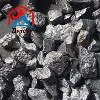
Silicon carbide with purity below 90% is widely used in metallurgy and refractory production, where cost efficiency, stable process performance, and reliable high-temperature resistance matter more than ultra-high purity. In global trade, the most common grades are SiC88, SiC85, SiC80, and SiC70, often quoted as 88–90%, 80–85%, and 70–75% purity ranges. These products are supplied as powder, grain, or lump for steelmaking, foundry, and refractory applications. For industrial buyers, the right choice depends not only on SiC content but also on free carbon, iron oxide, silica content, particle size, and whether the material is used as a deoxidizer, refractory additive, or general high-temperature raw material.


Looking for the right sub-90% silicon carbide grade for steelmaking, foundry, or refractory production? Send us your target chemistry, size range, and application, and our team will recommend a matched SiC solution with quotation support.

Get A Quote Now

What Does Silicon Carbide Below 90% Mean?


In real-world B2B trading, silicon carbide below 90% refers to metallurgical-grade or refractory-grade SiC, not semiconductor or high-purity ceramic materials. It is typically produced by smelting quartz and carbon raw materials in electric resistance furnaces, then crushed and graded into different chemical specifications and particle sizes for industrial use. This is why buyers looking for SiC88 deoxidizer, foundry additives, and refractory grains may all ask for "silicon carbide," even though their impurity limits and sizing requirements are very different.

It is also important to distinguish between high-performance ceramic SiC and commercial-grade sub-90% material. Dense silicon carbide ceramics are well known for extreme hardness, strong chemical resistance, high thermal conductivity, and stable performance at high temperatures. For reference, fine ceramic SiC can maintain strength up to 1400°C, with a density around 3.16 g/cm³ and Vickers hardness near 23 GPa. These properties explain why SiC performs well in harsh environments, but they do not define the chemical specifications of sub-90% metallurgical SiC.

For sub-90% grades, buyers focus on practical commercial chemistry ranges. In the refractory industry, common specifications include 88–90%, 80–85%, and 70–75% SiC, with sizes such as 10–0 mm, 5–0 mm, 3–0 mm, 1–0 mm, 200F, 325F, and 500F. This is how the market actually buys and sells these materials, rather than relying on abstract technical definitions.


Common Sub-90% SiC Grades and Where They Are Used

In the global market, sub-90% silicon carbide is usually referred to by commercial grade names rather than a unified international standard. Buyers often ask for SiC88, SiC85, SiC80, or SiC70, while some suppliers quote purity ranges like 88–90% or 70–75%. For procurement-focused websites, using real market terminology is more effective than forcing a universal grading system.

Grade overview for buyers


Commercial grade Typical SiC range Typical use Main buying logic
SiC88 88%–90% Steelmaking deoxidizer, foundry, selected refractory blends Best balance of recovery, stability, and cost
SiC85 80%–85% or 85% min Cost-sensitive metallurgy and refractory use Lower cost, wider impurity tolerance
SiC80 Around 80% General industrial or refractory use Budget-focused purchasing
SiC70 70%–75% Low-demand refractory or industrial use Price-first sourcing


This table reflects real commercial practice, not a single global mandatory standard.

Among these grades, SiC88 is the most popular because it offers a strong middle ground: better chemistry than lower grades without the higher cost of over-specified high-purity material.

This makes it the top choice in the deoxidizer market, which is why we cover it in detail in our article: What is Silicon Carbide? Why 88 & 90 Grades Are the Strategic Choice for Metallurgy.

For buyers monitoring market changes, we also provide up-to-date analysis: SiC 88 Deoxidizer Price: April 2026 Market Trend & Cost Analysis. For a full overview of SiC properties and applications, you can refer to: Silicon Carbide (SiC): Definition, Properties, Technical Data & Industrial Solutions.


Key Specification Items Buyers Should Check

One of the most common mistakes when sourcing sub-90% silicon carbide is choosing based only on SiC percentage. In actual production, two shipments labeled "SiC88" can perform very differently if free carbon, ferric oxide, silica, or particle size are not properly controlled. This is why JB/T 5204-2018 - the current Chinese industry standard for silicon carbide deoxidizer chemical analysis - is so important. It covers testing methods for SiC, free carbon, SiO₂, Fe₂O₃, CaO, MgO, Al₂O₃, sulfur, phosphorus, and other key components.

For practical purchasing, buyers should focus on:

  • SiC content
  • Free carbon (F.C.)
  • Fe₂O₃ / ferric oxide
  • SiO₂ / silica
  • Particle size distribution
  • Moisture and packaging condition

These factors directly affect melting behavior, recovery rate, slag condition, refractory compatibility, and on-site handling performance - more so than just a grade name.

It is also critical to match standards to applications. GB/T 2480-2022 is the current national standard for abrasive-grade silicon carbide, effective October 1, 2022. It applies when buying SiC for grinding and polishing. However, for deoxidizer-grade material, this standard is not sufficient on its own. Buyers should verify chemistry against deoxidizer-specific test methods. A professional supplier will clearly explain which standard applies to your use case, rather than using one standard for all SiC products.

Applications in Metallurgy and Refractory Production

Steelmaking and deoxidation

In steel production, sub-90% silicon carbide is widely used as a deoxidizer and process additive. It remains popular because it improves melt quality while keeping raw material costs under control. Its stable performance makes it suitable for both mass production and more controlled metallurgical processes. For most steel mills, SiC88 is the most practical choice.

Foundry and casting

In foundries, sub-90% SiC is used for melt adjustment where cost control and stability are both important. Mid-range grades are often preferred when the process does not require 90%+ purity. The right grade depends on how strict the melting parameters are and how sensitive the process is to impurities.

Refractory production

Sub-90% silicon carbide is widely used in refractories because it improves thermal conductivity, wear resistance, and high-temperature stability. It is commonly used in industrial furnace linings, zinc smelting equipment, crucibles, thermowells, temperature measuring tubes, and large refractory bricks. Its low thermal expansion and chemical stability make it ideal for long service in high-heat environments.

Wear, corrosion, and high-temperature auxiliary uses

Even lower-purity SiC benefits from the material's natural advantages: wear resistance, thermal shock resistance, chemical stability, low thermal expansion, and high thermal conductivity. For this reason, sub-90% grades are widely used as cost-effective raw materials in high-temperature and corrosive industrial environments.


How to Choose the Right Grade Below 90%

The simplest and most effective rule is: start with the application, not the grade number.

  • If your process is sensitive and you want a safe balance of performance and cost, choose SiC88.
  • If your application is more tolerant and cost is the main concern, SiC85 or SiC80 may be sufficient.

For basic uses with minimal performance requirements, SiC70 (70–75%) can be the most economical option.

Equally important: always specify chemistry + particle size together. Ordering only "SiC88" without defining impurity limits, size, or packaging can lead to misunderstandings and quality disputes. Refractory producers usually focus on particle distribution and workability, while steel mills care more about chemical recovery and cost per ton.

A clear specification should look like:SiC ≥88%, F.C. max 1.5–2.5%, Fe₂O₃ max 1.0–1.5%, particle size 0–3 mm / 1–10 mm, moisture ≤0.5%, packed in 1MT jumbo bags.

One final tip for buyers: do not pay for purity you do not need. Sub-90% SiC exists because most metallurgical and refractory applications do not require 90%+ purity to perform well. Matching the grade to your process will almost always save more money than choosing a higher-grade label.


Why Choose Zhen An International as Your Silicon Carbide Supplier?

ZHEN AN INTERNATIONAL CO.,LIMITED focuses on what serious industrial buyers actually need: the right grade for the right application, clear chemical specifications, consistent particle size control, and full export-ready service. For sub-90% silicon carbide, we help customers distinguish between metallurgical-grade, refractory-grade, and abrasive-grade requirements instead of treating all SiC as the same product. We also support complete pre-shipment specifications including SiC content, free carbon, Fe₂O₃, SiO₂, size range, and packaging.

Trust in this industry comes from honest, realistic advice. A reliable supplier should tell you when SiC88 is the best strategic choice, when SiC85 or SiC80 is enough, and when your application actually requires a different category of material. This reduces quality risks and helps control total plant costs, rather than just chasing the lowest price.


Frequently Asked Questions (FAQ)

Q:What is silicon carbide below 90% used for?

A:Silicon carbide below 90% is mainly used in metallurgy, foundry, and refractory applications, especially as a deoxidizer, process additive, or refractory raw material. It is ideal where cost efficiency and practical thermal performance are more important than ultra-high purity.

Q:What are the most common grades below 90%?

A:The most widely used grades are SiC88, SiC85, SiC80, and SiC70, often quoted as 88–90%, 80–85%, and 70–75% purity ranges depending on the supplier and application.

Q:Is SiC88 better than SiC85?

A:Not necessarily. SiC88 is preferred when process stability and balanced performance matter most. SiC85 is often sufficient for cost-sensitive applications with wider impurity tolerance. The better grade depends on your production process, not just the purity number.

Q:Which standard should I ask for when buying sub-90% SiC?

A:For abrasive silicon carbide, GB/T 2480-2022 is the main reference. For deoxidizer-grade SiC, JB/T 5204-2018 is more relevant because it covers testing for SiC, free carbon, SiO₂, Fe₂O₃, sulfur, phosphorus, and other key components.

Q:What should I include in the purchase specification?

A:A complete specification should include SiC content, free carbon, Fe₂O₃, SiO₂, particle size, packaging method, and intended use. This provides a clear, mutual standard for both buyer and supplier.


Conclusion

For most steel mills, foundries, and refractory plants, silicon carbide below 90% is not a lower-quality compromise - it is the most commercially sensible choice. The key is selecting the right grade, setting clear chemical and size requirements, and working with a supplier that understands the difference between deoxidizer, refractory, and abrasive specifications.

Contact us for personalized recommendations on SiC88, SiC85, SiC80, or other sub-90% silicon carbide grades. We provide sample support, custom specification matching, and competitive quotations for your metallurgy or refractory application.

Send Inquiry

Home

Phone

E-mail

Inquiry