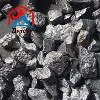
Vanadium-containing solid waste is converted into water-soluble vanadium ions such as VO3- and V4O124- (the ions vary depending on the pH of the solution) using processes such as roasting, acid leaching and alkali leaching.
Different ion exchange resins (such as 717 resin) are used according to the material, and the pH of the solution is adjusted. Adsorption reactions occur in the ion exchange column. For example, when 717 resin is used for ion exchange adsorption of VO3-, the reaction occurs: VO3-+R -N(CH3)3C1--R-N(CH3)3VO3-+ C1-(R represents a hydrocarbon radical). Since the affinity of VO3- for 717 resin is greater than the affinity of impurity ions for the resin, impurities such as phosphorus, iron, aluminium and silicon can be removed. The vanadium adsorbed on the ion exchange column can be eluted with a NaCI solution, and the reaction is: R-V(CH3) 3VO3-+C1---VO3-+ R-N(CH3)3C1. After adsorption, the vanadium is fixed on the ion exchange column, and impurity separation is achieved. After desorption, the vanadium is transferred to the eluent, and then precipitated with ammonium salt to produce ammonium metavanadate, which is then calcined to obtain V2O5.