What the N Notation Means
The N in 6N and 8N polysilicon stands for the number of nines in the purity value. 6N polysilicon is 99.9999 percent silicon, which means the total impurity content is no more than one part per million. 8N polysilicon is 99.999999 percent silicon, with total impurities limited to about ten parts per billion. The difference of two nines looks small on paper but represents a hundredfold reduction in impurity level, and it has a large effect on the production cost and on the applications the material can serve.
How 6N and 8N Polysilicon Are Made
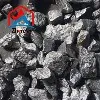
Most polysilicon is made by the Siemens process, in which trichlorosilane is decomposed on hot silicon rods, or by the fluidised bed reactor process, which produces granular polysilicon. Both routes purify the silicon to very high levels, and the final purity is controlled by the quality of the feedstock gases, the reactor materials and the purification steps. After deposition, the rods are crushed and the material is classified into chunks according to size and purity. The same production lines can usually make both 6N and 8N material, but the 8N grade needs stricter process control and more careful handling to avoid contamination.
Applications of 6N Polysilicon
6N polysilicon is the classic solar-grade material. It is used to grow monocrystalline ingots by the Czochralski method and to cast multicrystalline ingots, which are then sliced into wafers for photovoltaic cells. For standard solar cells, a purity of 6N is sufficient because the cell tolerates modest levels of metal impurities, and the lower purity keeps the cost down. In practice, many solar producers today use material of 7N or 8N quality for high-efficiency cell structures, because the extra purity improves carrier lifetime and therefore cell efficiency.
Applications of 8N Polysilicon
8N polysilicon sits between solar grade and electronic grade. It is used for high-efficiency photovoltaic cells such as TOPCon and heterojunction cells, where very low metal contamination is needed to reach efficiencies above 25 percent, and it is also suitable for some power semiconductor and sensor applications. True electronic-grade polysilicon used in integrated circuits is even purer, typically 9N to 11N, because a single metal atom at a critical site can destroy a device. Buyers should understand that 8N is not a substitute for electronic grade in advanced chip fabs.
Impurities, Doping and Resistivity
Purity grades describe total impurity levels, but the type of impurity matters just as much as the amount. Donor elements such as phosphorus and arsenic and acceptor elements such as boron control the resistivity of the grown crystal, while metal impurities such as iron, copper and nickel reduce carrier lifetime and harm device performance. Polysilicon specifications therefore list individual impurity limits for metals and for dopants, measured in parts per billion. When the polysilicon is melted for crystal growth, the dopant is added deliberately in a controlled way, so the base polysilicon should be very low in both donor and acceptor impurities.
How to Select Between 6N and 8N
The selection should be driven by the application, not by the grade name. For standard solar wafers, 6N material gives the lowest cost per watt and is fully adequate. For high-efficiency cell lines and for applications that need long carrier lifetime, 8N material is worth the premium. For semiconductor fabrication, the buyer needs electronic-grade material, usually 9N or above, and should verify the supplier's specification against standards such as GB/T 25074 for solar-grade polysilicon and GB/T 12963 for electronic-grade polysilicon. Buyers should always request a certificate of analysis showing both metal and dopant impurity levels in parts per billion.
Frequently Asked Questions
Q: What does 6N mean in polysilicon?
6N means 99.9999 percent silicon, or six nines of purity, which limits total impurities to about one part per million.
Q: What does 8N mean in polysilicon?
8N means 99.999999 percent silicon, or eight nines of purity, which limits total impurities to about ten parts per billion.
Q: Is 8N polysilicon better than 6N?
8N is purer and gives better carrier lifetime, which helps high-efficiency solar cells, but it costs more and is unnecessary for standard cell production.
Q: What is the difference between solar grade and electronic grade?
Solar grade is typically 6N to 9N and is used for photovoltaic cells. Electronic grade is typically 9N to 11N and is required for integrated circuit manufacture.
Q: Why does doping matter in polysilicon?
Deliberate doping with boron or phosphorus sets the resistivity of the grown crystal, so the base polysilicon must be very low in uncontrolled dopant impurities.
Q: How do I check the purity of a polysilicon lot?
Request a certificate of analysis listing the metal impurities and dopant impurities in parts per billion, measured by glow discharge mass spectrometry or an equivalent method.